Federal Board Of Revenue Introduces Surcharge Waiver For Late Tax Filers
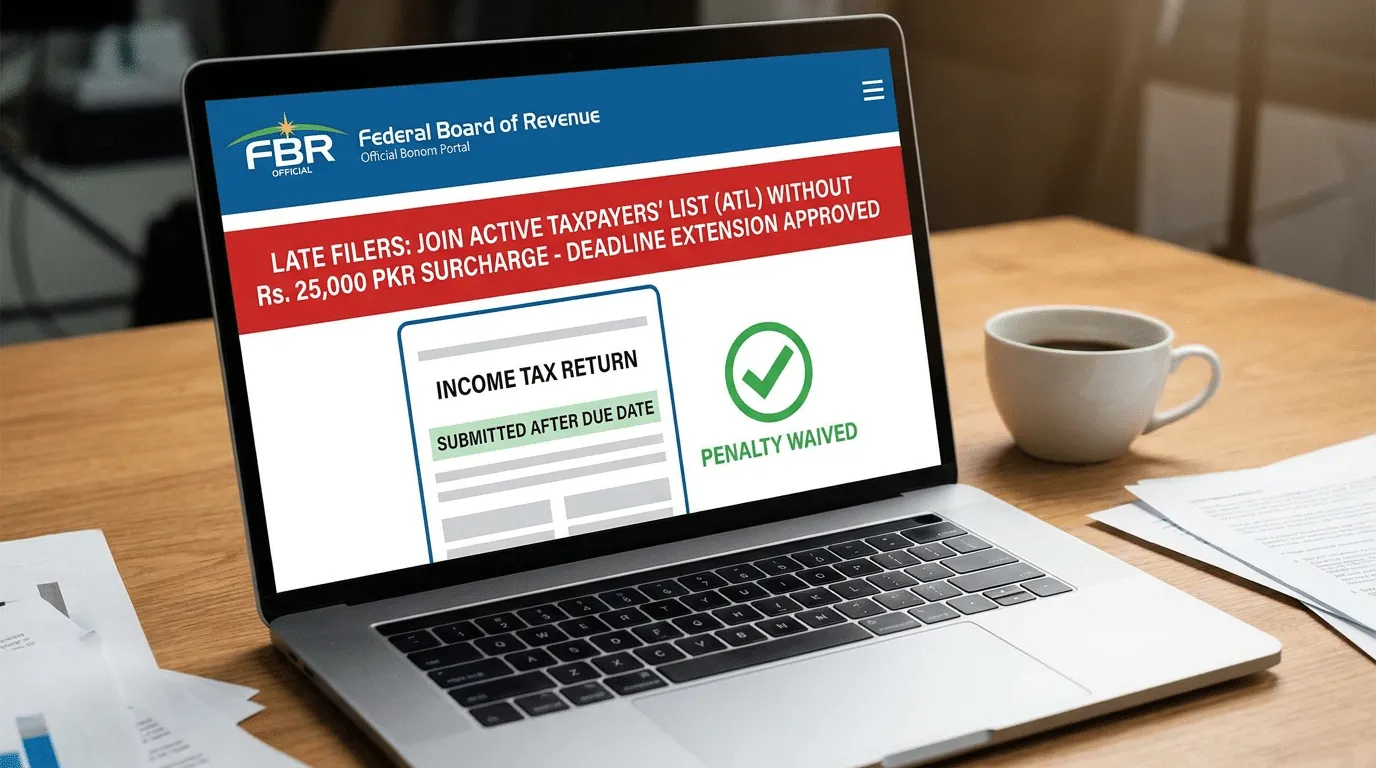
The Federal Board of Revenue has announced a new regulatory pathway allowing late tax filers to join the Active Taxpayer List without paying the standard Rs. 25,000 surcharge. This exemption comes with a strict condition that individuals must agree to forgo purchasing or acquiring property for a period of six months. The measure provides financial relief to citizens who missed the official filing deadlines, provided they adhere to the property acquisition freeze outlined in the updated regulations.
Tax authorities published the details of this policy through an official notification issued on Tuesday. The change alters the existing Income Tax Rules 2022 to accommodate individuals seeking inclusion on the taxpayer roster without incurring the heavy financial penalty normally associated with late submissions. Taxpayers must carefully weigh the six-month property restriction against the financial benefit of the fee waiver before making their decision.
How To Apply Using Form ATL-U
To qualify for the surcharge waiver, individuals who file their income tax returns after the due date or any extended deadline must submit a formal undertaking. This submission is completed through Form ATL-U, a specialized digital document integrated into the tax administration portal. The requirement ensures that every applicant formally binds themselves to the conditions set forth by the revenue administration.
FBR introduced this facility through SRO 2097(I)/2026, which formally amended the Income Tax Rules 2022. This regulatory update follows an earlier draft of the scheme that the department published on October 6, 2026, through SRO 1619(I)/2026. Submitting the form correctly through the digital portal is the first step for late filers seeking to regularize their tax status without the monetary penalty.
The Six-Month Property Acquisition Restriction
The core condition of the waiver involves a strict ban on property transactions. Under the submitted undertaking, individuals must agree not to purchase, acquire, or obtain ownership or beneficial interest in any property for six months. This restriction applies from the exact date the taxpayer submits the form through the digital system.
The timeline for the restriction begins precisely on the date shown on the electronic acknowledgement issued by the FBR IRIS system after successful submission of Form ATL-U. During this six-month window, taxpayers cannot expand their real estate holdings or take on beneficial interests in land or buildings if they want to retain the benefits of the fee waiver.
Verification Methods And Compliance Monitoring
Tax authorities retain the right to verify whether individuals have followed the terms of the undertaking. The revenue department uses information available within its own databases as well as data obtained from various government agencies, property registries, financial institutions, and other lawful sources. This cross-referencing allows the administration to monitor property transactions across the country.
If the agency finds that an individual acquired property during the restricted period, officials will initiate an administrative review. The department will first provide an electronic opportunity for the taxpayer to explain the matter before taking any adverse action. This procedural safeguard ensures individuals can address discrepancies or misunderstandings regarding their real estate status.
Consequences Of Violating The Property Purchase Ban
Breaking the terms of the undertaking carries clear administrative penalties. If the violation is established during the review process, the fee waiver will be withdrawn from the exact date of the breach. Consequently, the individual taxpayer status on the Active Taxpayer List will revert to being governed by the existing rules, meaning the unpaid surcharge may be reinstated or prior standing altered.
Taxpayers who choose this route must maintain strict vigilance over their financial and property dealings for the entire duration of the six-month window. Any real estate transaction during this period triggers the withdrawal mechanism, underscoring the importance of aligning personal investment plans with the requirements of the tax authority.