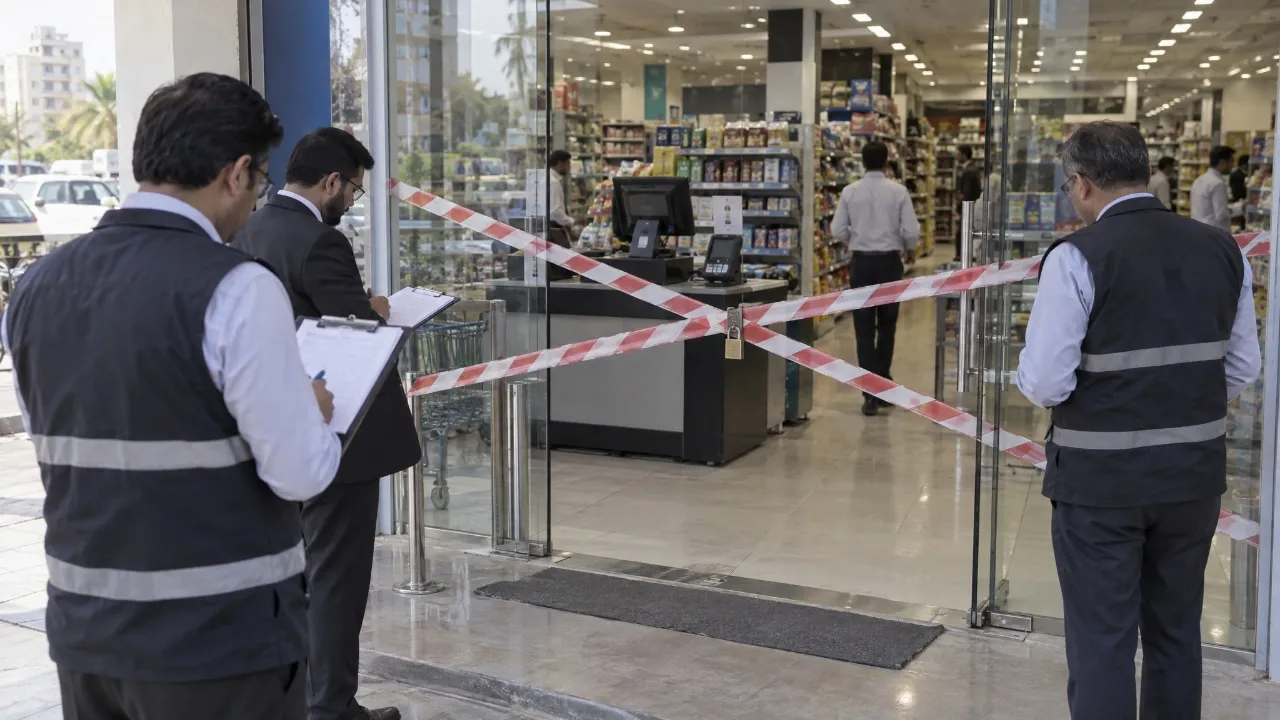
Federal Board of Revenue Seals Karachi Superstore Outlet
The Federal Board of Revenue took decisive enforcement action by sealing a prominent retail outlet belonging to a Karachi superstore. This operation followed the uncovering of massive financial irregularities amounting to billions of rupees. Tax authorities executed the crackdown as part of ongoing efforts to curb tax evasion and enforce electronic sales tracking across major commercial enterprises in the country.
Regional Tax Office-II of the Federal Board of Revenue planned and executed the raid on the retail establishment. Deputy Commissioner Corporate Office-II, Hina Malik, led the operation on the ground. Officials targeted severe violations linked to the electronic Point of Sale integration system, which large retailers must maintain to report transactions in real time.
Understanding the Point of Sale Integration System
The Point of Sale integration system is a digital tax monitoring mechanism introduced by revenue authorities to bring retail transactions into the documented economy. Retailers connect their billing terminals directly to the central servers of the tax administration. This direct link ensures that every transaction is recorded immediately, preventing businesses from hiding daily revenues or manipulating sales data.
Large retailers and supermarkets fall under strict statutory requirements to keep their billing systems continuously connected to the central network. Disconnecting these systems prevents tax authorities from tracking consumer purchases and collecting appropriate sales tax amounts. The enforcement action in Karachi highlights the strict penalties businesses face for tampering with or bypassing these mandated digital reporting tools.
Investigations Reveal Disconnected Billing Networks
Detailed forensic audits and investigations conducted by tax officials uncovered severe technical manipulation at the targeted superstore. Investigators discovered that the management had deliberately disconnected the Point of Sale system from its main computer network for a prolonged period. Specifically, records showed the system remained offline for the past 122 days.
Operating without a network connection allows business owners to generate private invoices that never reach the central tax database. This method conceals the true volume of daily commerce from state auditors. The extended duration of the disconnection pointed toward a systematic effort to evade financial reporting obligations rather than a temporary technical malfunction.
Billions in Off-System Sales and Tax Liabilities
During the comprehensive audit, tax authorities uncovered a massive volume of transactions conducted entirely outside the digital network. Investigators determined that more than Rs. 3.27 billion in sales were completed off the system. These hidden transactions involved unofficial invoices issued during a specific timeframe stretching from July 2024 to September 2026.
Sales directed exclusively to unregistered buyers accounted for the entirety of the Rs. 3.27 billion figure. Bypassing the registered tax channels left a colossal unpaid sales tax liability hanging over the business. The Federal Board of Revenue calculated this outstanding tax burden at Rs. 240.57 billion, which equals Rs. 240,570 million, reflecting the severe financial scale of the detected non-compliance.
Broader Enforcement Actions on Commercial Tax Evasion
Tax authorities across the country continue to scrutinize large commercial entities to ensure strict adherence to digital invoicing laws. The discovery of hidden sales running into billions demonstrates the challenges revenue departments face in capturing accurate tax revenues from high-volume retail sectors. Officials stated that monitoring physical outlets and digital servers remains a priority to protect state revenues from fraudulent practices.
The sealing of the Karachi retail outlet serves as a strong warning to other commercial establishments engaging in similar financial malpractice. Businesses operating large supermarket chains must maintain continuous digital connectivity with tax servers to avoid immediate closure and severe legal penalties. The Regional Tax Office-II announced that audits of other commercial operations will proceed as part of the broader campaign against tax fraud.