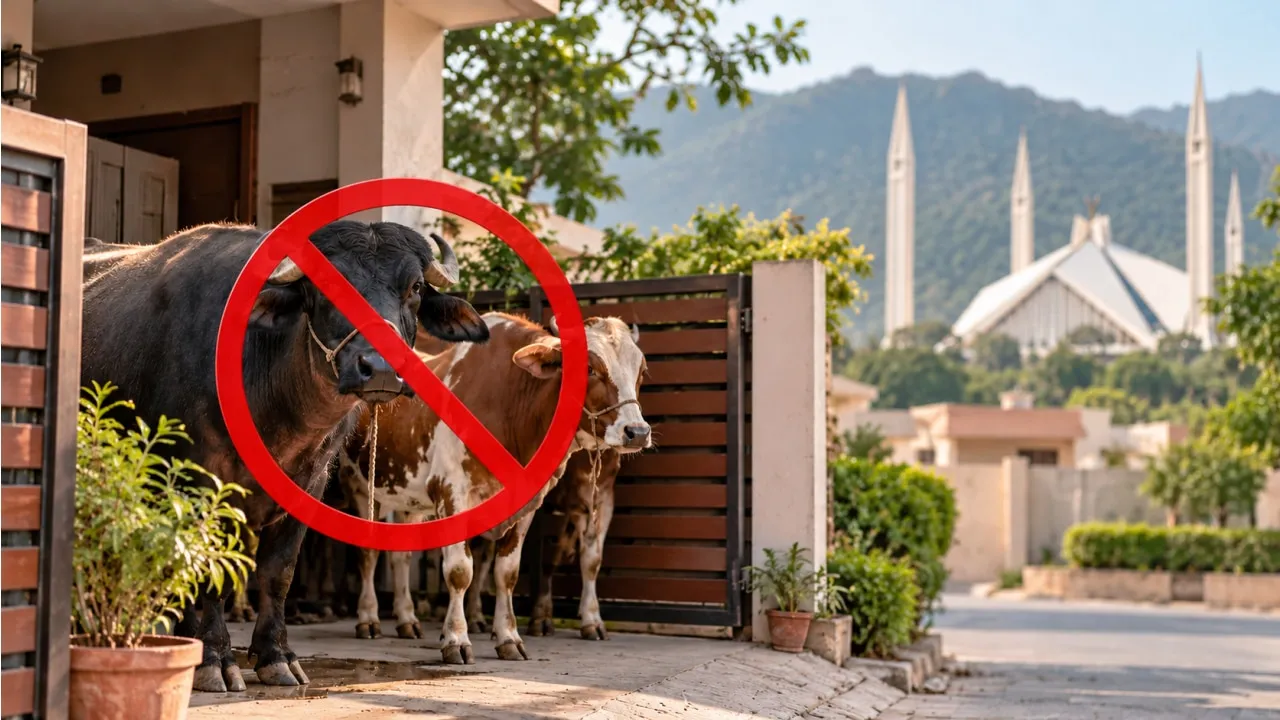
Islamabad District Administration Targets Illegal Cattle Farms in Residential Zones
The Islamabad district administration has arrested six people for operating illegal cattle farms in residential areas as part of an ongoing crackdown against unauthorized livestock facilities in the federal capital. Urban centers require strict adherence to zoning laws to maintain public health standards, prompting local authorities to take direct action against violators who ignore established municipal boundaries.
According to a statement shared by the Deputy Commissioner Islamabad, arrests were also made over the reactivation of cattle farms that had previously been sealed by the administration and violations of official orders. Authorities found that multiple individuals ignored prior warnings, removing official seals to resume unauthorized livestock operations within populated neighborhoods.
The administration has urged residents to comply with the ban on operating cattle farms in residential areas and warned against violating the restrictions. Officials emphasized that enforcement operations will continue across various sectors of the capital to ensure public compliance and to penalize repeat offenders.
History of Restrictions on Livestock in Islamabad
Islamabad's restrictions on cattle pens date back at least to 2002, when the Capital Development Authority and district administration decided to remove buffaloes and cows from the capital, citing the large number of animals being kept in urban areas. Urban planners recognized early in the development of the master-planned city that keeping large farm animals inside residential sectors conflicted with the intended architectural and environmental design of the federal capital.
Initial efforts relied on administrative warnings and voluntary relocations, but authorities soon realized that more formal regulatory mechanisms were necessary to curb the growth of backyard dairy farming and private livestock holding pens. Over the years, urban growth accelerated, making the presence of livestock an increasingly prominent issue for municipal sanitation departments tasked with keeping residential sectors clean and orderly.
The legal framework was further formalized under the Islamabad Capital Territory Local Government Act, 2015, which empowered local governments to declare prohibited zones and ban cattle keeping in designated areas. This legislation provided local authorities with explicit statutory backing to issue fines, confiscate animals, seal premises, and arrest individuals who refused to relocate their livestock operations outside city limits.
Public Health and Environmental Impact of Urban Livestock
The restrictions aim to address public health, sanitation, waste management, and environmental pollution caused by livestock in residential neighborhoods. Large animals generate significant volumes of solid waste and wastewater, which often end up in local drainage systems not designed to handle agricultural runoff, leading to severe blockages and foul odors.
Unregulated livestock operations also attract vectors such as flies, mosquitoes, and rodents, increasing the risk of vector-borne diseases spreading among human populations living in close proximity. Air quality in densely populated sectors deteriorates when ammonia and other gases from animal waste accumulate without adequate ventilation or agricultural buffer zones.
Furthermore, the movement of large animals through narrow residential streets creates traffic hazards and poses physical safety risks to pedestrians, particularly children and the elderly. Municipal authorities maintain that separating agricultural activities from residential housing is essential to safeguard the general well-being of the urban population.
Enforcement Actions and Legal Consequences for Violators
Operating an unauthorized livestock facility within prohibited urban zones carries immediate legal consequences under local municipal bylaws and the Islamabad Capital Territory Local Government Act, 2015. When inspection teams identify an illegal facility, they possess the authority to seal the premises, seize the animals, and initiate criminal proceedings against the owners.
The recent arrests of six individuals highlight the severity with which local officials are treating breaches of these zoning regulations. Breaking official seals placed by the administration constitutes a distinct legal offense, leading to harsher penalties for those who attempt to resume operations clandestinely after being shut down.
Citizens and business owners operating within the federal capital must verify local zoning designations before engaging in any activity involving the housing of livestock. District officials continue to monitor residential sectors closely, relying on both routine inspections and public complaints to identify hidden or newly established cattle pens.
What Comes Next for Islamabad Livestock Regulations
The Islamabad district administration plans to maintain pressure on violators through continuous field inspections and coordinated sweeps across all residential zones. Municipal teams will follow up on previously sealed properties to ensure that owners have not tampered with official barriers or brought new animals onto the sites.
Public awareness campaigns will run alongside enforcement actions to remind citizens of the legal prohibitions and the health rationale behind keeping livestock out of residential neighborhoods. Residents who notice unauthorized cattle keeping in their vicinity are encouraged to report the violations to the district administration for prompt intervention.
As the capital continues to expand, maintaining a clear division between urban residential areas and agricultural or peri-urban dairy zones remains a priority for municipal planners. The strict enforcement of the 2002 directives and the 2015 local government framework sets a firm precedent for urban management standards in the federal capital territory.





