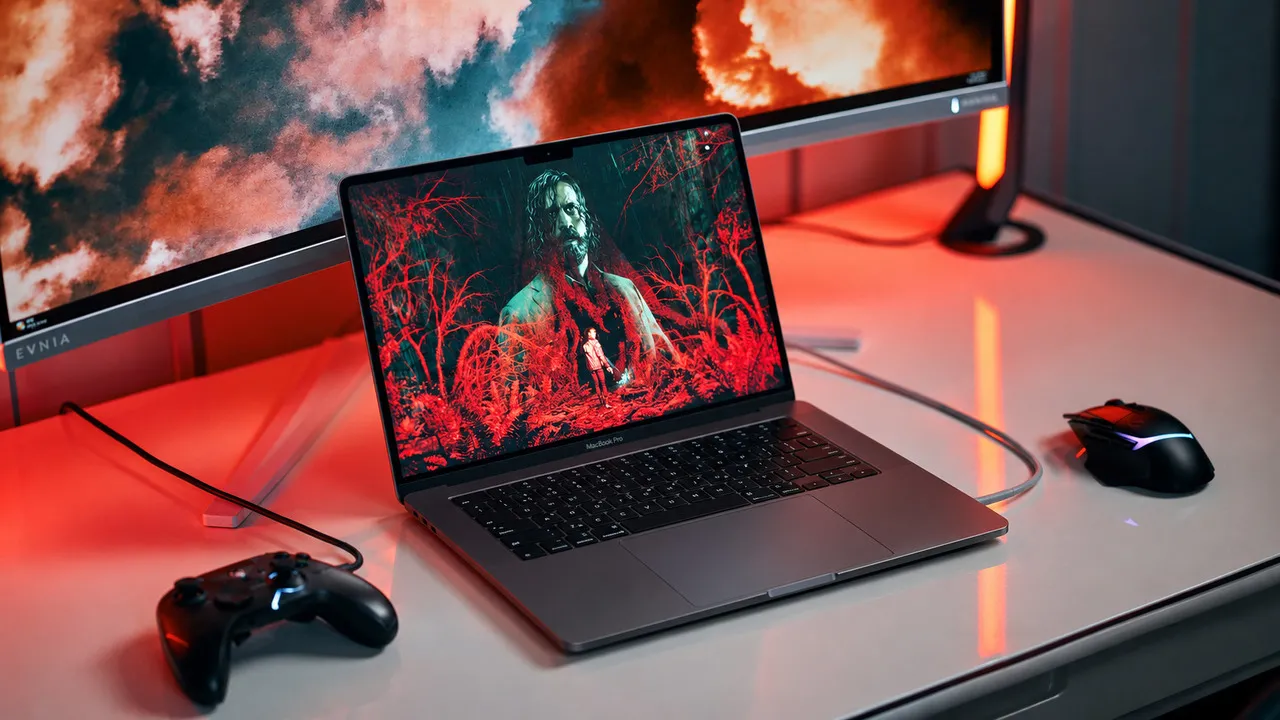
Google tool Gemini 4 Argon recently powered an experiment to adapt Alan Wake 2 from its Windows x86 format to Arm64 for macOS. The resulting software build reportedly achieves frame rates exceeding 140 FPS on an M3 Ultra chip.
The test appeared in a social media post on X by @mweinbach, who called it his top Gemini 4 Argon project. He stated that Argon managed the low-level tasks necessary to shift the title from Windows and x86 architectures to Apple Silicon and macOS.
Argon Rewrote x86 Operations for Arm
As noted by @mweinbach, Gemini 4 Argon generated Rust bindings for x86 instructions so they function properly on Arm hardware.
The software additionally managed the shift from Windows to macOS while translating the title graphics shaders into Metal shaders.
Developers designed the system so the adapted code undergoes ahead-of-time compilation, known as AoT compilation, entirely bypassing Apple translation software like Rosetta.
My favorite Gemini 4 Argon experiment was converting Alan Wake 2 from x86 and Windows to native Arm64 on macOS
Argon write rust bindings for every x86 byte and op to Arm as well as Windows to macOS + convert to Metal Shaders and did it in a way that can be AoT compiled without… pic.twitter.com/voQaKOH6Wg
— Max Weinbach (@mweinbach) October 13, 2026
The post indicated that the modified version of Alan Wake 2 functions properly and hits more than 140 FPS on an M3 Ultra machine.
This test demonstrates that Argon successfully executed the translation steps required to operate the Windows title natively on Apple Silicon hardware.
The Goal Is to Support More Games
@mweinbach reported that he is currently using Argon to construct generalized bindings for additional titles.
This work aims to discover if this technique scales broadly, allowing Windows games to operate as native Arm64 macOS applications without requiring developers to build native Mac versions.
He added that he intends to release the system as open-source once reliability improves, and he continues testing this method with other major titles.
Should this technique scale successfully, it offers a novel method for bringing Windows games to Apple Silicon Macs without depending on Rosetta or traditional macOS ports built by developers.