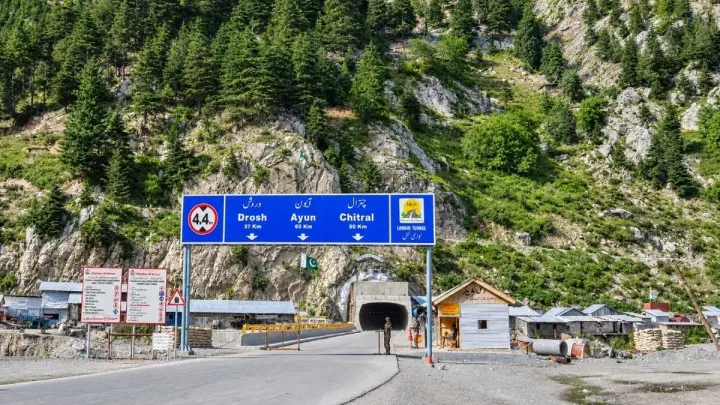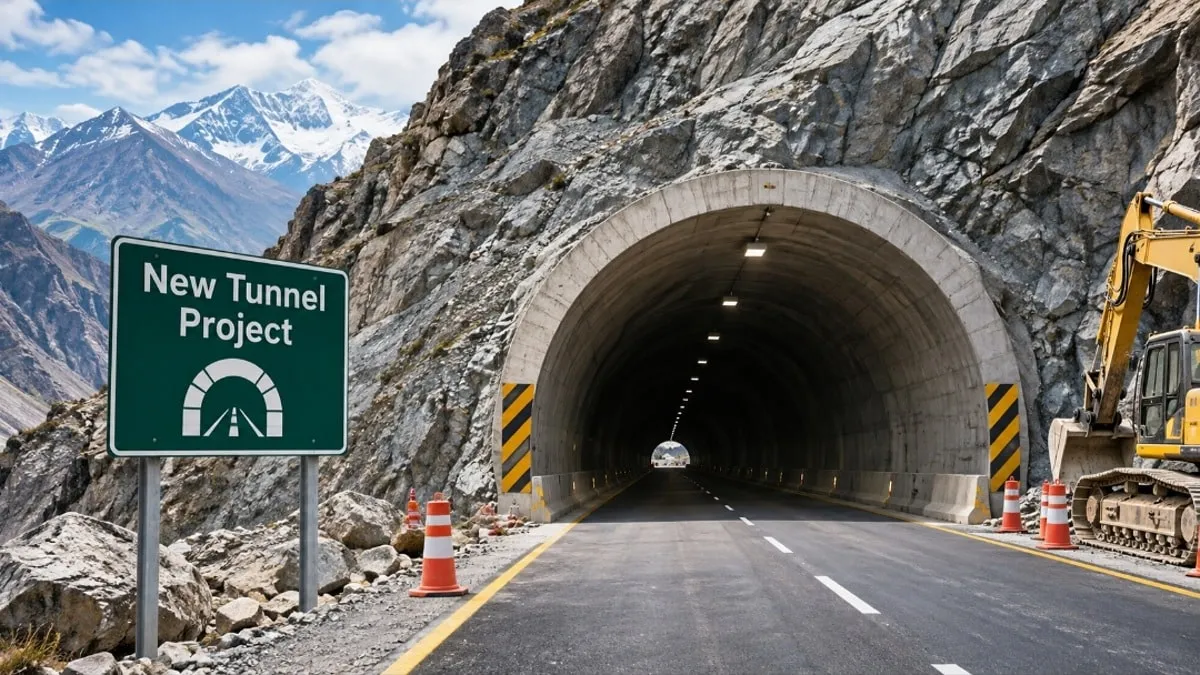
The National Highway Authority (NHA) will construct a 1.56-kilometer tunnel on the Jaglot-Skardu Road to improve road safety and provide safer passage through landslide-prone areas of Gilgit-Baltistan.
Federal Minister for Communications Abdul Aleem Khan announced the project during his visit to Gilgit-Baltistan, where he inspected ongoing development work along the strategic road.
Why the Malupa Tunnel Is Needed
The Jaglot-Skardu corridor is a lifeline for the northern districts of Pakistan, linking the capital of Gilgit-Baltistan with the rest of the country. Every winter, heavy snowfall, sudden snow-melt and steep terrain trigger landslides that close the road for days, stranding residents, halting trade and delaying emergency relief.
According to the NHA, more than 30 % of road-closure incidents on the route over the past five years were caused by landslides in the Malupa-Barundonala sector. The tunnel is intended to bypass the most vulnerable stretch, offering a permanent, weather-resistant conduit for two-way traffic.
Details of the Malupa Tunnel Project
The proposed tunnel, named the Malupa Tunnel, will be 1.56 km long and 10.8 m wide. Its cross-section will allow two lanes of traffic with shoulders on both sides, meeting NHA standards for mountain highways. The design includes ventilation shafts, emergency exits every 300 m and a lighting system that will be powered by a dedicated solar array installed at the tunnel portals.
Construction will be overseen by the NHA's Project Management Unit, which will award the civil works contract through a transparent bidding process. The tender documents specify that the contractor must use rock-bolt reinforcement, shotcrete lining and a waterproof membrane to withstand the region's high precipitation and seismic activity.
Complementary Safety Measures Along the Road
In addition to the tunnel, Minister Abdul Aleem Khan announced that work on overhead protective sheds has begun at two high-risk sites - Malupa and Barundonala. These sheds will shield the roadway from falling rocks and debris, reducing the likelihood of sudden blockages.
The minister also directed the NHA to install a continuous lighting system along the entire Jaglot-Skardu stretch, establish dedicated rescue services and upgrade the patrolling system. The rescue units will be equipped with all-terrain vehicles, portable communication kits and first-aid supplies, enabling rapid response to landslide incidents.
Funding, Timeline and Quality Assurance
The tunnel project is part of a broader federal initiative to modernise infrastructure in Gilgit-Baltistan. While the exact budget has not been disclosed, similar NHA mountain-road projects have ranged from Rs. 1.5 billion to Rs. 2.3 billion, depending on terrain difficulty and material costs.
The minister emphasized that all works must meet "quality standards and be completed within their stipulated timelines." The NHA has therefore mandated third-party monitoring by the Pakistan Engineering Council and an independent audit firm to verify compliance with design specifications and safety protocols.
Construction is due to begin in the first quarter of 2027, with an expected completion date of late 2029, subject to weather conditions and the availability of skilled labor.
Impact on Local Communities and the Economy
For residents of Skardu, Gilgit and surrounding valleys, the tunnel promises year-round accessibility. Farmers will be able to transport perishable produce to markets in Islamabad and Karachi without the risk of road closures, potentially increasing their income by up to 20 % according to a recent study by the Gilgit-Baltistan Agricultural Department.
Tourism, a major revenue source for the region, is also set to benefit. The Jaglot-Skardu Road is the main gateway for trekkers heading to the Karakoram Range; a reliable tunnel will shorten travel time by an estimated 45 minutes and improve safety perceptions among international visitors.
What Comes Next: Implementation Steps and Monitoring
Following the minister's announcement, the NHA will finalize the detailed project report (DPR) within the next two months. The DPR will include geotechnical surveys, environmental impact assessments and a schedule of milestones.
Once the DPR is approved, the tendering process will be opened to qualified contractors. Interested firms must submit technical and financial bids by the deadline set in the public notice, after which a bid evaluation committee will shortlist the winner.
Throughout construction, the NHA will publish quarterly progress reports on its website, allowing citizens and stakeholders to track the tunnel's advancement. A dedicated grievance redressal cell will also be established in Gilgit to handle community concerns.
Practical Takeaways for Travelers
Motorists planning trips on the Jaglot-Skardu Road should expect temporary diversions near the tunnel portals while construction is underway. The NHA advises drivers to adhere to posted speed limits, use the newly installed reflective markers and keep emergency contact numbers handy.
Local businesses are encouraged to coordinate with the NHA's logistics team to minimise disruption to supply chains. The ministry has promised to provide alternative routes for heavy-load vehicles during the most intensive phases of excavation.
Overall, the Malupa Tunnel represents a strategic investment aimed at reducing the human and economic costs of landslides, improving connectivity and fostering sustainable development in one of Pakistan's most challenging terrains.