How Hackers Turned European Supermarket Freezers Into 50°C Ovens
Hackers have hijacked supermarket refrigeration systems across Europe twice in three weeks in an unprecedented series of cyber intrusions. The malicious campaigns forced fridge temperatures up to as high as 50°C, destroying massive quantities of fresh and frozen goods that subsequently had to be discarded. Authorities and industry watchdogs confirmed that no specific collective or individual group has claimed responsibility for either of the synchronized strikes.
The first wave of disruptions struck France on October 12, when unknown digital intruders seized control of cooling units at hundreds of retail locations overnight. The Paris prosecutor's office formally characterized the incident as a large-scale offensive targeting critical infrastructure. The breach impacted connected refrigerators belonging to major retail brands such as Intermarché, Cooperative U, and Leclerc, leaving local store operators scrambling to salvage what little inventory remained uncompromised.
Understanding the Cyberattack Mechanics on Connected Refrigeration
Modern commercial refrigeration systems rely on internet connectivity to allow corporate operators to monitor internal temperatures remotely, operating on principles similar to a smart air conditioner or a Wi-Fi enabled home inverter. Digital attackers managed to breach this remote connectivity layer, disabling the cooling mechanisms from thousands of kilometers away. This remote takeover mirrors how poorly secured home security cameras are compromised, except the real-world consequence in this scenario involved spoiled tons of food and severe equipment strain.
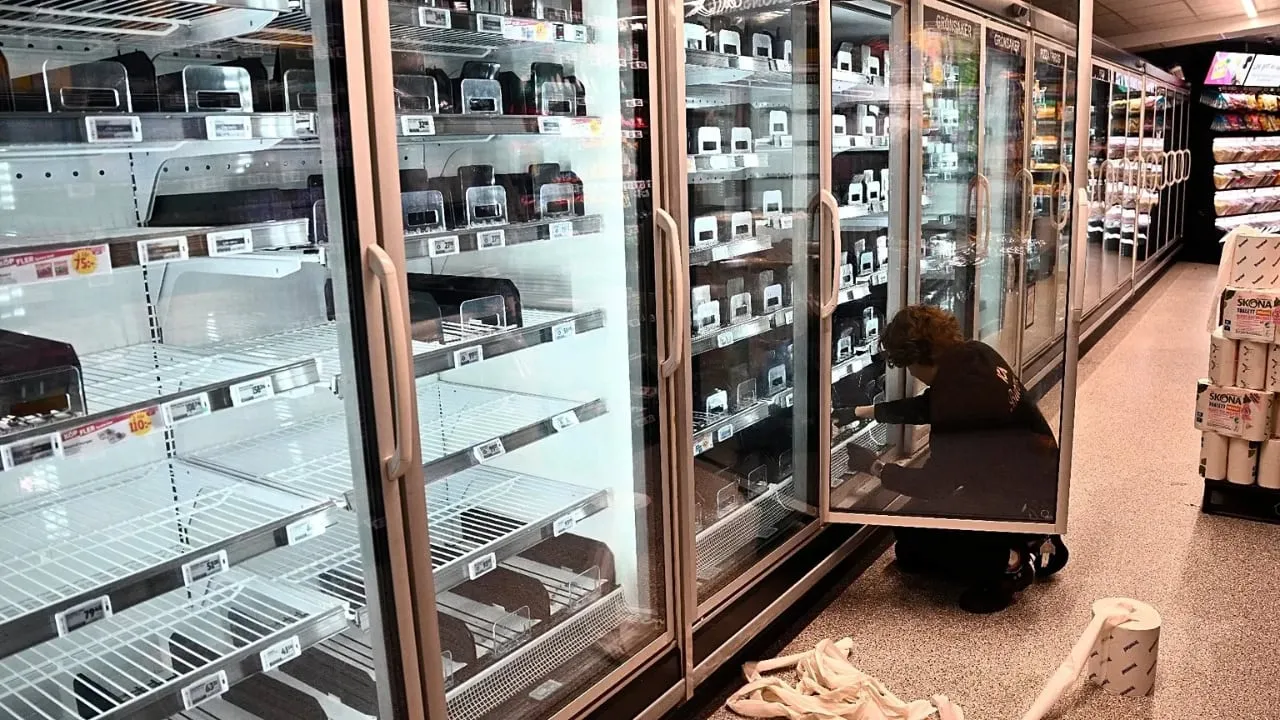
Employees at multiple Paris supermarket locations spent the early morning hours disposing of boxes of perished meat into giant industrial waste containers. In certain instances, stores reported actual fires triggered by the extreme overheating of the pressurized cooling equipment. These thermal spikes placed immense structural stress on commercial cooling compressors, raising urgent safety concerns for personnel working inside the facilities.
The Second Wave Spreads Across Seven European Countries
Just three weeks after the initial French breach, a second and more widespread wave of digital sabotage struck on November 2. This subsequent campaign expanded across at least seven distinct European nations, demonstrating a high degree of coordination and technical planning. Belgium, Sweden, the Netherlands, Luxembourg, Estonia, Denmark, and Finland all officially reported disruptive incidents within their borders. Dozens of retail outlets witnessed internal freezer temperatures soar overnight once again, catching store managers entirely unawares.
The multi-country assault crippled several major European supermarket conglomerates simultaneously. In Belgium and Luxembourg, retail giants Ahold Delhaize and Colruyt experienced severe cooling system failures. Simultaneously, Swedish grocery chains ICA and Coop reported identical equipment malfunctions. The cross-border nature of the assault prompted high-level concern from continental authorities regarding the resilience of commercial food distribution networks.
Official Reactions and Warnings From European Authorities
European Commissioner for Agriculture Christophe Hansen publicly condemned the malicious operations, characterizing the digital intrusions as a direct assault on essential food products. His statements highlighted the growing intersection between digital security and basic physical survival within modern industrialized nations. Officials stress that safeguarding physical infrastructure now requires treating software vulnerabilities with the same urgency as physical locks and gates.
"They are a deliberate attempt to disrupt our food supply chain and undermine consumers' confidence in it - a warning that we must take seriously," said EU commissioner for agriculture Christophe Hansen. "The repeated occurrence of these cyberattacks is deeply concerning."
The European Commission formally categorized the events as a clear demonstration of how digital threats increasingly infiltrate daily routines and critical economic sectors. Officials emphasized that this vulnerability extends beyond Europe, posing potential risks to emerging markets that are rapidly adopting identical digital infrastructure. Regions expanding their commercial cold chains with globally sourced components face similar operational exposures if foundational network defenses are neglected.
The Role of Danfoss Hardware and Sabcobel Response
A technical common thread linked many of the impacted retail facilities during both waves of disruption. At least a portion of the compromised cooling units used advanced temperature control technology manufactured by Danish firm Danfoss. These specific proprietary systems were similarly targeted during the initial French intrusion. Digital investigators discovered that the perpetrators remotely altered the operational parameters of the units, forcing the built-in evaporators directly into continuous defrost mode.
Belgian refrigeration engineering firm Sabcobel corroborated this specific attack vector through technical analysis of the logs. The chief executive officer of Sabcobel confirmed that hackers specifically manipulated system evaporators to switch into defrost cycles, artificially generating intense heat instead of cold air. Emergency technical response teams began mobilizing as early as 1 a.m. to physically disconnect the affected units from the grid. Technicians labored throughout the night to sever network links and isolate local cooling systems from external remote access.
Assessing Internet of Things Vulnerabilities in Retail Infrastructure
Cybersecurity specialists point out that these coordinated incidents expose a fundamental flaw in how Internet of Things architecture is deployed within commercial enterprises. While commercial refrigeration arrays require internet access for continuous telemetry and regulatory temperature logging, many installations operate without adequate cybersecurity hardening. One security specialist remarked that the digital intruders encountered virtually no resistance, likening the intrusion to pushing against an open door in an empty building.
As commercial refrigeration units, dairy processors, and pharmaceutical cold storage facilities become increasingly networked, the attack surface expands exponentially. The techniques deployed against European grocers serve as a stark reminder that physical infrastructure connected to the public internet remains exposed to distant bad actors. Industry stakeholders now face intense pressure to audit network gateways, implement multi-factor authentication, and ensure that critical environmental controls cannot be overridden remotely without rigorous authorization protocols.