Elon Musk and his aerospace enterprise SpaceX are reportedly exploring a major transaction to purchase Boost Mobile as part of a wider strategy to convert Starlink into a full mobile network provider within the United States. Initial details of these high-level discussions emerged from reporting by news publications detailing how SpaceX has engaged with EchoStar, the parent company that owns Boost Mobile. The potential corporate deal could involve an outright purchase of Boost Mobile or secure necessary access to the terrestrial mobile networks that the brand currently uses for its subscriber base.
Establishing a comprehensive mobile carrier service would allow Starlink to challenge established domestic telecom giants directly. While the talks indicate clear ambitions from Musk and his team, corporate representatives have not yet confirmed any formal agreements. Industry observers note that breaking into the traditional telecommunications market requires overcoming massive infrastructure hurdles, regulatory reviews, and potential resistance from entrenched competitors.
When Could Starlink Become a Full Mobile Carrier?
SpaceX has not publicly announced a precise timeline for launching a complete nationwide mobile service through Starlink. Executives at rival firm Verizon previously estimated that constructing the requisite terrestrial and satellite infrastructure from scratch could take four to six years. By contrast, Musk has expressed belief that SpaceX might complete the buildout in approximately half that duration. However, industry analysts treat these competing projections with caution given the immense logistical challenges involved.
Acquiring Boost Mobile could accelerate the timeline for SpaceX, but the firm would still face significant technical, financial, and contractual obstacles. For the moment, the reported negotiations demonstrate that SpaceX is actively evaluating multiple avenues to rival America largest cellular operators. Whether this transformation occurs through a direct company acquisition, a spectrum partnership, or proprietary infrastructure development remains entirely uncertain.
SpaceX Investing Billions in Mobile Networks
Before pursuing talks with EchoStar, SpaceX began aggressively accumulating wireless spectrum licenses to lay the groundwork for its mobile ambitions. The enterprise recently agreed to acquire approximately $8 billion worth of additional wireless spectrum permissions. Wireless spectrum refers to specific radio frequencies that enable mobile phones and transmission towers to exchange voice and data traffic. Owning these frequencies allows SpaceX to enhance Starlink Mobile coverage and bridge the gap between orbiting satellites and everyday mobile devices.
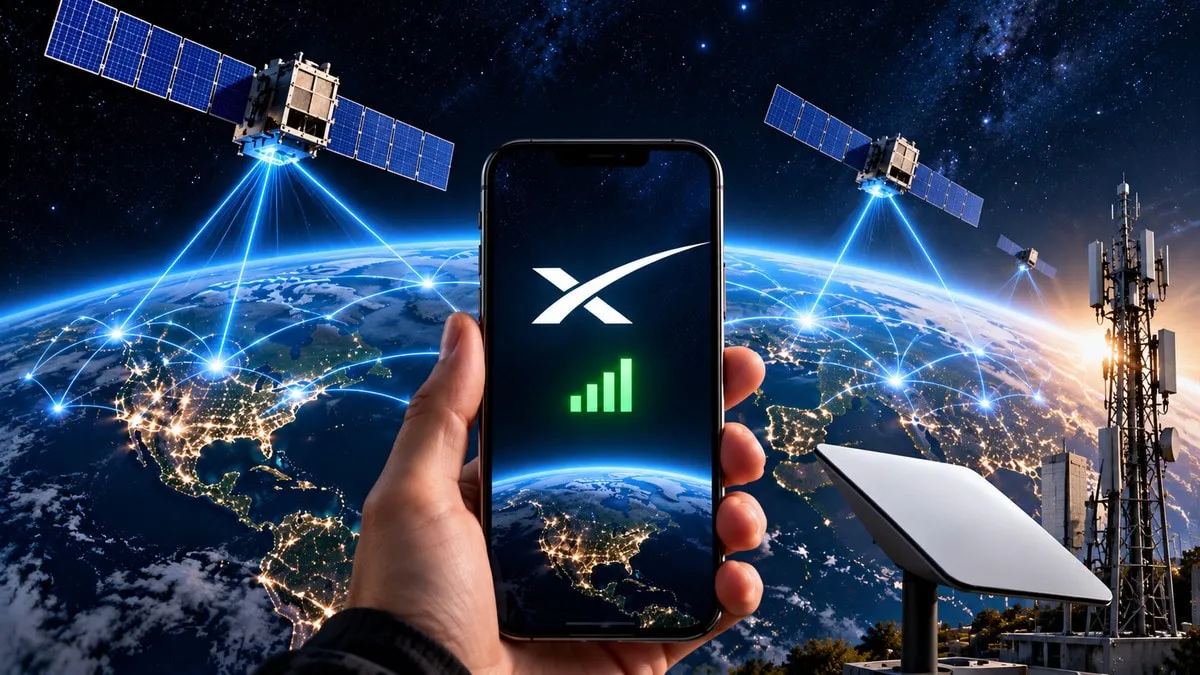
Beyond spectrum acquisitions, the company has reportedly negotiated access to thousands of cellular tower locations across the United States. SpaceX aims to combine its growing satellite constellation with ground-based infrastructure to deliver uninterrupted connectivity nationwide. This hybrid model intends to overcome the inherent physical limitations of satellite transmissions by routing signals through traditional cell towers when necessary.
Why SpaceX Wants Boost Mobile
Starlink currently delivers high-speed internet through Low Earth Orbit satellites and is actively rolling out direct-to-phone messaging features. Yet, satellite signals face persistent physical barriers, struggling particularly inside large concrete buildings, dense urban canyons, and heavily forested terrain. To offer a reliable replacement for standard mobile service, SpaceX requires integration with terrestrial cell sites. Boost Mobile presents a shortcut to acquiring that vital ground-based coverage.
Unlike major legacy carriers that own and operate massive proprietary nationwide networks, Boost Mobile primarily functions as a Mobile Virtual Network Operator. This means it relies on network capacity rented wholesale from providers like AT&T and T-Mobile. Securing access to Boost Mobile could grant Starlink customers the ability to route calls and data through conventional cellular towers whenever satellite line-of-sight is blocked.
Elon Musk Reportedly Met With EchoStar
Discussions between SpaceX and EchoStar have reportedly spanned multiple months as both sides evaluate potential partnership structures. Musk personally met with EchoStar chairman Charlie Ergen in October to discuss the parameters of a potential deal. One scenario involves SpaceX taking over Boost Mobile entirely through a cash or stock purchase. Another possibility is a commercial partnership granting SpaceX access to existing network agreements without a full corporate buyout.
Absorbing Boost Mobile would also supply SpaceX with an established consumer market rather than forcing the company to build a subscriber base from scratch. EchoStar reported approximately 7.38 million wireless subscribers at the end of the second quarter of 2026, primarily accumulated through Boost Mobile and Gen Mobile. Despite these figures and reported meetings, neither corporate entity has issued a confirmation that a transaction will definitely occur.
AT&T, Verizon, and T-Mobile Rejected SpaceX
Before opening dialogue with EchoStar, SpaceX reportedly approached the three largest mobile network operators in the United States to explore partnership options. According to reports, Musk asked AT&T, Verizon, and T-Mobile to grant SpaceX permission to use their extensive cellular networks for satellite handoffs. All three major carriers reportedly rejected these preliminary requests.
This previous pushback could complicate matters even if SpaceX successfully purchases Boost Mobile. Boost Mobile relies heavily on underlying network agreements with AT&T and T-Mobile, and those contracts may demand explicit vendor approval before rights can be transferred to a new corporate owner. Without consent from the major carriers, SpaceX might face legal and technical roadblocks in using those ground networks automatically. Consequently, buying Boost Mobile represents a strategic step forward, but it does not instantly resolve all of Starlink coverage hurdles.