Hub Power Company (HUBCO) announced on Tuesday that it will begin assembling BYD vehicles in Pakistan in December 2026, with the Sealion 6 plug-in hybrid selected as the first model, after the Chinese brand's cumulative sales in the country exceeded 10,000 units.
The announcement was made during an analyst briefing attended by Arif Habib Limited, which highlighted the financial upside of the electric-mobility venture and outlined a broader plan to expand local production beyond the initial model.
Why the Sealion 6 Was Chosen as the First Model
Arif Habib Limited reported that HUBCO's management believes local assembly will add momentum to its electric-mobility business. The December 2026 target refers to production using completely knocked-down (CKD) kits, a common method for importing parts and completing final assembly domestically.
The Sealion 6 is positioned as a mid-size plug-in hybrid that blends electric range with a gasoline engine for longer trips, fitting the preferences of Pakistani consumers who seek lower running costs without sacrificing range anxiety concerns. The model's selection reflects BYD's strategy to introduce a vehicle that can appeal to both early adopters and mainstream buyers.
In addition to the Sealion 6, the briefing indicated that HUBCO is evaluating other BYD models for later rollout, especially those targeting the higher-volume B and C segments. Arif Habib Limited's report identified the B8 and B5 as potential additions around the end of calendar year 2026, suggesting a phased product ladder that could broaden market coverage.
Financial Performance Boosts Confidence
The briefing also provided an update on the electric-mobility segment's financial results. According to Arif Habib Limited, the business continues to gain traction, with the following figures reported for the first quarter of financial year 2027:
- Cumulative BYD sales exceeded 10,000 vehicles.
- Profit for the quarter was approximately Rs1.5 billion.
- HUBCO's share of that profit stood at Rs780 million.
These numbers illustrate that BYD's entry into the Pakistani market has moved beyond a niche operation to a revenue-generating line that contributes materially to HUBCO's earnings. The profit share also underscores the financial incentive for HUBCO to deepen its involvement through local assembly.
Capacity and Expansion Potential of the Karachi-Area Plant
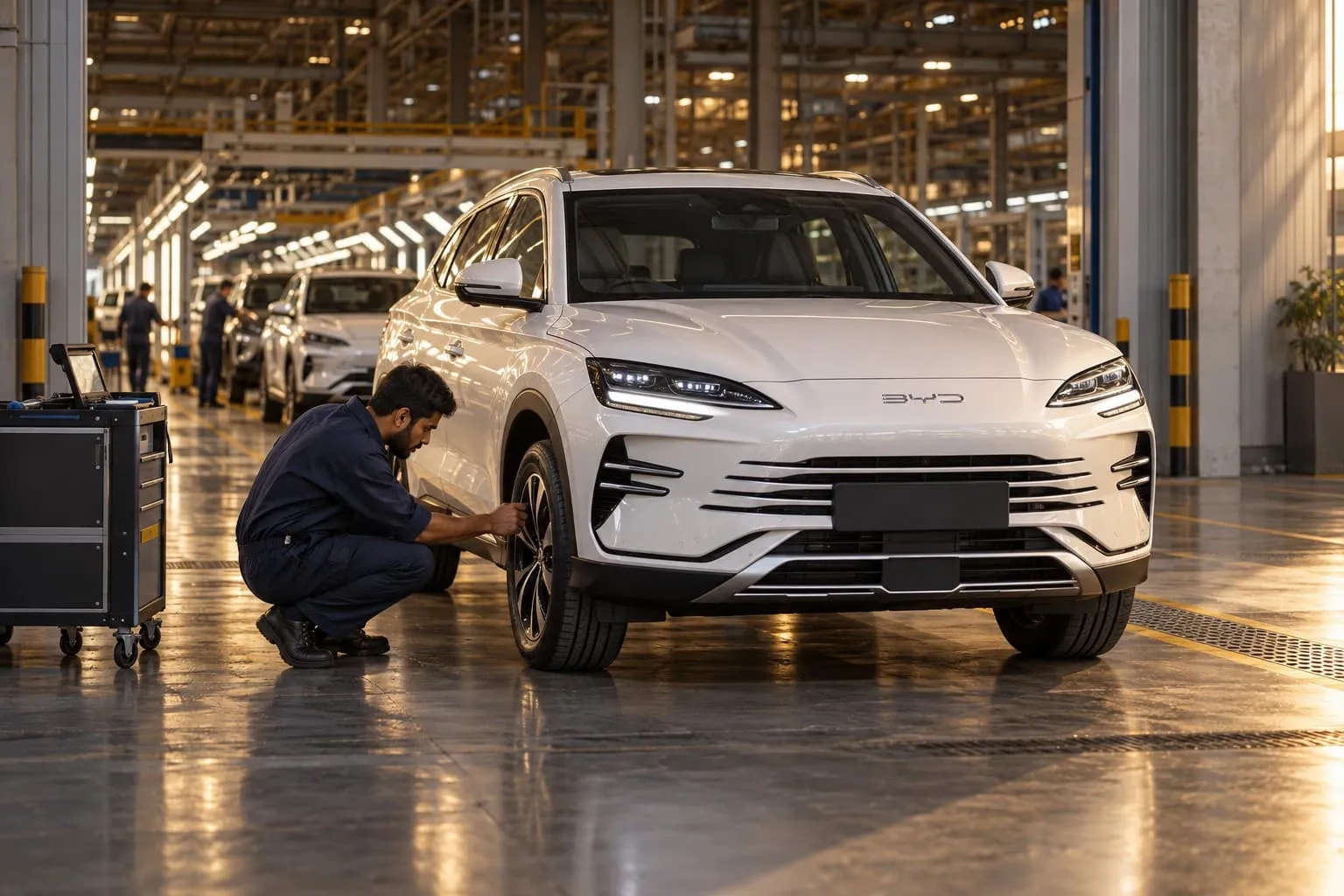
The assembly plant is located near Karachi and is a joint venture between BYD and Mega Motor Company, a subsidiary that handles manufacturing, marketing and distribution of BYD-branded passenger electric vehicles in Pakistan. The plant's initial annual capacity will be 25,000 vehicles when operating two shifts, with infrastructure designed to scale up to 50,000 vehicles per year.
This capacity range positions the plant to meet projected demand from both private buyers and fleet operators, while also allowing room for future model introductions. The ability to double output without building a new facility is a strategic advantage for HUBCO as it seeks to capture market share quickly.
From Market Entry to Local Production: A Timeline
BYD entered Pakistan's passenger-vehicle market in March 2024, partnering with Mega Conglomerate. Mega later clarified the partnership through its wholly owned subsidiary, Hub Power Holdings, and its associated company Mega Motor Company. This layered corporate structure helped navigate regulatory requirements and ensured that the venture aligned with Pakistan's automotive-investment policies.
Since the 2024 launch, BYD has focused on building a dealer network, establishing service centers, and promoting its electric and plug-in hybrid technology. The brand's sales have steadily risen, crossing the 10,000-vehicle threshold that triggered the decision to move to CKD assembly.
HUBCO's interest in developing charging infrastructure complements the assembly plan. By leveraging its existing power-generation assets, HUBCO can potentially roll out fast-charging stations alongside vehicle production, creating an ecosystem that supports both vehicle owners and the broader grid.
What the Assembly Plan Means for the Pakistani Automotive Landscape
Local assembly of BYD models is expected to have several ripple effects:
- Job creation: The plant will generate direct manufacturing jobs and indirect employment in logistics, parts supply and after-sales services.
- Import substitution: CKD assembly reduces the need for fully built-up imports, saving foreign exchange and aligning with the government's "Make in Pakistan" agenda.
- Technology transfer: Partnerships with BYD bring expertise in battery management, hybrid powertrains and vehicle electronics to local engineers.
- Consumer pricing: Local assembly can lower vehicle costs by cutting tariffs on fully assembled units, making electric mobility more affordable.
These outcomes align with Pakistan's broader goals to decarbonise transport, improve energy security and stimulate industrial growth.
Next Steps and Timeline
HUBCO's roadmap includes the following milestones:
- Finalize CKD kit supply contracts with BYD by Q3 2025.
- Complete plant upgrades to support two-shift operations by Q1 2026.
- Begin pilot assembly of the Sealion 6 in mid-2026, followed by full-scale production in December 2026.
- Launch charging-infrastructure projects in major cities by early 2027, leveraging HUBCO's power-generation capabilities.
- Introduce additional BYD models (B8, B5) by the end of calendar year 2026, subject to market demand.
Regulatory approvals, customs clearance for CKD kits and workforce training are the key dependencies that will determine whether the timeline stays on track.
Practical Takeaways for Consumers and Industry Stakeholders
For prospective buyers, the announcement signals that locally assembled BYD vehicles will become available within the next two years, potentially at lower price points than imported units. Fleet operators should monitor the rollout for bulk-purchase opportunities and integrated charging solutions.
Suppliers of automotive components, especially those involved in battery packs, electric motors and interior trim, can anticipate new sourcing contracts as the plant ramps up production. Meanwhile, policy makers may use this case study to refine incentives for electric-vehicle assembly and charging-network expansion.
Overall, HUBCO's December 2026 assembly target marks a decisive shift from market entry to domestic manufacturing, positioning Pakistan to become a regional hub for BYD's plug-in hybrid and electric vehicles.