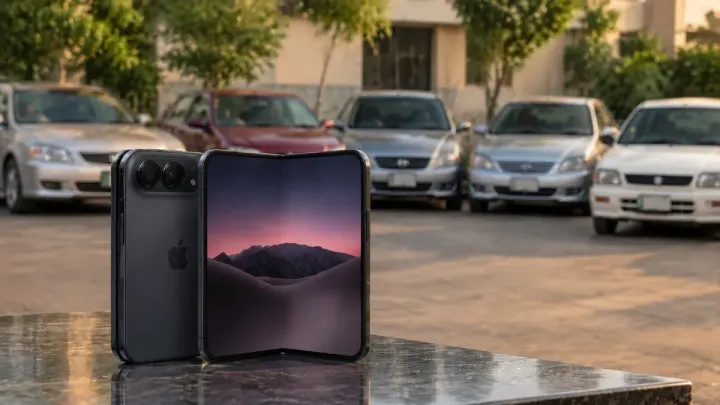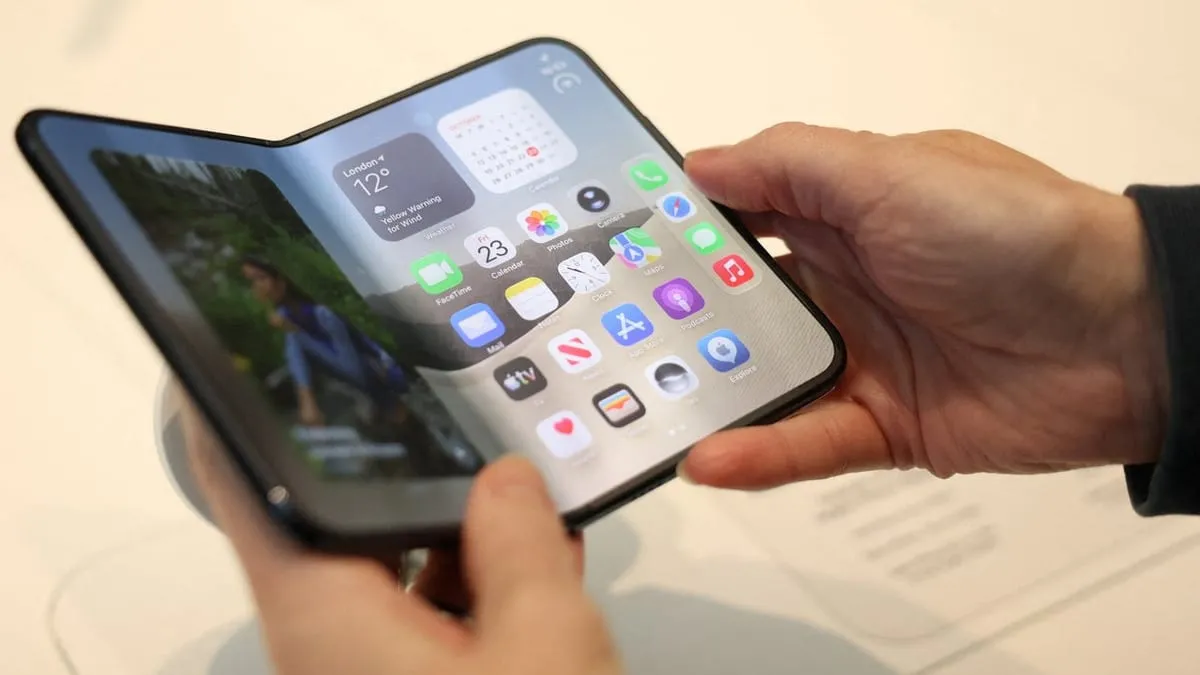
Apple's first foldable phone, the iPhone Duo, was taken apart by iFixit, uncovering a sophisticated hinge that may be linked to recent screen damage reports.
The device earned a repairability rating of 5 out of 10, which is higher than Samsung's Galaxy Z Fold8 at 4 out of 10 and the older Galaxy Z Fold7 at 3 out of 10.
Easier Repairs Than Other Foldables
iFixit notes that many internal parts of the iPhone Duo can be extracted without fully disassembling the handset.
For instance, the outer display can be lifted off with a suction clamp and a prying tool, a step shown around 4:20 in the teardown video.
The phone also contains two batteries that detach using Apple's electrically assisted adhesive-release technique, called anodic delamination.
This process connects a low-voltage source, such as a 9V battery, to silver tabs on the cells, causing the adhesive to release, and is demonstrated near 5:50 in the video.
How Apple Hides the Display Crease
The teardown offers a closer view of how Apple reduces the visibility of the fold line.
At roughly 3:00 in the video, iFixit inspects the inner screen's matte nano-texture layer under a microscope, revealing thousands of tiny bumps that scatter light.
Apple also adjusts the arrangement of RGB subpixels within the OLED panel, angling them differently to further mask the crease.
These measures conceal the fold without eliminating the physical bend.
Complicated Hinge Raises Concerns
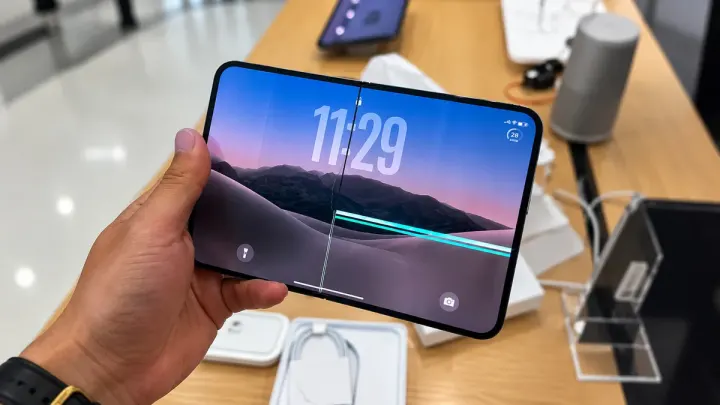
Even with a decent repair score, the iPhone Duo's hinge has drawn worry after early users reported problems.
Several owners say the hinge feels unusually stiff when opening the phone.
Applying extra force, they claim, produces a popping or cracking noise followed by lasting damage to the inner screen.
The damaged displays often show a vertical line down the centre and a horizontal line extending toward the right.
iFixit's analysis reveals a complex hinge that might explain these failures.
One theory suggests that some hinge components do not move downward properly, causing the mechanism to jam.
Another possibility points to the accordion-style flexible cable running through the hinge, which could interfere with folding.
Neither theory has been verified, and the precise cause of the screen issues remains unknown.