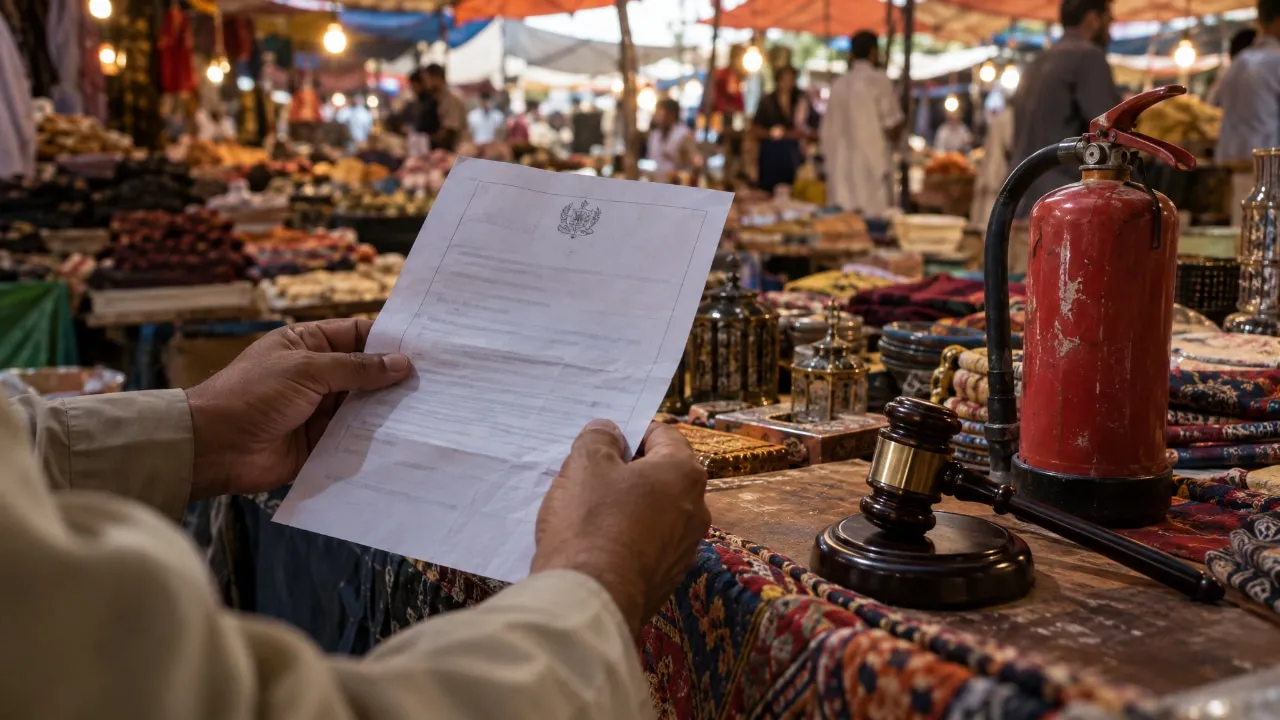
Islamabad High Court Restrains Authorities in Sunday Bazaar Eviction Case
The Islamabad High Court on Friday restrained authorities from removing the goods of a Sunday bazaar stallholder or evicting him from his stall until the next hearing. Justice Shahrukh Arjumand presided over the session and suspended the district administration notification to the extent it banned keeping goods inside the stall overnight. The court permitted authorities to enforce the remaining provisions of the safety directive while the legal challenge proceeds.
This judicial intervention addresses an immediate clash between municipal safety enforcement and the economic survival of local vendors operating within the capital city markets. The petitioner, a stallholder named Abdul Rehman, sought urgent legal protection after facing administrative deadlines that threatened his daily business operations. The court order halts the disruptive enforcement actions temporarily, giving both the legal representation of the vendor and the local administration time to present their arguments before the bench next week.
Details of the Court Order and Pending Notices
During the proceedings, the court directed authorities not to remove the applicant's goods or evict him from the stall until the next hearing. Furthermore, formal notices were issued to the district administration and other respondents, seeking formal replies by next week. The bench aims to review the administrative authority and the legality of the contested notification once all parties submit their responses.
The legal challenge originated from a petition filed by stallholder Abdul Rehman, who challenged the administrative directives issued by municipal bodies. Petitioner's counsel Adil Aziz Qazi argued the goods-removal order was hitting his client's livelihood, contending that the November 22 deadline set in the notification was unlawful and contrary to a court decision dated January 15, 2025. The counsel emphasized that administrative orders must align with previous judicial rulings and fair administrative practices.
Arguments Presented by the Petitioner
The legal arguments focused heavily on the practical impact of the municipal directives on working merchants. Counsel Adil Aziz Qazi further argued that removing goods and keeping the stall closed without consultation or a safety assessment was unjustified. Vendors maintain that sudden changes to operational protocols without prior dialogue create severe financial instability for families dependent on weekly market sales.
The petition highlights the friction between sweeping municipal policy changes and the established rights of licensed vendors. By contesting the November 22 deadline, the legal team seeks to establish whether the district administration bypassed necessary consultative procedures mandated by earlier judicial precedents. The court must now balance public safety mandates with the administrative accountability owed to local business operators.
The Metropolitan Corporation Islamabad Fire-Safety Notice
The court was told the Metropolitan Corporation Islamabad (MCI) had issued a notice requiring weekly bazaars to comply with fire-safety regulations by November 22. Municipal authorities instituted these rules following rising concerns regarding fire hazards, blocked emergency routes, and unauthorized structural modifications within densely packed public markets across the city.
The notice directed stallholders to:
- Not keep goods inside stalls overnight
- Remove inflammable tarpaulins and thermocol
- Keep passageways clear
- Not convert stalls into permanent shops or transfer them to others
These specific restrictions aim to mitigate disaster risks in weekly market spaces where crowds gather regularly. Fire safety in open-air bazaars remains a persistent challenge for municipal planners due to the proliferation of temporary wiring, volatile materials, and crowded walkways that hinder emergency response vehicles.
Background of Weekly Bazaars in Islamabad
Weekly bazaars serve as vital commercial hubs for thousands of residents in Islamabad, offering affordable vegetables, fruits, clothing, and household goods. Managed by municipal entities like the Metropolitan Corporation Islamabad, these markets operate on designated days of the week across specific sectors of the capital. Vendors secure temporary licenses or allotments to set up stalls, creating a dynamic micro-economy that supports numerous working-class households.
Over the years, municipal management of these markets has experienced various regulatory shifts. Authorities frequently attempt to balance urban organization and public safety with the welfare of traders. Past disputes typically revolve around stall allotments, fee structures, and infrastructure upgrades. Safety audits often prompt sudden administrative actions, leading to tensions between enforcement officers and market associations.
Impact of Safety Regulations on Small Vendors
The enforcement of fire-safety rules carries significant economic consequences for individual stallholders. Prohibiting overnight storage forces vendors to transport heavy inventory daily, increasing logistics costs and physical strain. Tarpaulins and thermocol materials are frequently used by traders to protect goods against weather elements, meaning their removal requires alternative investments in stall infrastructure.
Small-scale merchants operate on thin profit margins, making unexpected operational expenses difficult to absorb. While safety compliance is essential for preventing tragedies, traders argue that blanket bans without transitional support or financial assistance threaten their economic survival. The Islamabad High Court case underscores the delicate tension between enforcing municipal standards and protecting vulnerable livelihoods.
Next Steps and Judicial Proceedings
The court adjourned proceedings until next week, awaiting formal replies from the district administration and other respondents. The upcoming hearings will determine whether the temporary suspension of the overnight storage ban becomes permanent or if the municipal administration can proceed with full enforcement of the November 22 safety notice.
Observers and market associations will monitor the outcome closely, as the court decision could set a precedent for how municipal authorities implement safety policies in public markets. Compliance with fire regulations remains mandatory for other provisions, ensuring that passageway clearance and hazardous material removals continue while the legal battle over inventory storage unfolds.