Khyber Pakhtunkhwa Mandates Reading Hour in Government Schools
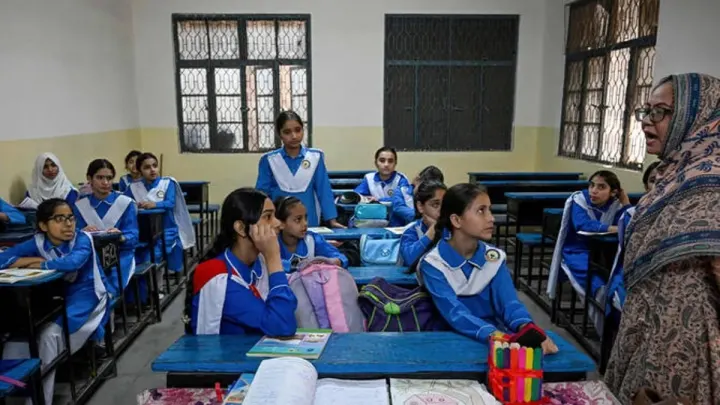
The Khyber Pakhtunkhwa Elementary and Secondary Education Department has directed government schools across the province to allocate one hour in their timetables for reading activities at the primary level. This policy change intends to address foundational learning gaps and build stronger educational outcomes for young students throughout the region. Education officials released the official guidelines to restructure daily schedules and prioritize core literacy skills in classrooms.
According to a notification issued on November 20, 2026, the directive applies to all primary schools and primary sections of government middle, high and higher secondary schools. By including middle and high schools that house primary sections, the education department ensures that young learners in various institutional settings receive dedicated reading instruction. School administrators must update their daily schedules to comply with the directive immediately.
How the Khyber Pakhtunkhwa Foundational Learning Policy 2024 Drives Change
The initiative aims to improve children's reading abilities in line with the Khyber Pakhtunkhwa Foundational Learning Policy 2024. Educational research consistently shows that early literacy forms the bedrock of all future academic success, making primary school interventions vital for long-term student retention and comprehension. The provincial policy framework provides a structured approach to identifying learning deficits and implementing targeted classroom strategies.
Educational authorities designed these new measures to tackle declining reading proficiency among young students by creating dedicated daily time for book engagement. Teachers will guide students through various reading exercises designed to enhance vocabulary, pronunciation, and reading comprehension. The mandatory reading period removes distractions and places full focus on textual interaction during school hours.
Mathematics Remediation Becomes Mandatory in Primary Classes
The department has also made Mathematics Remediation mandatory, requiring government schools to dedicate at least one mathematics period per week to primary-level students. Numerical literacy remains just as important as verbal literacy for early development, prompting authorities to pair the reading initiative with structured math support. Schools must integrate this designated remediation period into their standard weekly timetables without exception.
The initiative will help children develop basic mathematical skills and understand fundamental concepts needed for further learning. Remedial sessions allow teachers to work closely with students who struggle with foundational arithmetic, ensuring no child falls behind in quantitative subjects. By addressing math difficulties early, the education department hopes to build student confidence in handling numbers and solving basic problems.
Role of the Director of Curriculum and Teacher Education
The notification further directs the Director of Curriculum and Teacher Education to incorporate at least one hour of reading into the primary-level scheme of studies. This institutional change guarantees that the reading hour remains a permanent fixture of the academic framework rather than a temporary classroom project. Curriculum planners must update textbooks, resource guides, and study schedules to reflect the newly mandated reading hours.
Teacher training programs will also need alignment with the new curriculum requirements to ensure educators possess the right tools for literacy instruction. Instructors will receive guidance on how to manage the reading hour effectively, keeping young students engaged and assessing their comprehension levels accurately. The collaboration between administrative departments and school heads ensures smooth implementation across the entire province.
Broader Impact on Students, Teachers, and Parents
Parents and local communities stand to benefit directly as children improve their reading and mathematical abilities through structured school routines. Stronger foundational skills reduce the need for private tutoring and give families greater confidence in the public education system. Teachers receive clear administrative backing to prioritize essential subjects over rote memorization or rushing through congested syllabi.
Educational specialists emphasize that consistent daily habits yield the best results in early childhood development. As schools adopt the new timetables, educational monitors will observe classroom activities to ensure compliance with the November 20, 2026 notification. The provincewide rollout marks a structural shift in how foundational education is delivered across government institutions in Khyber Pakhtunkhwa.