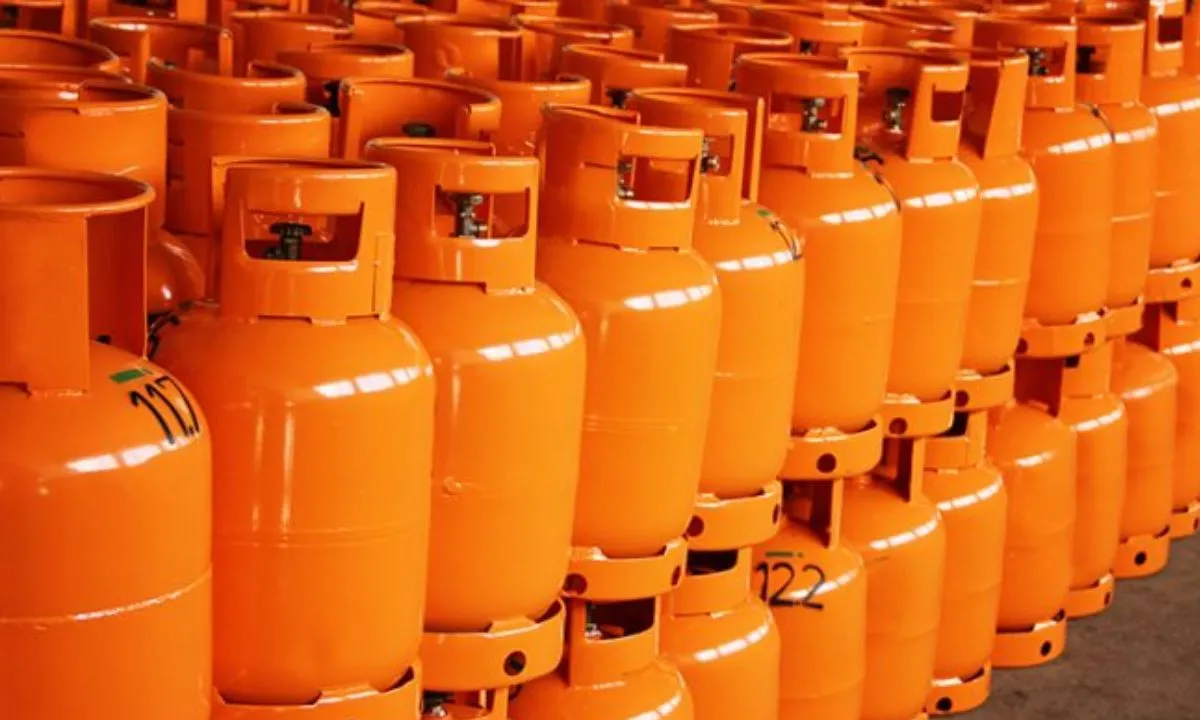
The Oil and Gas Regulatory Authority (OGRA) raised the official November price of liquefied petroleum gas (LPG) to Rs294,075 per tonne, up from Rs279,341 in October. In the open market, LPG is now selling at almost twice the official rate, a situation tied to a shortage stemming from the US-Iran conflict.
According to a notification released on Saturday, the official price of an 11.8 kg domestic cylinder increased by Rs173 to Rs3,470, with the official rate set at Rs294 per kilogram.
OGRA explained that the producer price depends on the Saudi Aramco-CP price and the US dollar exchange rate. Saudi Aramco-CP rose 6.47 percent compared with the prior month, while the average dollar rate slipped 0.12 percent, lifting the consumer price by Rs14.73 per kilogram.
In the open market, LPG is being offered at up to Rs630 per kilogram, while company-operated franchises charge as much as Rs400 per kilogram.
LPG Distributors Association of Pakistan Chairman Irfan Khokhar warned that the closure of the Iran border has made the situation serious. He noted that at least 70 percent of LPG is imported from Iran and 30 percent is produced locally, and urged the government to act against market manipulation.
Separately, LPG marketing firms have threatened to halt operations from Nov 16 if the private sector is excluded from the forthcoming LPG policy. Pakistan LPG Marketers Association Chairman Ali Haider said the group will strike if the policy is implemented, arguing the government should not reverse LPG deregulation and blaming the shortage on the Iran border closure.
Haider added that only about 225,000 tonnes of the nation's roughly 1.3 million tonnes are imported from the Gulf, mainly by the private sector, and that the ProGas terminal at Port Qasim, run by Sui Southern Gas Company, last imported LPG around seven months ago.
The association has written to Petroleum Minister Ali Pervaiz Malik, stating the draft policy sent to the prime minister lacked private-sector input and calling for full deregulation of the LPG sector.
It also pointed out that the 2016 LPG policy imposed a petroleum development levy of Rs4,669 per tonne on locally produced LPG to fund subsidies for state-owned entities such as PSO, Parco and SSGC for winter and emergency imports. Haider claimed that despite billions collected through the levy, these entities have not imported LPG during the current shortage.