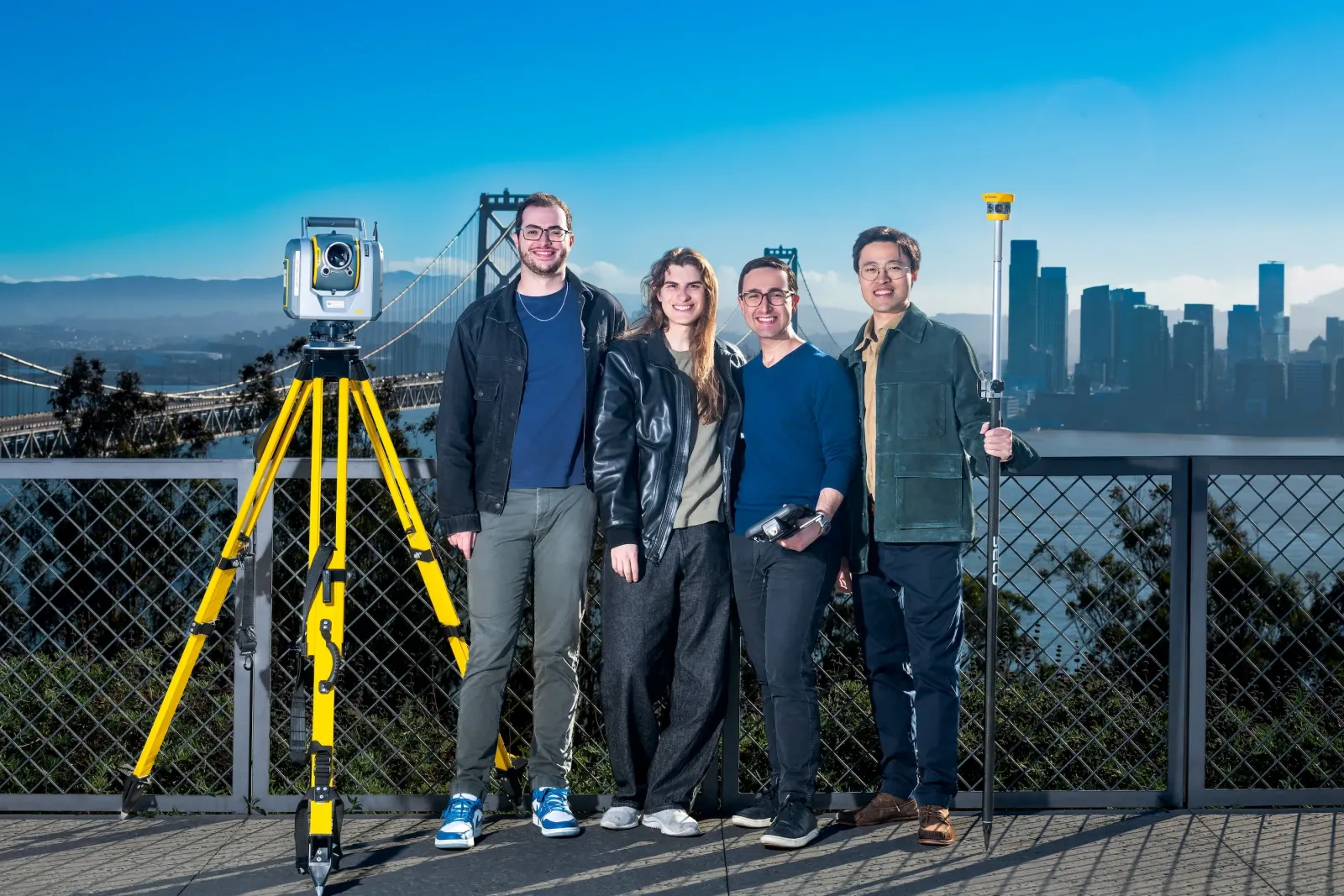
When Alex Baikovitz launched Mach9 Robotics in 2021, his original objective was creating faster, cheaper visual inspection tools for civil engineers. The firm intended to bypass bureaucratic hurdles and update slow construction procedures across the United States.
After building that hardware within a few years, Baikovitz realized physical devices were not the main obstacle.
"We saw how tedious it was for civil engineering organizations to take data from these amazing laser scanners and image data capture systems and turn that into a usable survey," he told TechCrunch in an interview, referring to a detailed map of a site that engineers use for design work. "The real pain was in their workflows," he said, and "how to turn all the endless amounts of data that they're able to collect into ... information that people can use to make the best design and asset management decisions across the board."
Because of this, Baikovitz removed robotics from the business title and shifted toward creating artificial intelligence computer-aided design software. This choice succeeded, giving Mach9 nearly 100 private beta users who applied the tool across more than 2,500 projects.
That growth helped Mach9 secure fresh capital. On Wednesday, the company revealed a $34 million Series A round co-led by First Round Capital and Bessemer Venture Partners. Additional contributors included Prudence, a New York early-stage firm focused on artificial intelligence software for real estate and construction, alongside existing backer Quiet Capital.
Mach9 joins multiple companies attempting to update the planning and building workflow for infrastructure. CivilGrid raised $26 million in August to expand its underground mapping platform, while Blueprints AI reached the top 200 during the Startup Battlefield at TechCrunch Disrupt.
Baikovitz stated that Mach9 targets computer-aided design software because it remains one of the slowest and most labor-intensive parts of the pipeline.
"It takes months to be able to deliver a project, and about a week per mile for someone to do manually in the legacy incumbent software that's built by the Autodesk and Bentley Systems of the world," he said.
Mach9 reports that its system automates much of that labor, increasing speed tenfold and cutting expenses significantly. Baikovitz noted this enables surveying and civil engineering clients to expand capacity, handle larger jobs, and let reality capture data influence major infrastructure choices.
To achieve the centimeter-level accuracy required in construction, Baikovitz mentioned that Mach9 built and trained proprietary artificial intelligence models.
"That's not something that a lot of off-the-shelf models are able to do or deliver at in any capacity," he said. "A big part of what our development process has looked like since 2024 has been, how do we build the industry leading models that can turn imagery or these multimodal image and laser scan datasets into survey grade like geometry, like tracing out the curbs, the pavement striping, all of this exactly how our customers want it to be at the accuracies that the industry demands."
The system processes survey data to generate an initial plan draft for engineers to refine. Baikovitz explained that the startup supplies tools for drawing, removing objects, adjusting vertices, and checking model quality so licensed professionals can take responsibility for the final output given the high liability in the field.
Regarding the investment, Baikovitz stated the money will go toward product upgrades, hiring industry specialists, and expanding the company structure to match market demand.
Looking back, Baikovitz expressed appreciation for starting with hardware because it gave them a product to present to prospective clients who ultimately explained that hardware upgrades were unnecessary.
"I'm not interested in getting this cheaper, lower-cost hardware," he remembers one VP telling him. Better software could instead enhance efficiency for statewide transportation mapping efforts, which he said helps states like Texas become safer and more effective.