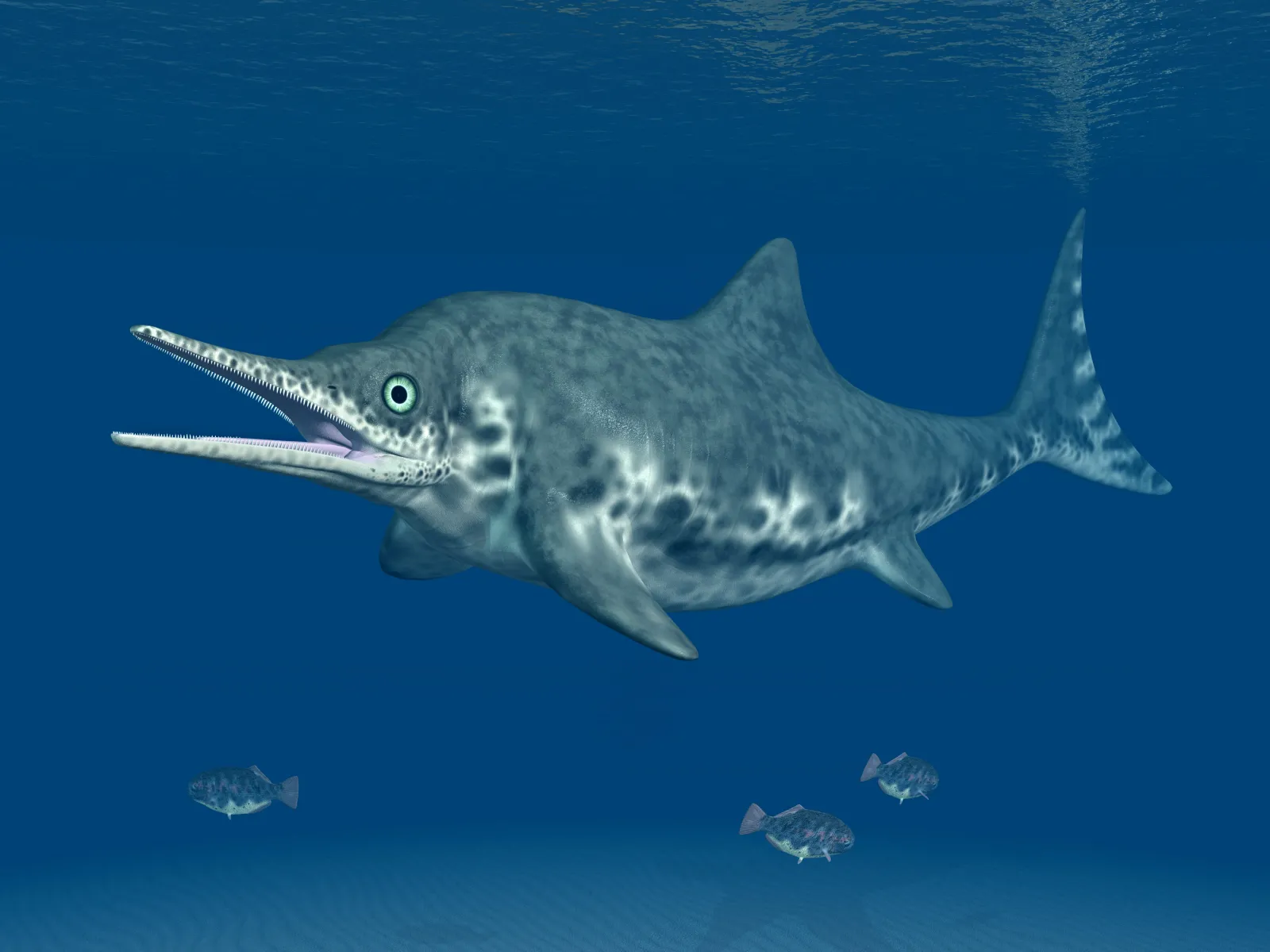
Unsuspecting visitors have led to the public exhibition of a massive ancient sea reptile's remains for the first time.
A 10-metre ichthyosaur, which is an ancient marine predator from 174 million years ago, left behind fossilised bones found entirely by chance.
During a walk near Bridport in Dorset, Belgian tourists Michel Plissart and Carine Christens noticed a rock shelf with bone fragments sticking out.
After inspecting the site closely, the pair extracted one fragment and brought it to specialists for analysis.
This specimen ranks as the youngest ichthyosaur of its type ever found in the UK, indicating these creatures survived nine million years past a worldwide environmental disaster previously thought to have destroyed them.
These marine reptiles resembled dolphins, breathed air, and inhabited the oceans, where giant versions like the Bridport specimen preyed on other large sea reptiles while smaller ones pursued fish and squid.
Area palaeontologists returned to the coastline to find nearly complete skeletal parts of the ancient creature trapped inside a sandstone block.
Specialists faced a urgent race against time to dig out the bones and secure the specimen before harsh winter ocean waves destroyed it.
"It's always a kind of race against time. The natural elements reveal these fossils, but they also destroy them as well," Phil Davidson, a palaeontologist at the Charmouth Heritage Coast Centre, told the Daily Mail.
"It'll get smashed up and spread along the beach, and all those lovely bones will be turned into pebbles and sand."
Workers extracted the fossil from the sandstone using careful cuts and hauled it off the shore using a sledge so experts could clean it.
Researchers at the University of Bristol subsequently examined the bones and established their age at 174 million years.
Information from the fossil sheds light on the predatory reptile's dimensions and form, alongside the environmental conditions of the UK during its existence in warm seas.
"It would have been quite a lot different than today," Mr Davidson explained.
"Sea levels would have been a lot higher, and we were a lot closer to the equator, so a bit more of a tropical island archipelago, similar to how Barbados is today."
Bridport Museum now exhibits the fossil, where visitors can view it until April 10, 2027, with admission included in regular ticket prices for the Sea Dragon exhibition.