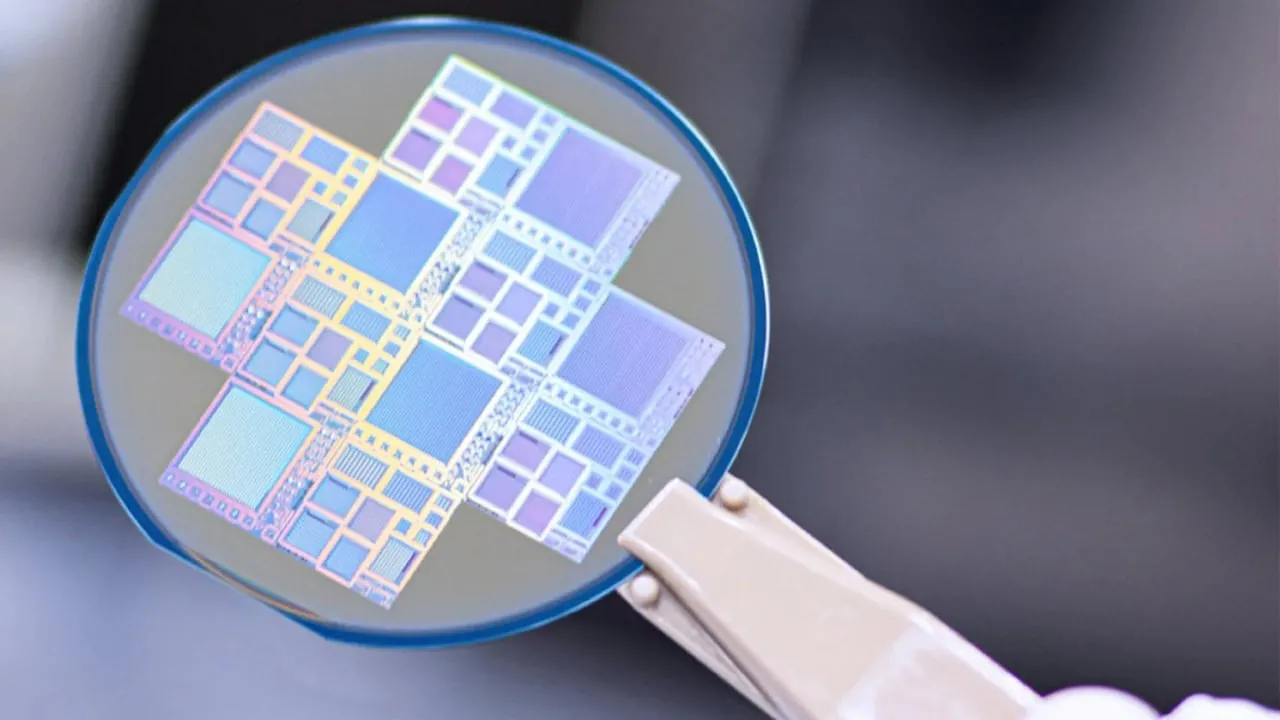
Investigators in the United States have developed a neuromorphic computer processor capable of evaluating fusion plasma at a rate of one million samples every single second. Because fusion reactors generate heat roughly 10 times greater than the center of the Sun, standard silicon processors find it difficult to handle the heavy processing demands needed to track these harsh environments.
The creation of the microchip came from Brookhaven National Laboratory alongside Great Sky, a startup based in Colorado. Production of the hardware relied on 12 years of study conducted at the National Institute of Standards and Technology. Collaboration also involved the Princeton Plasma Physics Laboratory and the DIII-D National Fusion Facility located in California, where the group evaluated the hardware to track and forecast plasma activity instantly.
"This is our largest chip to date, and it's great to see it processing high-speed data directly from a tokamak," said Jeff Shainline, Great Sky's founder and CEO. "This is just the beginning. This approach to AI hardware has so much to offer with regard to fusion, as well as other applications at the forefront of technology. Analysis of high-speed X-ray data, advanced cyber security, control and error correction of quantum systems, video intelligence with continual learning, these are all incredible opportunities as we scale up our systems."
Superconducting circuits built to imitate human brain neurons make up the core of the device. Rather than using standard silicon transistors found in normal processors, the unit functions in cryogenic conditions and transmits information via light signals down to the level of single photons. Great Sky reports that this design allows the hardware to handle huge flows of information using significantly lower amounts of energy.
During laboratory evaluations, the collaborators supplied actual plasma measurements from the DIII-D tokamak into the processor at a rate of one million samples per second. The hardware accurately spotted abnormal plasma activity and forecasted disruptions capable of harming a reactor. A third trial used mock data supplied by TORAX, which is a tokamak modeling tool created by the fusion group at Google DeepMind. The processor successfully anticipated sawtooth instabilities, which represent a frequent obstacle during tokamak operations.
By December 2026, Great Sky intends to launch an upgraded processor featuring a neural network that is 10 times bigger. Testing during active fusion trials at DIII-D is scheduled for 2027. Outside of nuclear fusion, the enterprise notes that comparable processors might assist with quantum computing, computer security, and rapid video processing.