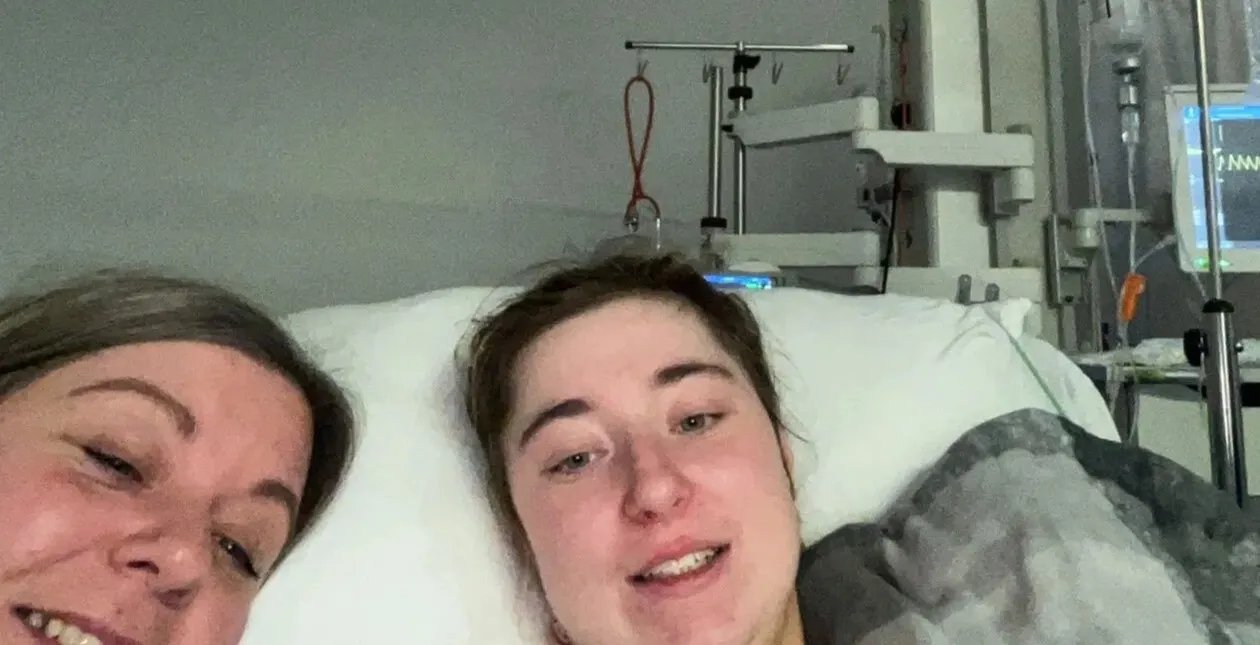
Following a long shift, NHS nurse Elana Murray enjoyed a night of dancing and drinking with her colleagues. The next day, the 24-year-old tried to treat what she thought was a terrible hangover with naps and comfort food, but her condition worsened and she was eventually admitted to hospital when she could no longer use her legs.
"In the blink of an eye, my life had changed beyond all recognition," the mental health nurse, from Fife, told Sun Health. "I was unable to change, bathe or go to the loo myself - and needed around-the-clock care. I just couldn't understand how this could be happening. My life had only just begun."
Elana noticed her worrying symptoms in December 2024. After finishing a long shift as a newly qualified mental health nurse, she attended a staff gathering. The following day, she attempted to recover with naps and beige food while regretting her high heels.
By the next day, she felt wobbly and weak. While visiting shops with her mother, she struggled to open the car door because her hands lacked strength. On the third day, she could not get out of bed and tumbled to the floor, where her father initially reassured her she merely had pins and needles.
When feeling failed to return to her limbs after a couple of hours, she was rushed to hospital. Medical staff performed a lumbar puncture and admitted her to the stroke ward for a week. Doctors soon confirmed she had Guillain-Barré syndrome, a rare autoimmune condition affecting 1,500 people in the UK annually.
Physicians believe her illness was triggered by a recent bout of flu. She was discharged two weeks later in a wheelchair before undergoing physiotherapy to walk again.
What is Guillain-Barré syndrome?
Guillain-Barré syndrome is a rare condition that affects the nerves.
When you get an infection, your immune system normally attacks and kills the bacteria or virus. But in Guillain-Barré syndrome the immune system starts to attack your nerves.
It's not known what causes Guillain-Barré syndrome, but it's thought to be caused by problems with the immune system.
It usually starts within a few weeks of an infection, such as flu or a stomach bug. There have also been very rare cases in older adults who have had the RSV vaccine.
Guillain-Barré syndrome can affect anyone, but it's more common in adults and males.
The condition usually affects your arms and legs first and symptoms include tingling, numbness or pins and needles your hands and feet.
This is usually followed by muscle weakness and difficulty moving joints.
Other symptoms can include:
- sharp, shooting pain (nerve pain), often in your legs or back
- problems breathing
- problems with your face, such as drooping face muscles or trouble swallowing or speaking
- problems with your eyes, such as double vision
- Some people's symptoms become so severe that they are not able to move their legs, arms and face (paralysis)
Source: NHS
Reflecting on her recovery, Elana stated: "After fearing I would never walk again, I realised nothing could really scare me anymore - even heights. It felt nothing short of a miracle."