New Gas Discovery Announced by OGDCL in Sindh
Oil and Gas Development Company Limited has announced a gas and condensate discovery at its Bitrisim Northwest-1 exploratory well located in District Khairpur, Sindh. Testing operations at the site recorded 12.8 million standard cubic feet per day of gas alongside 175 barrels of condensate per day. This development marks another addition to the country's domestic hydrocarbon exploration efforts, coming from a region with a long history of oil and gas production.
The find was made within the Basal Sands of the Lower Goru Formation, which sits inside the Bitrisim Exploration License area. Oil and Gas Development Company Limited operates this license holding a 95 percent working interest. Government Holdings (Private) Limited maintains the remaining 5 percent working interest in the joint venture.
Drilling operations at the well began when it was spudded on August 21, 2026. Engineering teams advanced the drill bit to a total depth of 3,732 meters, reaching the Sembar Formation. Following standard industry procedures, specialists evaluated well log interpretations, which prompted them to conduct a Drill Stem Test specifically in the Basal Sands of the Lower Goru Formation.
Technical Specifications and Testing Results
During the testing phase, the well produced strong flow rates through a 32/64 inch choke. Officials recorded a wellhead flowing pressure of 3,020 pounds per square inch alongside the daily output of 12.8 million standard cubic feet of gas and 175 barrels of condensate. These metrics indicate a healthy reservoir pressure and high deliverability from the targeted geological formation.
Condensate is a low-density mixture of liquid hydrocarbons that frequently separates from natural gas when temperature and pressure drop during production. The recovery of both gas and condensate improves the economic viability of the well. High wellhead pressure simplifies the initial phase of surface processing and reduces the immediate need for artificial lift systems.
The Lower Goru Formation is a proven hydrocarbon producer in the southern plains of the country. Geological strata in this region consist of alternating layers of sandstone, shale, and siltstone, which form effective traps for petroleum and natural gas. Exploration companies continue to target these sedimentary layers because they frequently yield commercial quantities of hydrocarbons.
Accelerating Production and Integration Plans
Following the successful test results, Oil and Gas Development Company Limited stated that it was accelerating the necessary work to connect the well to the national gas gathering system on a fast track basis. Connecting new wells quickly allows operators to achieve early monetization of the discovery. Bringing new production streams online without unnecessary delays helps offset operational costs and generates immediate revenue.
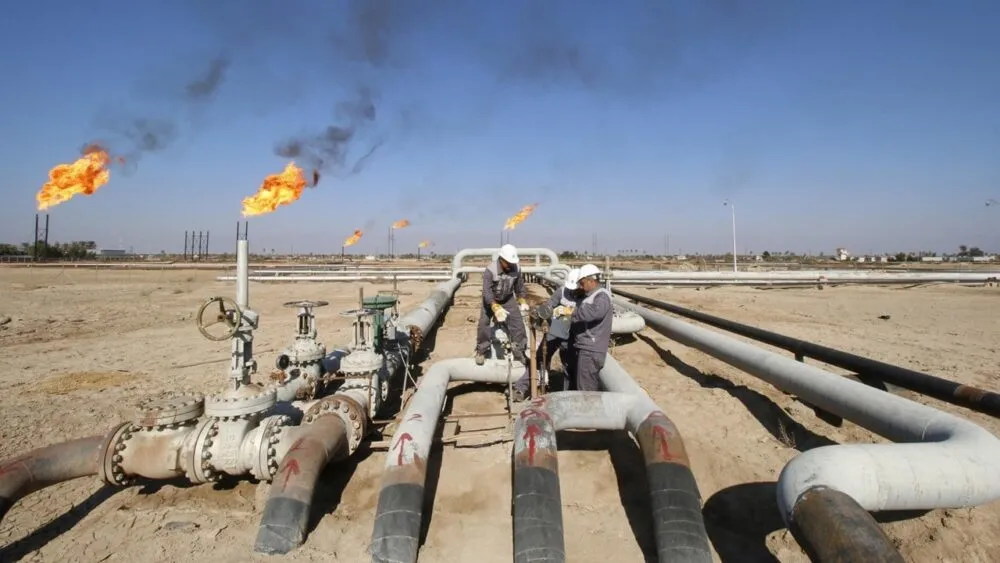
The national gas gathering system consists of an extensive network of pipelines that transport raw gas from remote field separators to central processing facilities. From processing plants, the treated fuel enters transmission pipelines operated by state gas utility companies. Engineering crews must construct short tie-in pipelines from the Bitrisim Northwest-1 wellhead to the nearest existing trunk line to complete the integration process.
Fast track development requires close coordination among drilling engineers, pipeline construction crews, and regulatory authorities. Environmental and safety clearances must be obtained while civil works proceed on site. Once linked to the main grid, the new volumes will mix with other regional supplies before reaching commercial, industrial, and domestic consumers.
Impact on Domestic Energy Security
The company expects the discovery to strengthen its hydrocarbon reserves and support national energy security. Pakistan faces a persistent challenge in meeting its primary energy demands through domestic output, relying heavily on imported liquefied natural gas and petroleum products to bridge the shortfall. Expanding indigenous production helps reduce dependence on costly foreign fuel imports and stabilizes the national trade balance.
Domestic gas supplies provide critical fuel for power generation plants, fertilizer manufacturing facilities, and general industrial sectors. Natural gas also serves urban households for cooking and heating purposes. Every new million cubic feet of gas produced locally contributes directly to alleviating shortages during peak demand cycles, particularly during the winter months when consumption surges.
State-owned exploration firms play a central role in maintaining baseline supply levels across the country. As older producing fields experience natural pressure depletion, new discoveries in mature basins like Sindh are essential for replacing lost output. Exploration investments sustain employment opportunities for technical specialists, geologists, and petroleum engineers working in the domestic energy sector.
Background on the Operator and Regional Exploration
Oil and Gas Development Company Limited is the largest exploration and production company in the country, holding a major share of total oil and gas output. The firm operates numerous fields across Sindh, Punjab, Balochistan, and Khyber Pakhtunkhwa. Its upstream portfolio encompasses exploratory licenses, development leases, and producing blocks managed through various joint ventures.
District Khairpur and surrounding areas in Sindh have hosted active drilling operations for decades. The geological setting of the middle and lower Indus basin offers favorable conditions for petroleum generation and accumulation. Joint ventures between public and private sector entities continue to deploy modern seismic technology to identify subtle structural traps that escaped earlier exploration rounds.
As drilling technology advances, operators can reach deeper geological targets with greater precision. The successful completion of the Bitrisim Northwest-1 well at a depth of 3,732 meters demonstrates the technical capability of local operators in evaluating complex formations. Continued drilling activity in the region remains a cornerstone of long-term resource development strategies.





