Pakistan Secures Record Agreements at CACIE 2026
Pakistan-China skills projects reached a new milestone in early November 2026, as Pakistan locked in 11 cooperation agreements and 14 joint skills and education initiatives with Chinese institutions. The deals were signed during a week-long visit to Beijing by Prime Minister's Youth Programme Chairman Rana Mashhood Ahmad Khan and are set to reshape how young Pakistanis train for work in a competitive global economy.
Pakistan secured these agreements during Chairman Rana Mashhood's October 27 to November 3 visit to China, and the country recorded the highest number of signings among all participating nations at the 27th China Annual Conference and Expo for International Education. That is a notable result, showing that Pakistan is pushing harder than other countries to build formal education ties with China.
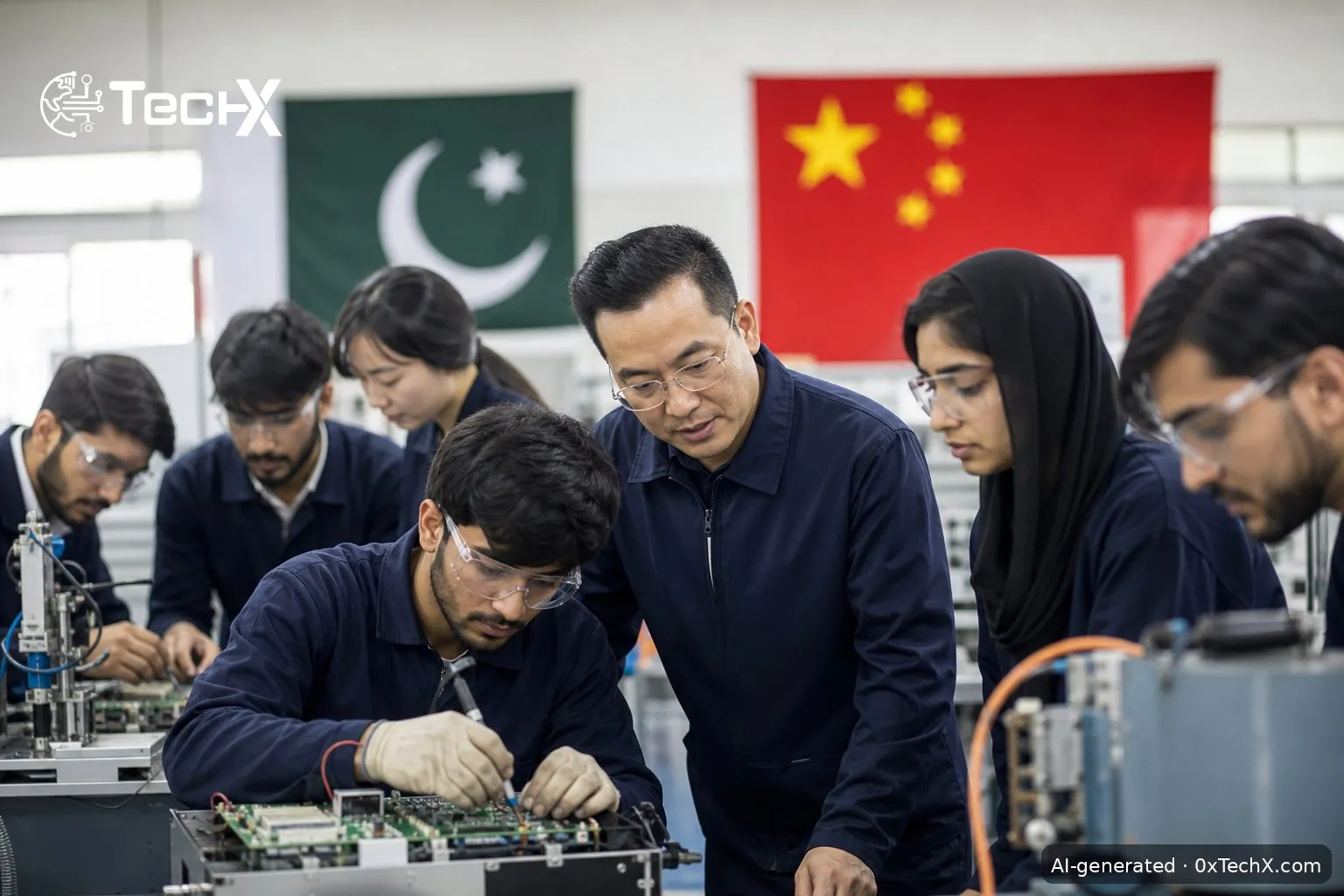
Institutions from both nations have established formal frameworks covering mechatronics, green energy, mobile communications, nursing, modern agriculture, cross-border e-commerce, and international skills certification. This is a broad mix, and it matters: the focus is not just on one sector but on building a workforce that can serve multiple industries.
The 14 Pakistan-China Skills Projects in Detail
The 14 flagship skills and education initiatives include an International Nursing Talent Training Base, a Cross-Border E-Commerce Talent Training Base, Pakistan Tiangong College, a Joint Teacher Training Centre, and new committees on Industrial Robotics and Electronic Information Engineering.
Each of these fills a real gap in Pakistan's current training landscape. The International Nursing Talent Training Base matters because Pakistan has a growing nursing workforce that is in demand across the Middle East and Asia, and international certification from a Chinese institution adds weight to qualifications abroad.
The Cross-Border E-Commerce Talent Training Base serves a country that has emerged as the world's fourth-largest freelancing nation, where young professionals play a key role in expanding digital exports. A formal e-commerce training base can turn informal hustle into certified skills.
Pakistan Tiangong College is a new institution-level tie-up that will give Pakistani students access to Chinese academic and technical programmes without having to travel. Meanwhile, the Joint Teacher Training Centre acts as a force-multiplier since better-trained teachers mean better outcomes for students. The Industrial Robotics and Electronic Information Engineering committees address the demand for automation skills inside factories and industrial zones, including those tied to projects under the China-Pakistan Economic Corridor.
The ML-1 Railway Connection Most Reports Miss
One detail that most coverage has not highlighted is the direct link between these Pakistan-China skills projects and infrastructure on the ground. China Railway Group Secretary Han Hui flew to Pakistan on the same day strategic discussions concluded with the PMYP chairman, setting the stage for on-the-ground work on skills training linked directly to the Main Line-I railway upgrade.
This means technical training is being aligned with real construction and engineering work happening inside Pakistan, not just classroom theory. Aligning workforce development with active transport projects helps ensure that local engineers and technicians secure direct employment opportunities from major investments.
A Dedicated Secretariat to Keep Things Moving
Past Pakistan-China education deals have sometimes stalled at the agreement stage. This time, there is a structure to push things forward. The PMYP China Secretariat, based at the Beijing headquarters of TANG International Education Group, will facilitate cooperation between government departments, educational institutions and industry partners.
Rana Mashhood said youth empowerment remained a key priority of the government under Prime Minister Muhammad Shehbaz Sharif, with the initiatives advancing the vision of a Skilled, Empowered and Digital Pakistan. Having a physical coordination office in Beijing removes bureaucratic delays and keeps institutional partners aligned.
Part of a Bigger China-Pakistan Training Push
These 14 projects sit inside a much larger bilateral effort. Earlier in 2026, Planning Minister Ahsan Iqbal announced that China will provide digital skills training to 300,000 Pakistani youths every year, a move aimed at strengthening Pakistan's technology sector and digital economy. The CACIE 2026 agreements add new institutional channels to that pipeline.
The Pakistan-China skills partnership also has roots in vocational training. From October to December 2025, 25 Pakistani welders completed specialised training tailored to modern industrial requirements, and all participants secured employment with Chinese firms operating in Pakistan. That pilot showed that joint certification programmes can produce real jobs fast. The 14 new projects now scale that idea across far more sectors.
According to official policy documents, less than 10 percent of the country's workforce currently possesses artificial intelligence or advanced digital skills. Closing that gap is exactly what these new training bases and college partnerships are designed to address, though the work of turning signed agreements into active courses and certified graduates still lies ahead.
What Pakistani Youth Should Watch For
The agreements are signed, but students and job-seekers need to know what comes next. The PMYP is the main contact point for young Pakistanis interested in these programmes. With proper training and globally acceptable certifications, Pakistan's youth could become a globally competitive workforce as the government prepares to launch large-scale technical and vocational training with China's support.
The key question now is speed. The visit is expected to generate long-term positive impacts on Pakistan's technical education landscape by promoting knowledge exchange, strengthening human resource development, and paving the way for a more competitive workforce. Actual enrolment numbers in the months ahead will tell the real story of how effectively these frameworks translate into classroom instruction.