Pakistan China Digital Marketing Training Initiative Launches in Islamabad
Pakistan China digital marketing training is now a reality on the ground. On 17 November 2026, Pakistan's OIC-COMSTECH, the Prime Minister's Youth Programme, and China's TANG Chinese Education launched a nationwide digital marketing training initiative aimed at equipping young Pakistanis with skills for the global digital economy. The event marks a clear shift in CPEC's focus from roads and power plants to digital jobs.
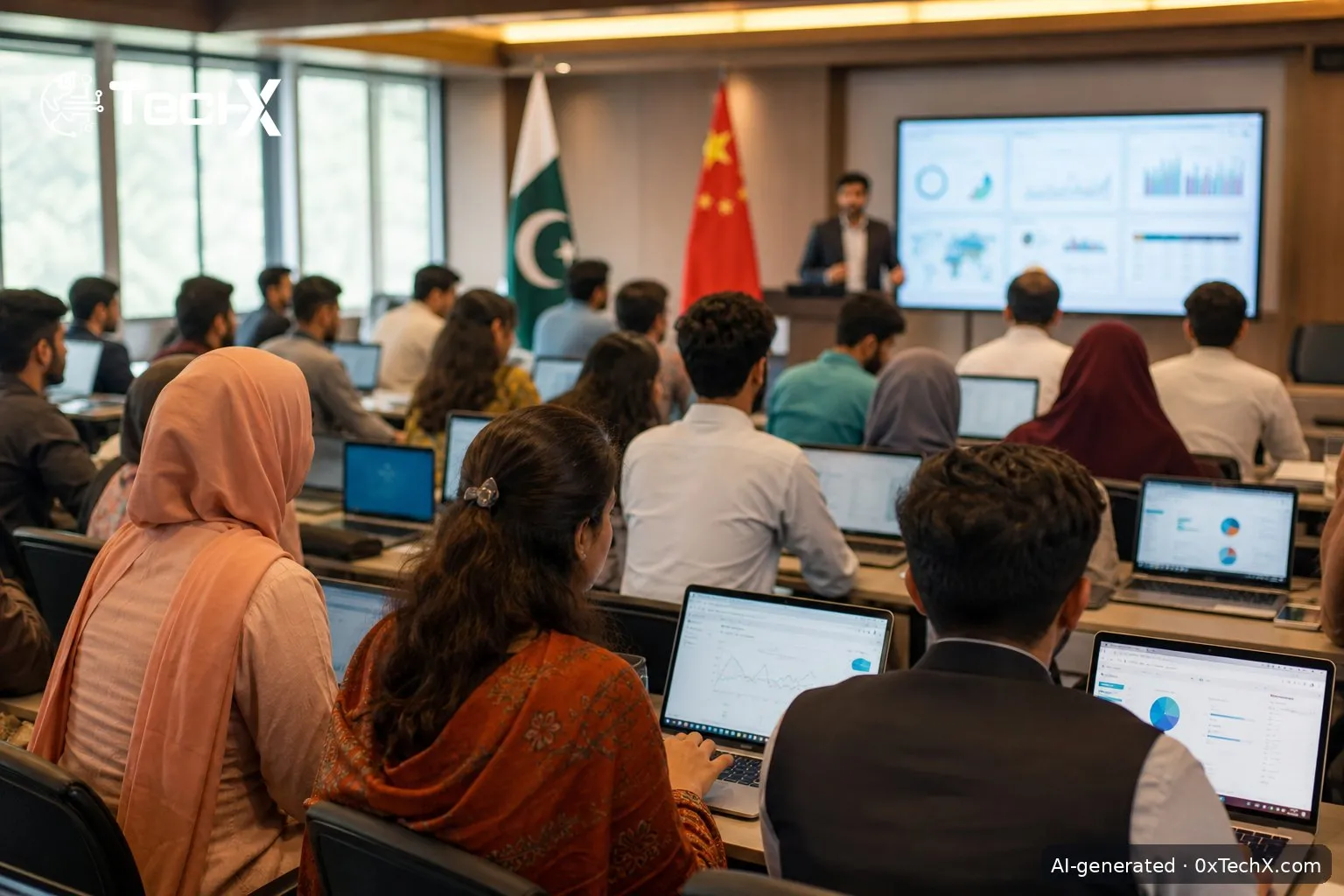
The two-day professional training programme, titled "Contemporary Digital Marketing Application and Future Development," was inaugurated at the COMSTECH Secretariat in Islamabad and attracted approximately 1,300 to 1,500 participants from across Pakistan. That is a large first cohort for a programme that only just got off the ground. Organisers stated that the collaboration aims to strengthen professional skills, expand educational cooperation between Pakistan and China, and create new opportunities for young people in digital employment and entrepreneurship.
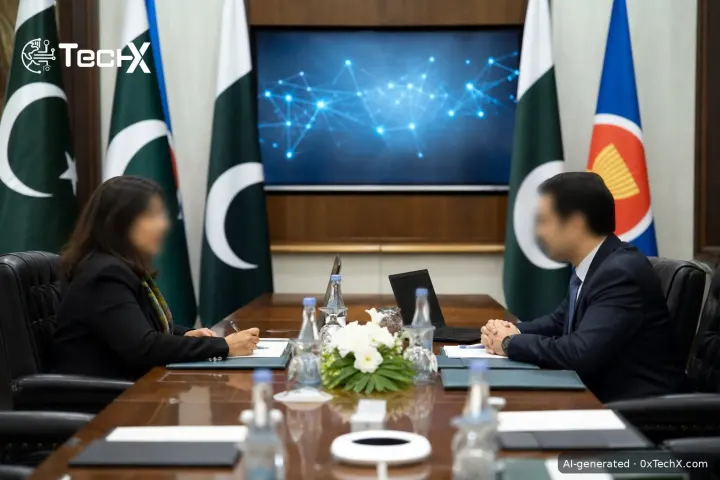
Institutional Framework and International Cooperation
The venue choice matters for institutional reasons, as COMSTECH serves a wide network across 57 OIC member states. This setup combines OIC-COMSTECH's diplomatic reach, the Prime Minister's Youth Programme's domestic platform, and China's deep expertise in digital commerce. Consequently, this model holds the potential to be replicated across dozens of Muslim-majority countries, giving Pakistani trainers and graduates an export market for their own acquired expertise.
This launch builds directly upon institutional groundwork laid earlier in the year. In January 2026, the Prime Minister's Youth Programme and TANG Chinese Education and Technology signed a Letter of Intent to strengthen cooperation in technical and vocational education and training. That agreement quietly established the legal foundation for the courses that opened this week.
Expanding Vocational Training Agreements Since 2025
The January agreement followed an even earlier push by government bodies. In May 2025, Pakistan's Prime Minister's Youth Programme signed a Letter of Intent with ITMC China, UNI International, and leading Chinese vocational colleges to launch specialised digital skills vocational training programmes across the nation. Over a five-year horizon, that initiative aims to train up to 100,000 youth, with each participating institute training 100 trainees annually.
The curriculum topics show how practical the focus is. Specialised training programmes include Amazon Store Operations, Cross-border E-commerce Live Streaming, Short Video Production, Business Data Analysis, AI Intelligent Agent Development, Digital Marketing Applications, Online Store Operations, Data-driven Product Selection, and AIGC Technology Applications. These subjects reflect actual market demands rather than purely academic theory.
Broader Chinese Commitments and Freelancing Growth
The COMSTECH event sits inside an even bigger national ambition. Federal Minister for Planning Ahsan Iqbal announced earlier in 2026 that China will provide digital skills training to 300,000 Pakistani youths every year, aimed at strengthening Pakistan's technology sector and digital economy. Speaking at the 3rd LCCI IT Freelancing Awards 2026, Ahsan Iqbal noted that Pakistan has emerged as the world's fourth-largest freelancing country, with young professionals playing a key role in expanding digital exports and earning foreign exchange.
Free, certified training has also started flowing through other channels. Zhejiang Technical Institute of Economics in China has been offering free online training in Search Engine Optimisation (SEO) and Search Engine Marketing (SEM) to Pakistani teachers, students, and working professionals to help strengthen their digital marketing and cross-border e-commerce skills. Participants who complete the programme receive certificates jointly issued by Zhejiang Technical Institute of Economics and ITMC China, representing internationally recognised credentials.
How CPEC 2.0 Prioritises the Digital Economy
The China-Pakistan Economic Corridor, a flagship project of the Belt and Road Initiative, is expanding its role beyond energy and transport infrastructure into new areas of cooperation in the digital economy, particularly Artificial Intelligence between Pakistan and China. This commitment is also reflected in the May 2026 joint statement between the two countries, which identified artificial intelligence, the digital economy, scientific and technological innovation, and information and communication technology as important areas for expanded bilateral cooperation.
The initiative assumes added significance as Pakistan seeks to maximise the employment and skills-development benefits of the next phase of CPEC by preparing its young workforce for emerging opportunities in infrastructure, energy, technology, and other sectors. Put simply, CPEC 2.0 wants Pakistan's youth earning from digital work, not just watching Chinese contractors build highways.
In line with China's international cooperation policy, 30 to 50 Centres of Excellence will be established across Pakistan, providing physical training infrastructure in collaboration with NAVTTC, TEVTAs, and Chinese TVET institutions. When those centres open, the training pipeline will reach students in cities well beyond Islamabad.
Practical Steps for Interested Youth and Students
The two-day COMSTECH event is just the opening act. The broader programme targets a large number of trainees over the next several years, and new batches are expected to roll out as more Centres of Excellence come online. Pakistani students and institutions should watch for enrolment announcements from the Prime Minister's Youth Programme at pmyp.gov.pk and NAVTTC at navttc.gov.pk, where open applications are listed as they become available.
The core pitch for young Pakistanis is straightforward. The training offers free or low-cost entry into skills like SEO, e-commerce, short video, and AI-assisted content, areas where global demand is growing fast and where a Pakistani freelancer can compete from anywhere with a decent internet connection.