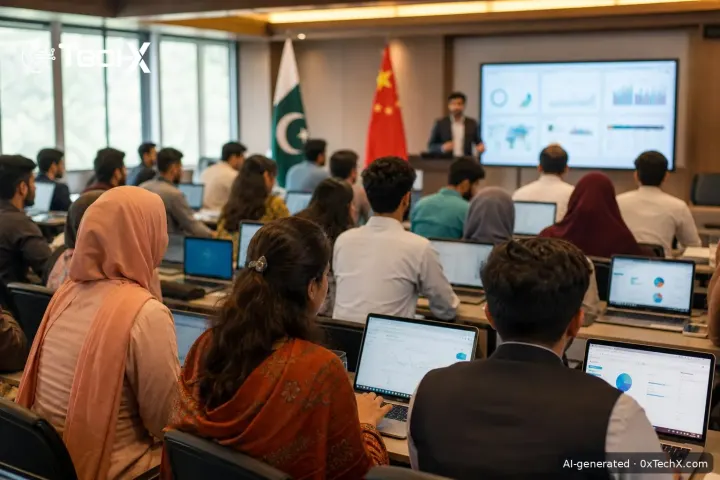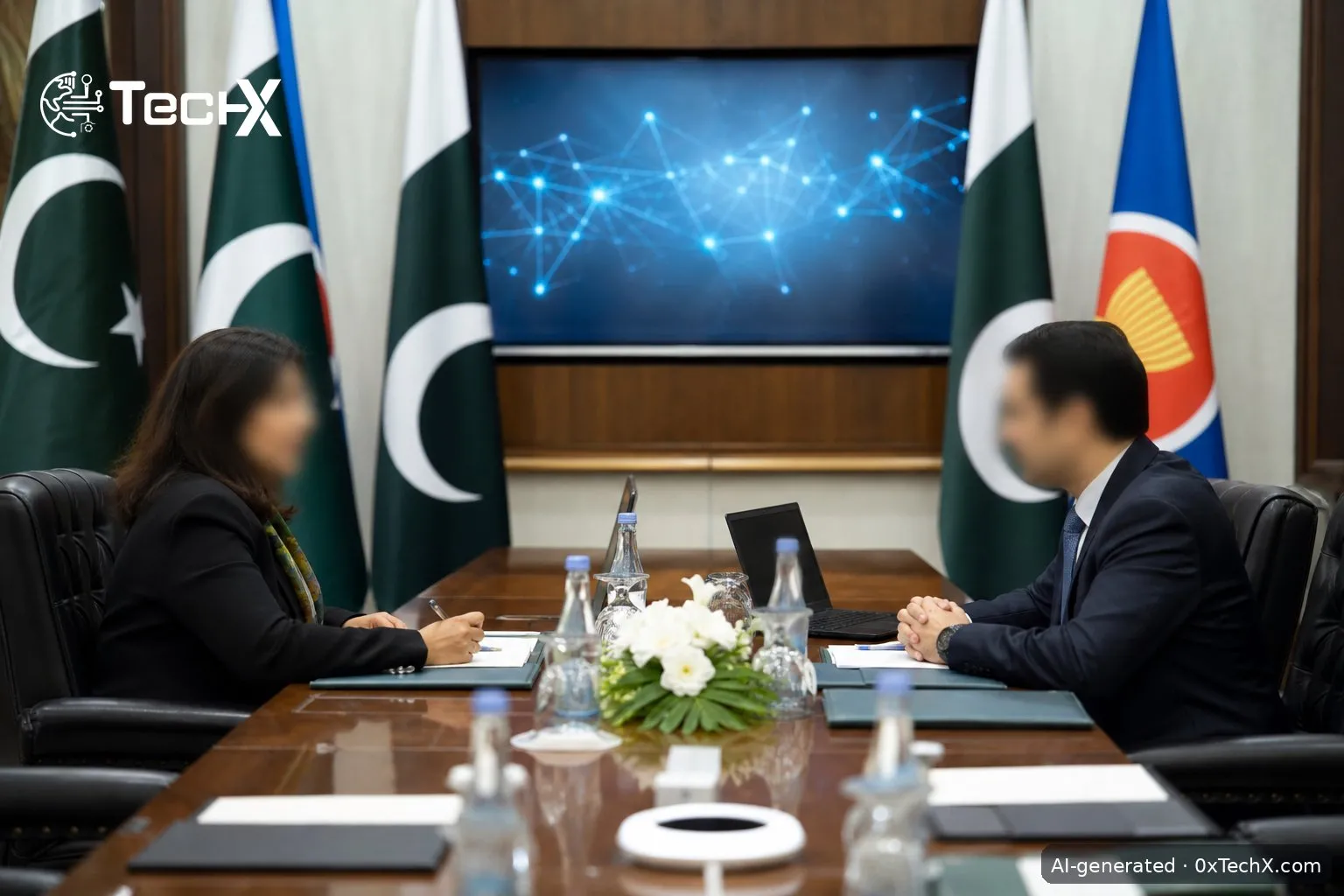
Deputy Prime Minister and Foreign Minister Ishaq Dar and ASEAN Secretary-General Dr Kao Kim Hourn announced on 19 November 2026 a broad agreement that places cybersecurity, climate change, food insecurity and energy-supply disruptions at the centre of Pakistan's relationship with Southeast Asia.
The pact, unveiled after high-level talks in Islamabad, is the most concrete signal yet that Pakistan is seeking regional help to protect its growing digital economy.
What Pakistan and ASEAN Actually Agreed On
Pakistan and ASEAN agreed to strengthen cooperation in addressing emerging non-traditional security challenges, including climate change, food insecurity, energy supply disruptions and cyber threats, while expanding collaboration in trade, technology, education and regional connectivity.
The understanding was reached during talks between Deputy Prime Minister and Foreign Minister Senator Mohammad Ishaq Dar and ASEAN Secretary-General Dr Kao Kim Hourn, who jointly addressed a press conference in Islamabad.
The talks marked the first visit by an ASEAN secretary-general to Pakistan in over two decades, underscoring the weight both sides are putting on reviving the relationship. Both sides reviewed progress under the Pakistan-ASEAN Sectoral Dialogue Partnership, established in 1993, and committed to implementing the Practical Cooperation Areas framework covering 2024 to 2028.
Why the Cyber-Threat Cooperation Matters Now
Pakistan has seen a steady rise in cyber-attacks targeting its banking sector, government systems and critical infrastructure over the past few years. At the same time, the country is pushing hard to grow its digital economy, with freelancers, fintech firms and e-commerce platforms all expanding fast. Without stronger cyber defences and regional intelligence-sharing, those gains are vulnerable.
ASEAN brings real value here. ASEAN Secretary-General Dr Hourn described ASEAN as the world's third-largest trading bloc and invited Pakistan to tap into its rapidly expanding digital economy, which reached $305 billion last year and is projected to grow to $2 trillion. A Pakistan that is plugged into that network, with shared cybersecurity standards and early-warning systems, stands to gain far more than one that sits outside it.
The ASEAN secretary-general encouraged Pakistan to make greater use of the organisation's specialised institutions and centres for technical cooperation, training, knowledge sharing and capacity building. This is the practical side that most news reports gloss over. Pakistan does not need to build cyber-defence capacity from scratch. It can send officials and technicians to ASEAN-linked training centres, borrow frameworks already tested in Singapore and Malaysia, and join regional threat-intelligence sharing channels. That is a much faster path than building everything locally.
Pakistan's law-enforcement agencies have already been working to close cyber skill gaps. The Pakistan Cyber-Crime Authority (PACA) recently ran crypto-tracking training for police, showing that domestic agencies are actively investing in digital investigation skills. The ASEAN partnership can build on that momentum at a regional level.
The Digital Economy Angle
Highlighting the growing importance of technology-driven economic development, Deputy Prime Minister Dar said Pakistan saw considerable potential for cooperation with ASEAN member states in the digital economy and emerging technological fields.
Dar also highlighted the scope for collaboration in digital technologies and artificial intelligence, saying stronger university and research links would prepare young people in Pakistan and ASEAN member states for a changing economy. This is significant because the Pakistan-ASEAN cyber-threat cooperation does not exist in isolation. It sits inside a bigger ambition: to connect Pakistani businesses, startups and talent to a Southeast Asian market that is growing fast.
Joint research, exchange of expertise and capacity-building programmes could help young people in Pakistan and ASEAN countries benefit from emerging technologies, Dr Hourn said. For Pakistani universities and tech schools, this opens the door to partnerships with institutions in Singapore, Malaysia, Indonesia and beyond.
Pakistan's Bid for Full Dialogue Partner Status
ASEAN is currently reviewing Pakistan's formal request for full dialogue partner status. Right now, Pakistan has been the organisation's sectoral dialogue partner since 1993. Moving to full dialogue partner status would put Pakistan in the same category as the United States, China, Japan, South Korea, Australia and India. It would mean a seat at more ASEAN tables, including those that deal with digital governance, cybersecurity norms and technology regulation.
As ASEAN approaches the 35th anniversary of the ASEAN-Pakistan Sectoral Dialogue Partnership in 2028, the bloc looks forward to working closely with Pakistan to strengthen the partnership and explore new areas of cooperation for shared benefits, Dr Hourn said. The window to formalise and deepen Pakistan-ASEAN cyber-threat cooperation is open right now, in the run-up to that milestone.
What Happens Next
Discussions also covered regional and international peace and security, including the impact of regional tensions on maritime trade, sea routes and supply chains. That matters for Pakistan too, as a country that depends on sea routes for trade and whose ports link Central Asia to the Indian Ocean.
Both sides explored opportunities for collaboration in climate resilience, disaster preparedness and digital innovation. These are not separate issues. A major climate disaster or a disruption to energy supplies can knock out digital infrastructure fast. Having a regional partner network means Pakistan does not face those moments alone.
For now, the agreed framework runs to 2028. The real test will be whether Pakistan moves quickly to send delegations to ASEAN technical centres, sign specific memoranda of understanding on cyber information sharing, and push the full dialogue partner bid over the line. Words at a press conference are a start. Action plans, training cycles and joint cyber-incident response drills are what actually shift the needle on digital security.
Pakistan's digital future is increasingly tied to what happens in the region. The ASEAN agreement signals that the government understands this. The next step is turning a press conference into a programme. For more on how ASEAN governs digital cooperation, see the official ASEAN website. For Pakistan's own digital regulatory framework, the Pakistan Telecommunication Authority (PTA) remains the key domestic body whose work will need to align with any regional cyber norms that emerge from this partnership.
Frequently Asked Questions
What did Pakistan and ASEAN agree on regarding cyber threats?
Pakistan and ASEAN agreed to cooperate on cyber threats as part of a broader set of non-traditional security challenges. The agreement, announced on 19 November 2026, also covers climate change, food insecurity and energy-supply disruptions. Both sides committed to using ASEAN's specialist training centres for capacity-building.
Who signed the Pakistan-ASEAN cyber cooperation agreement?
No formal treaty was signed at this stage. The commitment was made during delegation-level talks between Deputy PM and Foreign Minister Ishaq Dar and ASEAN Secretary-General Dr Kao Kim Hourn in Islamabad. It is part of the broader Practical Cooperation Areas framework running from 2024 to 2028.
What is Pakistan's current status with ASEAN?
Pakistan has been an ASEAN Sectoral Dialogue Partner since 1993. It has formally applied for full dialogue partner status, which ASEAN is currently reviewing. Full status would give Pakistan access to a wider range of ASEAN forums, including those covering digital governance and cybersecurity.
How does this affect Pakistan's digital economy and tech sector?
The agreement opens the door to joint research, AI and digital skills training, and access to ASEAN's network of technical institutions. ASEAN's digital economy is worth $305 billion and is projected to reach $2 trillion. Greater integration with this market, backed by shared cybersecurity frameworks, could benefit Pakistani startups, freelancers and fintech firms significantly.