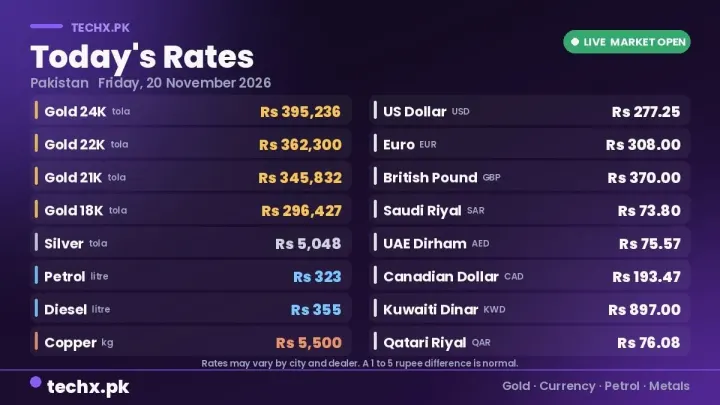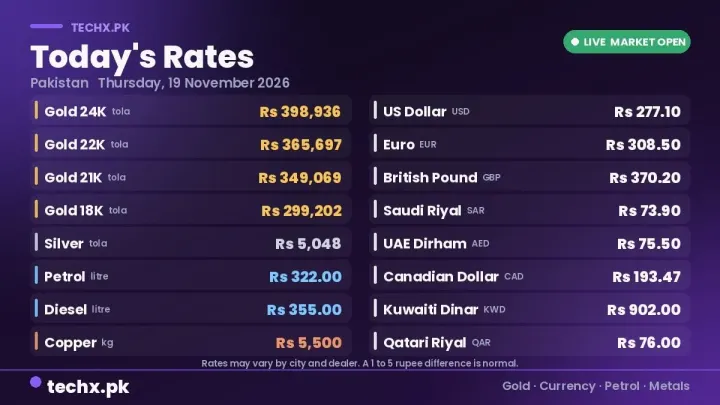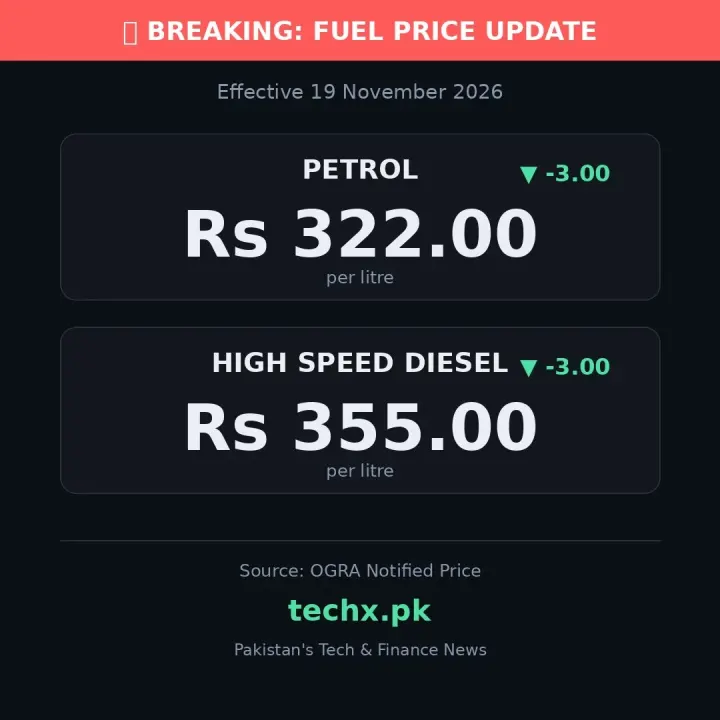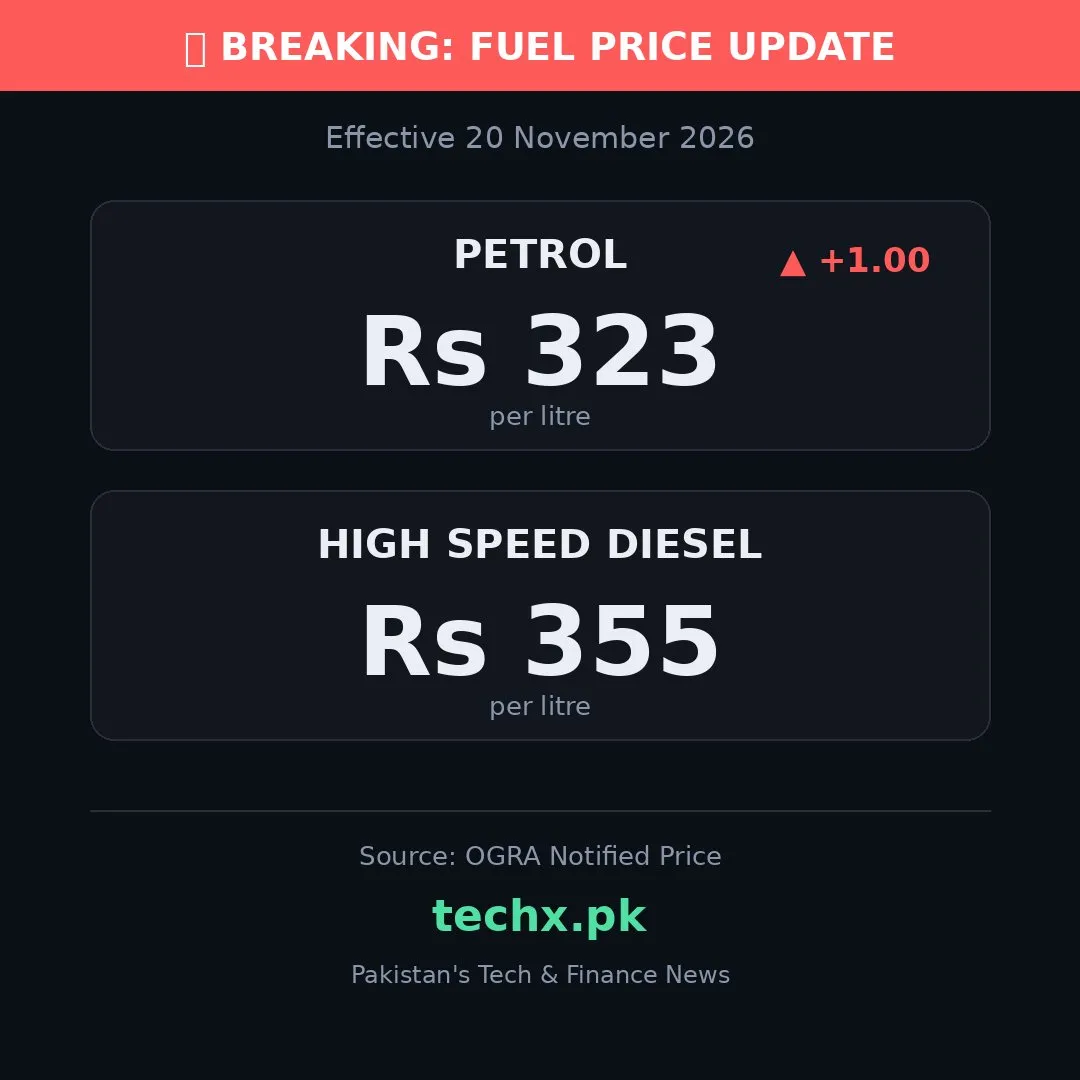
Petrol in Pakistan rose by Rs 1 per litre to Rs 323 on 20 November 2026, while high-speed diesel stayed at Rs 355 per litre, according to the Oil and Gas Regulatory Authority's (OGRA) fortnightly revision.
The modest increase follows OGRA's routine review of fuel tariffs, which takes into account global crude price movements and the rupee's exchange rate against the US dollar. The change affects commuters, motorcyclists and small-scale vehicle owners, while diesel-dependent transport operators see no price impact for the current period.
What OGRA Does and How Fuel Prices Are Set
OGRA is the statutory body that regulates the oil and gas sector in Pakistan. Established under the Oil and Gas Regulatory Authority Act of 2002, it is tasked with ensuring transparent pricing, fair competition and consumer protection. Every two weeks OGRA publishes a revision of retail fuel prices after consulting market data, import costs, taxes and the prevailing exchange rate.
The authority collects data from oil marketing companies, refineries and the State Bank of Pakistan. It then calculates a weighted average cost of imported crude, adds domestic refining margins, excise duties, sales tax and any subsidies approved by the Ministry of Finance. The final figure is the retail price that stations display on pumps.
International Oil Market Movements That Influenced the Latest Revision
During the fortnight ending 20 November 2026, Brent crude futures edged up by roughly 0.4 % on the global market. The rise was linked to supply concerns in the North Sea and a modest increase in demand from Asia. At the same time, the Pakistani rupee weakened marginally against the US dollar, moving from 285 to 287 rupees per dollar, which raised the cost of imported crude.
OGRA's formula translates these shifts into a small increase for petrol, which is more sensitive to crude price changes because it carries a higher excise duty component. Diesel, by contrast, benefits from a lower duty rate and a larger share of domestic refining, allowing its price to remain unchanged despite the same market pressures.
Historical Context: Fuel Price Trends in Pakistan
Fuel prices in Pakistan have been volatile over the past decade. Between 2015 and 2020, petrol prices rose by an average of Rs 3 per litre each revision, driven by sharp fluctuations in global oil markets and periodic devaluation of the rupee. The government introduced a subsidy scheme in 2021 that capped retail prices for a limited period, but the scheme ended in early 2023, after which prices have been fully market-linked.
Since the end of the subsidy, OGRA has issued 28 revisions. The average change per cycle has been Rs 2.5 for petrol and Rs 1.8 for diesel. The current Rs 1 increase is therefore below the recent average, reflecting a relatively stable international market.
Impact on Different Segments of the Economy
For daily commuters who rely on petrol-powered cars or motorcycles, the Rs 1 rise translates to an additional Rs 80-120 per month, assuming an average weekly fill-up of 20 litres. While the amount is small, cumulative effects can be felt by low-income households that spend a larger share of income on transport.
Truck operators, public bus services and logistics companies that run on high-speed diesel will not see any cost increase for the current fortnight. This stability helps keep freight rates steady, which is important for the country's export-oriented sectors such as textiles and agriculture.
Retail fuel stations must update price boards within 24 hours of OGRA's notification. Failure to do so can result in penalties under the Oil and Gas Regulatory Authority Act.
How Consumers Can Verify the New Prices
OGRA publishes the official price schedule on its website and through a dedicated mobile app. The announcement for the 20 November revision was released on 18 November 2026, giving stations two days to adjust. Consumers can also check the latest prices on the Pakistan State Oil (PSO) portal, Cnergy, or through the techx.pk portal mentioned in the original article.
It is advisable for motorists to keep a receipt of each fuel purchase. In case of a discrepancy, the consumer can lodge a complaint with OGRA's consumer grievance cell, which resolves disputes within 15 working days.
What to Expect in the Next Revision
OGRA's next review is scheduled for 4 December 2026. Analysts predict that if global oil prices remain steady and the rupee does not depreciate further, petrol may see another modest increase or remain flat, while diesel could experience a slight rise if domestic refining costs shift.
Stakeholders are advised to monitor the Brent crude price index and the Pakistan rupee's exchange rate, as these are the primary drivers of OGRA's calculations. Official statements will be released on OGRA's website and disseminated through major news agencies.
Practical Takeaways for Readers
- Petrol is now Rs 323 per litre; diesel stays at Rs 355 per litre.
- The increase reflects a Rs 1 rise due to global oil price movement and rupee depreciation.
- Commuters will face a small extra cost per fill-up; diesel-powered transport faces no change.
- Check official OGRA releases or trusted portals like techx.pk for the next price update.
While the change is modest, it underscores the ongoing link between Pakistan's fuel market and global oil dynamics. Keeping informed helps consumers plan budgets and allows businesses to anticipate cost fluctuations.