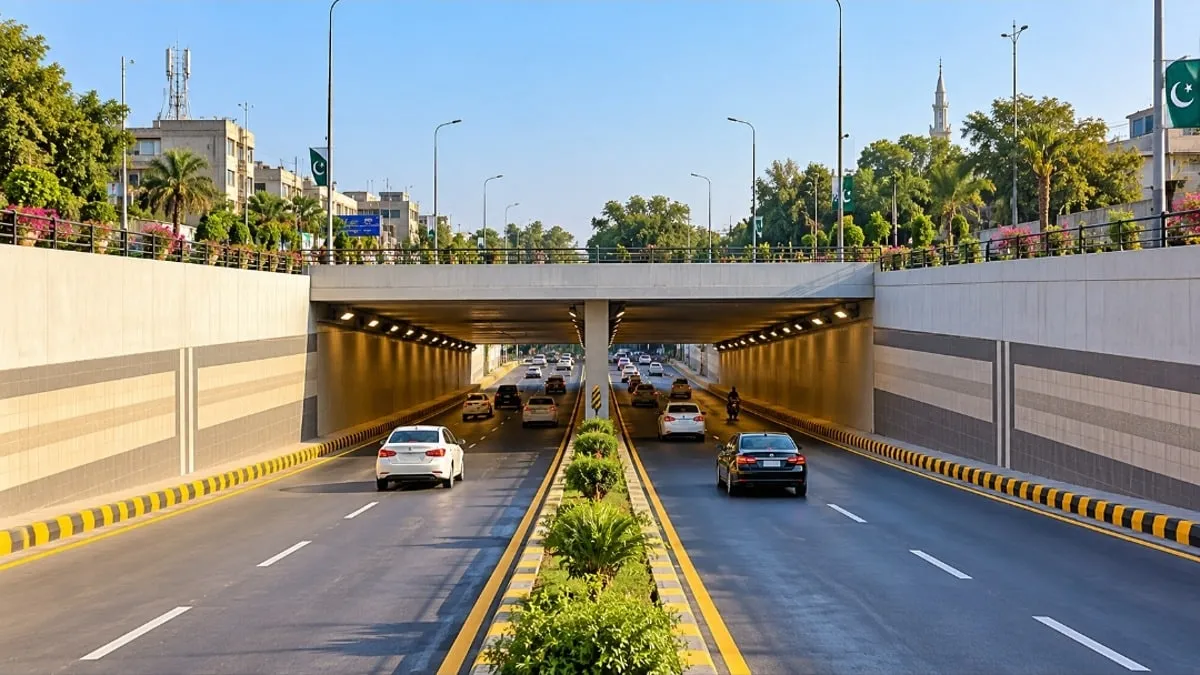
Rawalpindi Underpasses Nearing Completion on Peshawar Road
Rawalpindi Commissioner Salman Ghani conducted a detailed inspection on Thursday to review the ongoing construction work at the Race Course Chowk and Charing Cross underpasses situated on Peshawar Road. These major infrastructure development projects aim to transform the traffic flow in the area, offering significant relief to daily commuters who travel along this busy urban corridor. During his visit to the sites, the commissioner received comprehensive updates from project engineers and municipal officials regarding the physical progress achieved so far.
According to the official briefings presented during the inspection, the Race Course Underpass has reached 74% completion. Meanwhile, construction work on the Charing Cross Underpass has advanced to 71% completion. Authorities confirmed that all remaining construction tasks are targeted for completion by the end of November, keeping the projects on track for their scheduled public rollout.
Current Construction Status of Race Course and Charing Cross Projects
Substantial engineering milestones have been accomplished at both locations since the inception of the projects. Major construction activities, including piling, deck slabs, capping beams, barrier installation, excavation, utility relocation and drainage work, have almost been completed at both sites. These complex structural components form the backbone of the subterranean roadway systems, ensuring durability and safety for heavy vehicular traffic.
Engineers have designed the infrastructure to meet modern urban transport standards. Specifically, the Race Course Underpass will feature two lanes dedicated to northbound traffic, accommodating the heavy volume of vehicles moving in that direction. The integration of these lanes is expected to absorb a large share of the daily vehicular load currently burdening the surface level of Peshawar Road.
Design Features and Traffic Flow Improvements
Beyond the standard subterranean roadway design, planners have incorporated advanced civil engineering solutions to manage complex intersections. A three-level road configuration will also be developed to improve traffic movement and facilitate turning. This multi-layered approach separates traffic streams heading in different directions, drastically reducing conflict points at major junctions.
During the site visit, Commissioner Ghani interacted with project supervisors and issued strict instructions regarding quality control. He directed the authorities to maintain construction standards and complete the remaining work within the given timeframe. Adherence to strict engineering specifications remains a priority to ensure the long-term structural integrity of both underpasses under heavy daily usage.
Managing Commuter Convenience and Environmental Controls
Construction projects of this scale in densely populated urban areas often create severe logistical challenges for the public. Acknowledging these difficulties, Ghani stressed the need to ensure smooth traffic flow, provide effective alternative routes and minimize inconvenience to commuters during construction. Traffic management teams have been tasked with monitoring diversion points closely to prevent massive traffic gridlocks on adjacent roads.
In addition to managing vehicular movement, environmental concerns received direct attention from the commissioner. He further ordered regular anti-smog measures at both sites to control dust and air pollution. Dust suppression techniques, including water sprinkling, are essential to protect workers and nearby residents from the adverse health effects generated by heavy excavation and civil works.
Long-Term Impact on Rawalpindi Traffic Corridor
The successful finalisation of these infrastructure projects holds considerable promise for the urban mobility of the city. Ghani stated that the completion and opening of the underpasses would make Rawalpindi's main traffic corridor almost entirely signal-free, helping commuters and reducing congestion. Removing traffic signals from this major artery allows vehicles to maintain a steady speed, cutting down travel times and lowering fuel consumption for commercial and private transport alike.
As the projects enter their final weeks before the end-of-November deadline, supervisory teams face the challenge of finishing surface paving, lane markings, and lighting installations. Citizens and local business owners along Peshawar Road continue to monitor progress closely, anticipating the relief that a signal-free corridor will bring to their daily routines. The administration remains focused on meeting the target date without compromising on the quality of construction or environmental safety protocols.