Financial markets across Pakistan experienced a varied session on 27 November 2026, marked by a sharp upward movement in precious metals alongside modest relief at fuel pumps and stability in key foreign exchange rates. Consumers and investors tracking daily commodities observed that the primary headline of the day centered on the bullion market, where gold values surged significantly across all purities. At the same time, retail fuel consumers benefited from a minor downward adjustment in both petrol and high-speed diesel prices, offering a brief respite to commuters and transport operators nationwide. Meanwhile, the foreign exchange market remained relatively calm regarding the US Dollar, even as several major European and regional currencies registered noticeable fluctuations in the open market.
Understanding these daily economic shifts requires a close look at how domestic markets interact with international pricing structures, global supply chains, and local consumer demand. As citizens navigate the complexities of inflation, currency devaluation, and purchasing power, monitoring the precise rates of gold, foreign currencies, and petroleum products becomes an essential daily routine. The interplay between international commodity exchanges and local bazaars dictates the final costs borne by ordinary households, making transparent market data vital for financial planning and commercial activities across the country.
Gold Rate in Pakistan Today 27 November 2026
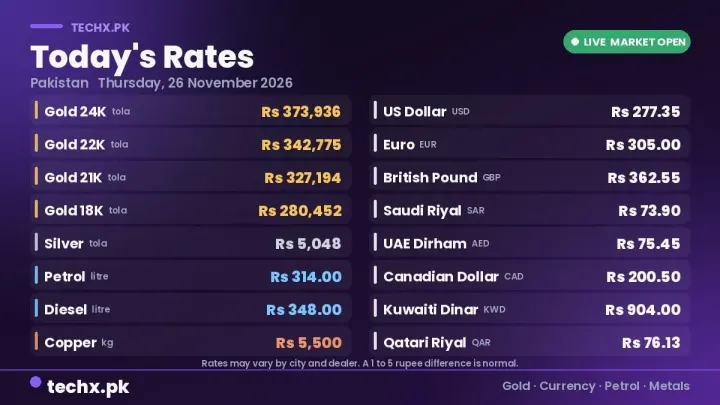
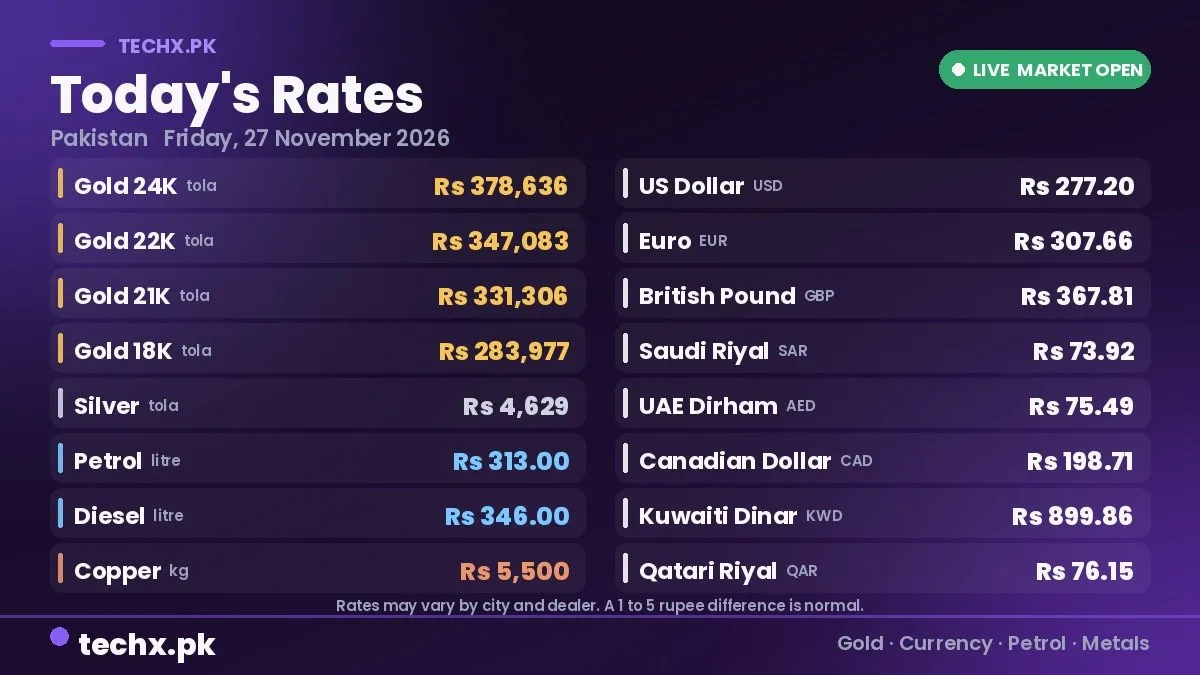
The domestic bullion market recorded a notable increase, pushing the valuation of precious metals higher for local buyers. Today the 24k gold price per tola in Pakistan is Rs 378,636, which is Rs 4,700 higher than yesterday's closing rate. All gold purities have risen today, while silver rate today has fallen by Rs 419 per tola. Buyers visiting local Sarafa bazaars today will find 22K gold per tola at Rs 347,083 and 18K gold at Rs 283,977. Silver, often used in jewellery and industrial products, has dropped noticeably today, making it slightly cheaper for buyers compared to yesterday.
In addition to per tola measurements, fine gold traded heavily in smaller denominations across urban trading hubs. The 24K gold rate for 10 grams settled at Rs 324,619, marking an increase of Rs 4,030 compared to the previous trading session. Investors and retail jewellers closely monitor these incremental figures as they calculate profit margins for ornaments, bullion bars, and investment certificates. The divergence between gold and silver performance on the same day highlights the distinct supply and demand dynamics governing each precious metal within regional and global commodity exchanges.
Dollar and Currency Rates in Pakistan Today
Foreign exchange dynamics showed a steady posture for the benchmark American currency alongside varying movements among European and regional monetary units. Today the US Dollar is trading at Rs 277.20 in Pakistan's open market, unchanged from yesterday's rate. Among the European currencies, the British Pound has gained the most today, rising Rs 5 to reach Rs 367.81, while the Euro is up Rs 3 at Rs 307.66. These are the currency rates in Pakistan 27 November 2026 as reported by the open market. Dollar rate in Pakistan today remains flat, which means no extra pressure on import costs from USD movement today. People sending remittances from the UK will get a better rate compared to yesterday, as the pound has strengthened.
Other major currencies also posted mixed results across currency exchange counters in major financial districts. The Saudi Riyal held firm at Rs 73.92, while the UAE Dirham remained steady at Rs 75.49. Conversely, the Canadian Dollar eased to Rs 198.71 after dropping Rs 2, and the Kuwaiti Dinar decreased by Rs 4 to stand at Rs 899.86. Meanwhile, the Qatari Riyal maintained its position at Rs 76.15, and the Omani Rial stayed constant at Rs 719.90. The Australian Dollar was recorded at Rs 185.92 with no recorded change from the preceding session.
Petrol and Diesel Prices Today
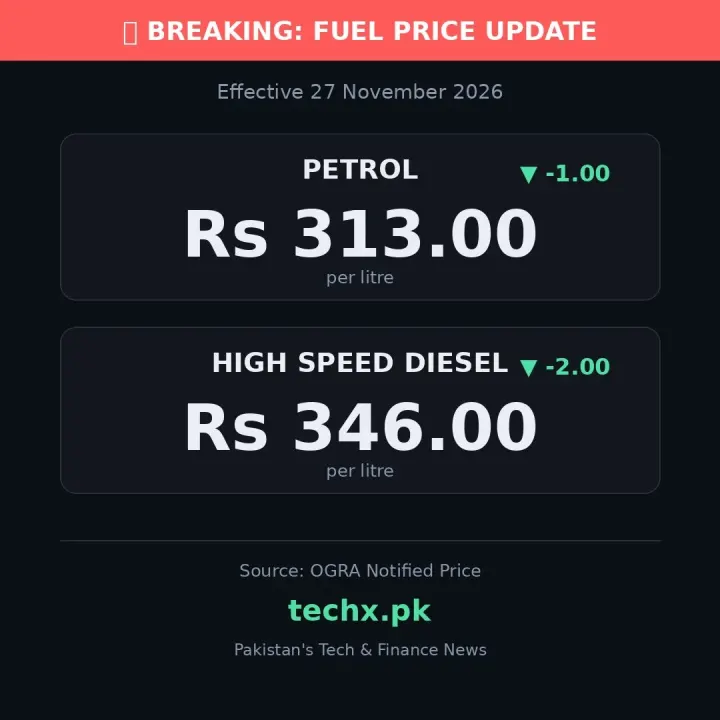
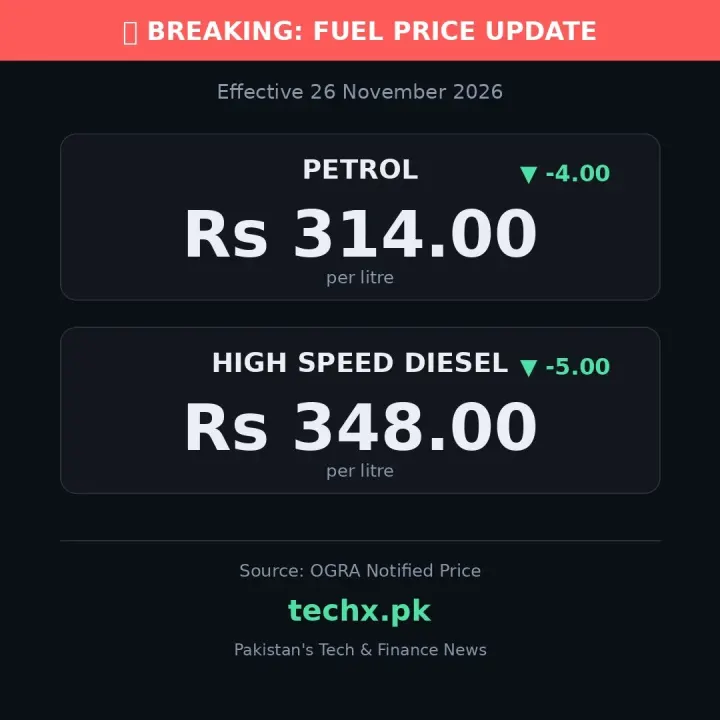
Energy consumers received a modest economic adjustment as petroleum products registered slight decreases at retail distribution networks. Petrol price in Pakistan today is Rs 313.00 per litre, which is Rs 1 lower than yesterday. High Speed Diesel has also dropped by Rs 2 and now stands at Rs 346.00 per litre. Even a small drop in fuel prices is good news for daily commuters and transport operators. Lower diesel prices in particular can help reduce the cost of goods transport across the country, which benefits consumers over time.
Transportation expenses form a major component of household budgets and commercial logistics throughout the nation. Whenever fuel tariffs decline, freight operators face lower overhead expenses, which theoretically dampens inflationary pressures on perishable goods and manufactured items moved via roadways. While the reductions of Rs 1 for petrol and Rs 2 for diesel are relatively minor, they contribute to a cumulative stabilization effect for working-class citizens who rely heavily on public transport and personal motorbikes for daily commuting.
Copper Rate Today
Industrial metals maintained a firm baseline in local manufacturing sectors, driven by ongoing demand from construction and electrical engineering projects. Today copper is priced at Rs 5,500 per kg in Pakistan's local market. Copper is widely used in electrical wiring, construction, and manufacturing. Its local price affects the cost of many industrial and household products in Pakistan.
Makers of cables, home appliances, and plumbing supplies rely heavily on consistent raw material pricing to manage their operational budgets. Because copper functions as a primary indicator of industrial health, stable pricing in local markets allows small and medium enterprises to forecast production expenses with greater accuracy. Contractors and builders factor these per-kilogram figures into ongoing infrastructural developments across urban and rural zones.
Why Did Rates Change Today?
Market analysts attribute the day's financial shifts to a combination of international commodity trends and domestic trading habits. Gold has risen today mainly because of upward movement in international bullion markets. When global gold prices increase, local Sarafa markets in Pakistan adjust their rates accordingly. Strong buying demand at local jewellery shops and bullion dealers can also push prices higher on a Friday, as customers often plan their purchases ahead of the weekend. Silver, however, moved in the opposite direction today, likely due to a dip in its international price or weaker local demand compared to gold.
Petrol and diesel prices have come down slightly, which points to a small easing in global crude oil prices or a minor adjustment in the government's fuel pricing formula. The US Dollar stayed flat against the Pakistani Rupee today, which means the USD-PKR rate did not add extra pressure on gold or fuel import costs. The Euro and British Pound gained against the Rupee, possibly driven by stronger economic signals from Europe and the UK. The Canadian Dollar and Kuwaiti Dinar eased slightly, reflecting normal market corrections in those currency pairs. Friday, 27 November 2026 brings a mixed picture for Pakistani consumers: gold buyers are paying more, fuel buyers are saving a little, and the dollar market is calm. Keep checking back for the latest numbers throughout the day.