New Petrol and Diesel Prices in Pakistan Today
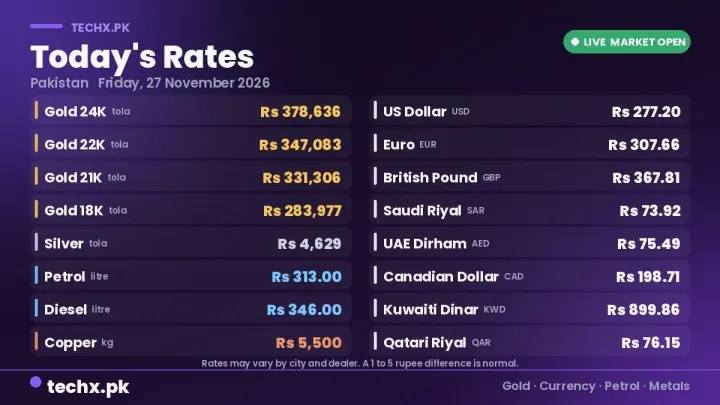
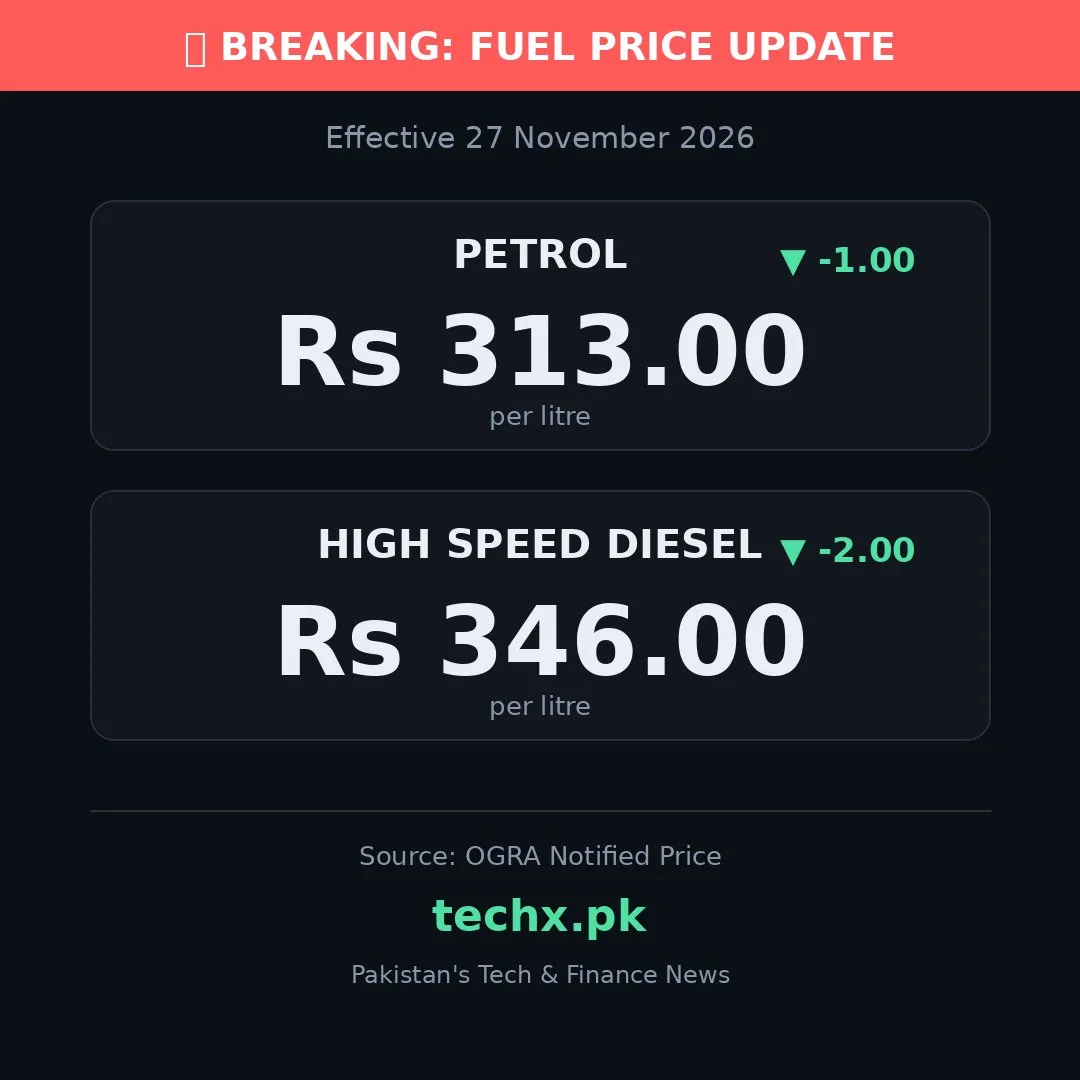
The petrol price in Pakistan today drops by Rs 1.00 per litre as OGRA announces revised fuel rates effective 27 November 2026. High Speed Diesel also gets a cut of Rs 2.00 per litre, giving some relief to commuters and transporters across the country.
OGRA fuel prices have been officially revised for the new fortnightly period starting 27 November 2026. Following this latest notification, consumers filling up their vehicles at fuel stations will notice a slight downward adjustment on their receipts.
Petrol, officially categorized as Super, is now priced at Rs 313.00 per litre following the Re 1.00 reduction. Meanwhile, High Speed Diesel has dropped to Rs 346.00 per litre after absorbing a Rs 2.00 decrease from its previous rate.
These rates apply across all retail outlets authorized by the state petroleum authorities. Motorists are advised to check local fuel station meters to ensure the correct revised rates are applied to their purchases.
Why Did Fuel Prices Change in Pakistan?
OGRA carries out fortnightly fuel price revisions based on movements in global crude oil markets and the Pakistani rupee exchange rate. When international oil prices soften or the rupee holds steady, OGRA can pass on savings to consumers through a lower new petrol price and a reduced diesel price in Pakistan.
These routine adjustments keep local pump prices aligned with global benchmarks and government policy on fuel subsidies. The mechanism relies heavily on the landed cost of refined petroleum products imported by local oil marketing companies.
Global energy markets face constant fluctuations driven by supply and demand dynamics, geopolitical tensions in producing regions, and decisions made by major international cartels. When the cost of refined petroleum drops on international shipping exchanges during a given pricing fortnight, state regulators recalculate taxes, levies, and ex-depot prices.
The stability of the national currency plays an equally critical role in determining retail rates. Because petroleum products are imported, a stable or strengthening local currency reduces the cost of purchasing foreign oil, leaving room for marginal price decreases at domestic pumps.
What the Price Cut Means for Commuters and Transport
Even a small cut in OGRA fuel prices brings some relief at the pump. For daily commuters, rickshaw and taxi drivers, and small business owners, paying Rs 1.00 less per litre on petrol and Rs 2.00 less on High Speed Diesel can add up over a full tank.
Freight and transport costs may also ease slightly, which could have a modest positive effect on the prices of goods and groceries in local markets across Pakistan. Public transport operators, who rely primarily on diesel for buses and larger commercial vehicles, experience minor relief in operational overheads.
Household budgets remain tight for millions of citizens facing broader economic pressures. While a single-digit reduction per litre does not erase cumulative inflation from previous months, any downward movement provides psychological and financial breathing room for working families.
Small-scale enterprises that depend on delivery motorcycles and backup diesel generators find modest savings in their daily utility expenditures. Every rupee saved on fuel inputs helps preserve profit margins for micro-entrepreneurs operating in urban and rural centers alike.
How the OGRA Pricing Mechanism Works
The Oil and Gas Regulatory Authority functions as the primary oversight body responsible for monitoring petroleum sector operations. Every two weeks, the agency reviews pricing data submitted by oil marketing companies and state financial institutions.
The calculation involves adding petroleum levy charges, custom duties, general sales tax, and distribution margins to the calculated import cost. The government adjusts these levies periodically to manage fiscal targets and stabilize state revenues.
Transparency in fuel price announcements ensures that consumers and businesses can anticipate market shifts. Retailers are legally bound to display the official rates prominently at every filling station across the provinces.
Consumer protection councils monitor compliance to prevent unauthorized overcharging by petrol pump owners. Any discrepancies reported by motorists are investigated by regulatory inspection teams stationed in major cities.
Historical Context of Fuel Price Trends in Pakistan
Petroleum pricing in the country has historically been a sensitive political and economic issue. Past decades have seen extreme volatility in international crude markets, forcing successive administrations to manage difficult trade-offs between fiscal deficit targets and public welfare.
Subsidies were heavily used in earlier eras to cushion consumers from sudden external oil shocks. However, structural economic reforms and international financial agreements have largely phased out blanket state subsidies in favor of market-based pricing formulas.
Consumers have grown accustomed to fortnightly reviews, shifting attention to international market tickers every fifteen days. The frequency of these updates ensures that local pump prices respond more rapidly to global trends than under older monthly or ad-hoc systems.
Economic analysts continue to track energy import bills as a primary driver of the national trade balance. Managing domestic consumption while ensuring affordable energy for industrial production remains a central challenge for economic planners.
What to Watch for in Future Fortnightly Revisions
Market watchers and transport associations will monitor global crude benchmarks closely ahead of the next pricing cycle. If international quotes continue their downward trend, additional minor adjustments could follow in subsequent fortnightly announcements.
Conversely, any sudden disruption in shipping lanes or supply cuts by major exporters can quickly reverse recent gains. Consumers should remain aware that petroleum rates fluctuate in both directions depending on external market realities.
Government tax adjustments also remain a variable factor in upcoming price notifications. Policymakers retain the authority to adjust petroleum levies to meet revenue collection targets set in the national budget.
Stakeholders across the transport and manufacturing sectors will continue adapting their operational strategies to match these regular price movements. Staying informed about OGRA notifications helps businesses manage fuel expenses effectively throughout the year.