Gold rates across Pakistan moved significantly higher on Wednesday, 18 November 2026, with the benchmark 24K gold price crossing the major threshold of Rs 412,000 per tola. This upward movement in precious metals happened alongside notable shifts in foreign exchange rates, fuel values, and industrial commodities. Market participants at the traditional Sarafa bazaar experienced an active trading session as buyers responded to the new price levels. Individuals tracking the daily economy must evaluate how these financial adjustments impact purchasing power, household budgets, and commercial sectors nationwide.
Alongside the surge in gold, currency markets presented a mixed performance. The US Dollar maintained a steady position in the open market, while other major international currencies experienced varied gains and losses against the Pakistani Rupee. At the same time, consumers received a slight reprieve at fuel stations as petrol prices dropped, while diesel rates remained unchanged. Industrial buyers also noted the ongoing cost of raw materials such as copper. Comprehensive daily tracking of these financial markers remains essential for investors, business owners, and ordinary citizens trying to manage their daily expenses amidst ongoing economic fluctuations.
Gold Rate in Pakistan Today 18 November 2026
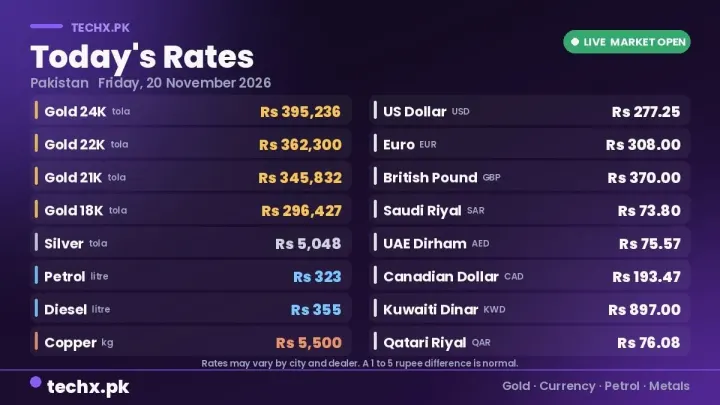
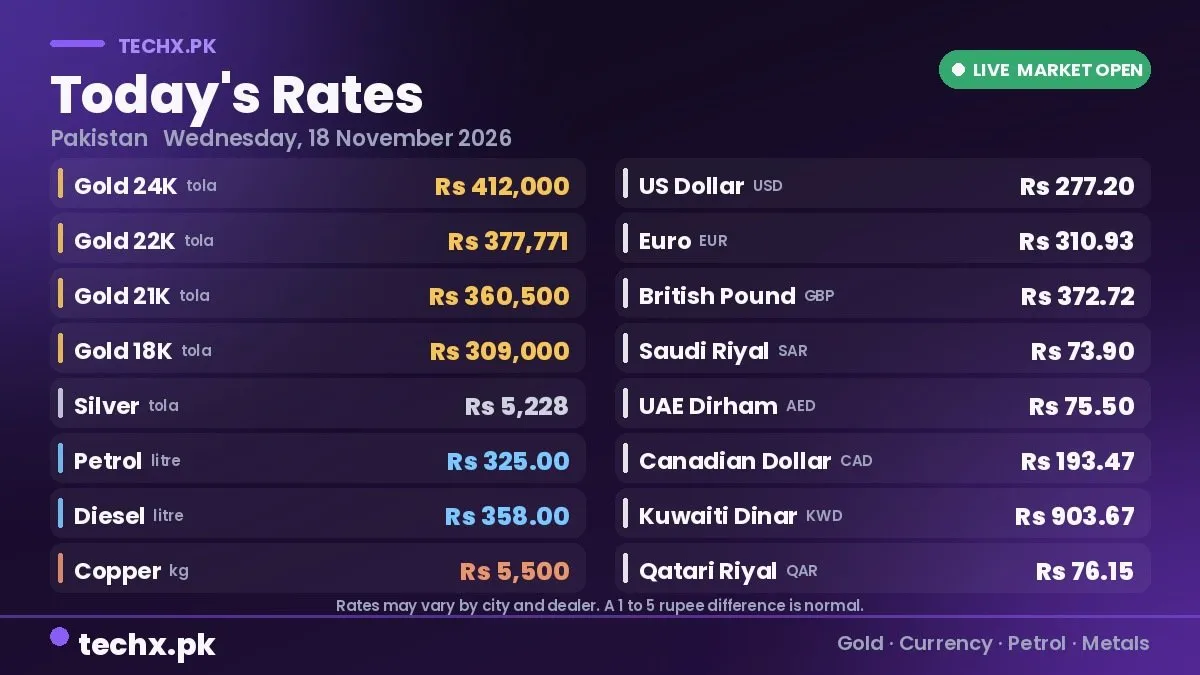
The 24K gold price per tola in Pakistan stands at Rs 412,000, registering an increase of Rs 3,064 compared to the previous trading session. All other gold karats climbed across the board, reflecting strong upward momentum in the local market. For buyers seeking alternative purity levels, 22K gold is priced at Rs 377,771 per tola after rising by Rs 2,913. Meanwhile, 21K gold reached Rs 360,500 per tola following a gain of Rs 2,681, and 18K gold climbed by Rs 2,298 to settle at Rs 309,000 per tola.
Looking at smaller measurement units, 24K gold per 10 grams is now valued at Rs 353,230, which is higher by Rs 2,634. Silver prices remained steady during the same session, with the silver rate holding firm at Rs 5,228 per tola without any recorded change. Buyers searching for jewellery options in lower karats or those purchasing silver as a more affordable asset alternative will find these updated figures guiding transactions in markets across major urban centers.
Dollar and Currency Rates in Pakistan Today
The US Dollar is trading at Rs 277.20 in the open market of Pakistan, holding the same level without immediate movement. Foreign exchange figures on 18 November 2026 showed varied patterns among international currencies. The Euro gained ground to reach Rs 310.93, marking an increase of Rs 1, while the British Pound stayed flat at Rs 372.72. Gulf currencies experienced minor downward pressure, as the Saudi Riyal and UAE Dirham both slipped by Rs 1 to trade at Rs 73.90 and Rs 75.50 respectively.
Other currencies showed distinct adjustments during the session. The Canadian Dollar remained unchanged at Rs 193.47, whereas the Australian Dollar registered the sharpest drop among all listed currencies by falling Rs 7 to settle at Rs 186.76. The Kuwaiti Dinar continued to hold the highest monetary value among listed foreign units at Rs 903.67 after gaining Rs 6. The Qatari Riyal remained stable at Rs 76.15, and the Omani Rial ticked upward by Rs 2 to reach Rs 720.72.
Petrol and Diesel Prices Today
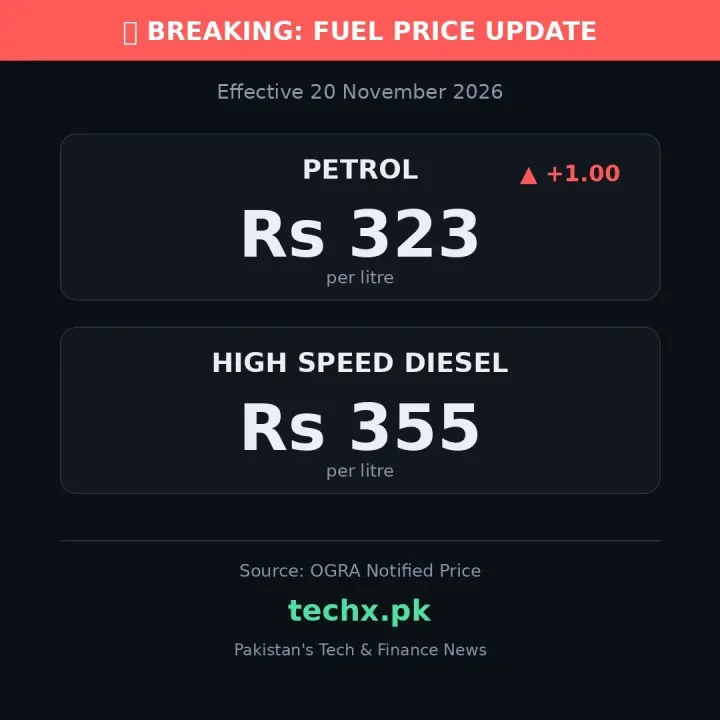
The petrol price in Pakistan today is established at Rs 325.00 per litre, reflecting a decrease of Rs 3 compared to yesterday. High Speed Diesel is priced at Rs 358.00 per litre, holding steady without any adjustment. These figures represent the official government-notified fuel rates applicable across the country on 18 November 2026. Motorists and daily commuters using motorcycles and cars welcomed the minor reduction in petrol costs, which offers small relief during ongoing inflationary pressures.
Diesel prices, which heavily influence the agricultural and logistics sectors, remained unchanged at Rs 358.00 per litre. Because transport costs depend heavily on diesel expenses, commercial truck owners and freight operators continue to monitor these official rates closely. Any future movement in international crude oil benchmarks will dictate whether these fuel figures experience further revisions in upcoming fortnightly government announcements.
Copper Rate Today
Industrial metals also recorded specific valuations on Wednesday, with copper trading at Rs 5,500 per kg in Pakistan. This raw material rate applies directly to construction projects, electrical wiring manufacturing, plumbing supplies, and various manufacturing enterprises across the country. Factory owners and builders factor this specific market rate into their operational budgets as industrial demand fluctuates throughout the fiscal year.
The consistent pricing of industrial inputs like copper helps construction firms plan their expenditures, though broader economic factors continue to influence raw material availability. Local traders and hardware suppliers coordinate their wholesale pricing based on these established per-kilogram benchmarks, ensuring that industrial supply chains maintain visibility on day-to-day cost structures.
Why Did Rates Change Today?
Gold prices moved higher primarily because of rising values in international bullion markets, where global investors continue to purchase precious metals as a secure store of value. This external pressure from worldwide trading floors filters directly into domestic trading floors, driving up local rates for all karats. Strong retail demand from jewellers and private investors in major metropolitan areas added further upward momentum to the 24K gold price per tola.
In the currency sector, the substantial drop in the Australian Dollar reflects broader weakness among commodity-linked international currencies against major global reserves. The minor reduction in petrol prices connects directly to softer international crude oil valuations, giving authorities room to pass a small discount to domestic consumers. Overseas workers transferring funds home will also note the slight downward adjustment in popular Gulf currencies like the Saudi Riyal and UAE Dirham.