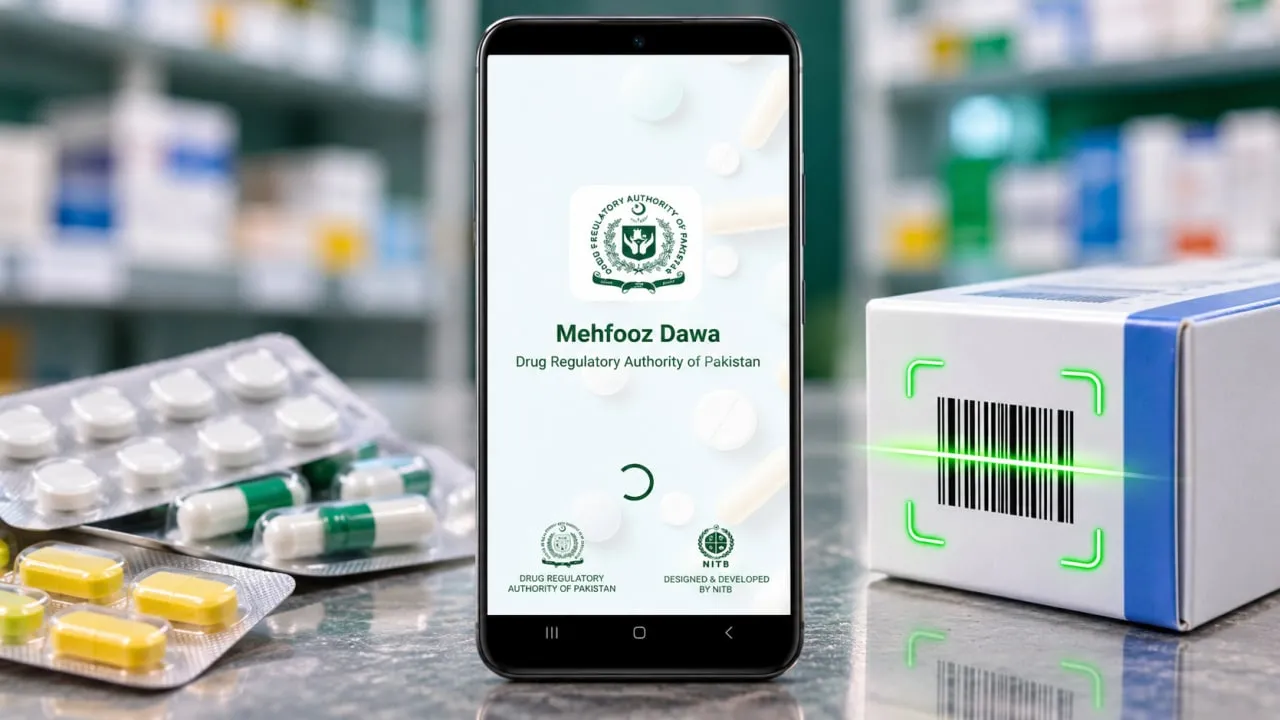
How the Mehfooz Dawa App Works for Citizens
Prime Minister Shehbaz Sharif has launched the government's "Mehfooz Dawa" app, allowing consumers to check whether medicines are genuine, verify their prices and confirm expiry dates by scanning barcodes printed on medicine packaging. This digital tool gives everyday shoppers and patients a direct method to inspect pharmaceutical products before consumption, bringing a new layer of transparency to local pharmacies and medical stores.
The application is available on both the Android and Apple app stores, making it accessible to a large portion of the population with smartphones. DRAP Chairman Dr. Obaidullah said consumers could scan the barcode on medicine packaging to check its authenticity, price and expiry date. By using the built-in camera of a mobile phone, a user captures the barcode data, which then queries the central repository to return immediate details about the drug in question.
Beyond simple verification, the platform serves as a reporting mechanism for public grievances. The app also allows users to report suspected counterfeit medicines, quality concerns and shortages directly to DRAP. A red indicator appears when a medicine is identified as fake, while a green indicator confirms that it is genuine and meets the required standards. This color-coded system ensures that even individuals with minimal technical knowledge can instantly understand the safety status of the drugs they hold.
Development and Institutional Collaboration Behind the App
The app has been developed by the Ministry of National Health Services in collaboration with the Drug Regulatory Authority of Pakistan (DRAP). Speaking at the launch ceremony, the prime minister said the platform would also help identify counterfeit medicines and provide information about their availability in the market. Bringing multiple state bodies together was essential to building a secure digital infrastructure for the pharmaceutical sector.
Federal Health Minister Syed Mustafa Kamal said pharmaceutical companies had shared data on more than 92,000 medicines with the government. Information from 700 pharmaceutical companies has also been incorporated into a national database, which will support the app's verification system. This extensive database forms the backbone of the application, ensuring that the scanning feature references up-to-date manufacturer records.
To ensure widespread adoption, administrative leadership has set clear promotional targets for state departments. The prime minister directed the Ministry of Information and Broadcasting and the Ministry of Information Technology to launch an awareness campaign to make the application accessible to households across the country. He also called on the health ministry to coordinate with the relevant departments and the Special Investment Facilitation Council to promote its use.
Historical Context of Spurious Drugs in Pakistan
During the ceremony, Shehbaz recalled an incident from his tenure as Punjab chief minister when around 100 heart patients receiving treatment at the Punjab Institute of Cardiology died. The provincial government was initially blamed, and medicine samples were sent to laboratories in London, Geneva and Paris for testing. This tragic historical event remains a stark reminder of the dangers posed by unregulated or mislabeled pharmaceutical products in the public healthcare system.
He said the then federal government had declared the medicines genuine through DRAP and held the Punjab Institute of Cardiology and the provincial government responsible. However, subsequent laboratory reports from abroad revealed that the medicines being administered to heart patients were actually intended for treating malaria. The confusion and delayed discovery exposed severe vulnerabilities in how medical drugs were tracked and tested at the time.
The prime minister said the incident highlighted the importance of learning from past mistakes and improving public services. Modernizing the verification process through mobile applications is viewed by authorities as a direct answer to historical failures, ensuring that similar tragedies can be intercepted before patients ingest harmful or incorrect chemical formulations.
Addressing Healthcare Affordability and Accessibility
Beyond safety and verification, public officials used the launch platform to discuss broader systemic issues within the national medical sector. He also stressed that access to affordable medicines and healthcare remained a major challenge, particularly for millions of people who cannot afford treatment. Out-of-pocket expenses for prescriptions often push vulnerable households into financial distress during medical emergencies.
To combat these economic barriers, leadership has called for collaborative solutions involving both public and private stakeholders. He called for federal and provincial governments to work together with pharmaceutical companies to make medicines and healthcare more affordable. Aligning regulatory bodies, manufacturers, and state healthcare providers is presented as the primary pathway toward universal health security and equitable access to essential remedies.
The integration of the national database with consumer-facing technology marks a significant structural shift in regulatory enforcement. By empowering citizens to act as frontline inspectors through their smartphones, the government hopes to curb the circulation of illicit drugs while simultaneously gathering real-time data on drug shortages and pricing irregularities across different regions.