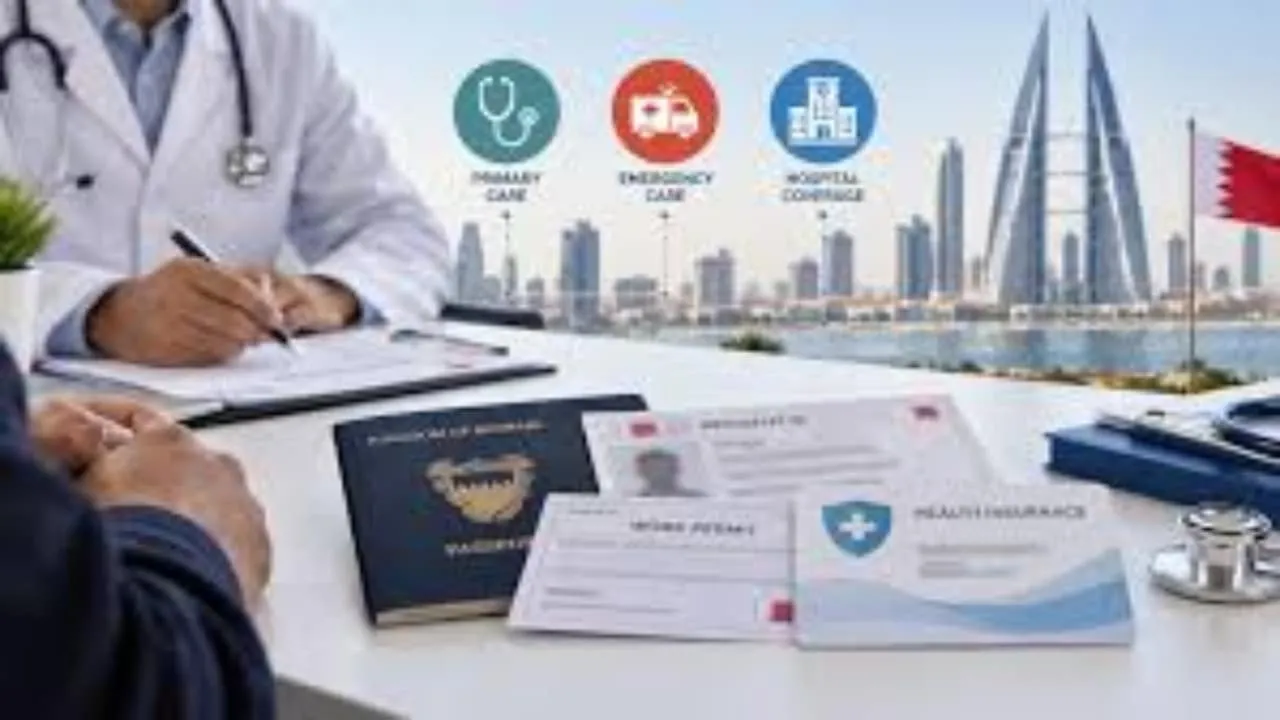
Bahrain Introduces Mandatory Health Insurance for Dependents
Foreign nationals filing dependent residence permit applications and renewals in Bahrain are now automatically enrolled in a government-mandated health insurance policy, with a fee of BHD 180. This regulatory update marks a major shift in how the nation administers residency documents for families living within its borders, shifting healthcare responsibilities for expatriate dependents into a formalized public system.
Individuals can still obtain additional private health insurance beyond this mandatory coverage. While the baseline requirement is now automatically fulfilled through the official fee, families who prefer more comprehensive medical packages or specific hospital access retain the freedom to purchase supplemental policies from commercial providers.
The New Requirement Imposed by Authorities
Under the change, the Labour Market Regulatory Authority now requires dependents applying for a new residence permit in Bahrain to hold valid health insurance coverage. The Labour Market Regulatory Authority, commonly known as the LMRA, serves as the primary government agency regulating work permits, dependent visas, and expatriate labor policies in the country.
Previously, health insurance was not a mandatory requirement for dependents applying for a residence permit. It was required only for main applicants, leaving family members dependent on out-of-pocket payments, employer-sponsored private plans if extended voluntarily, or emergency public care depending on individual circumstances.
Compliance Conditions and Policy Duration
The health insurance policy must be issued by a licensed insurance provider in Bahrain and must remain valid for the full duration of the residence permit. Regulatory compliance depends entirely on matching the exact validity dates of the insurance certificate with the duration requested on the official residency application form.
For example, a dependent applying for a one-year residence permit must hold health insurance coverage valid for at least one year. If a permit is issued for a different timeframe, the underlying insurance policy must stretch across that exact period without any lapse in coverage dates.
What Employers and Sponsors Need to Know
There is currently no guidance or updates issued regarding whether this requirement also applies to renewals. Employers and individual sponsors must monitor future announcements from regulatory bodies to see if existing dependent renewals will face retroactive enforcement or if the rule applies strictly to new applications currently moving through the system.
Employers should account for additional costs and ensure that employees sponsoring dependents obtain compliant health insurance coverage for each dependent for the full duration of the residence permit. Human resources departments across businesses operating in the country must update their budgeting models to reflect the BHD 180 fee per dependent.
Background on Bahrain Healthcare Regulations
Bahrain has steadily reformed its healthcare sector over recent years to balance the financial sustainability of public medical facilities with the growing demands of a large expatriate population. The country relies heavily on foreign labor across financial services, construction, manufacturing, and retail sectors, making clear regulations for worker families an essential part of national infrastructure.
In previous years, mandatory health coverage was introduced in phases, starting primarily with primary work permit holders before extending outward. Integrating dependents into a mandatory scheme closes a long-standing regulatory gap where non-working family members did not have guaranteed baseline insurance tied directly to their legal residency status.
Practical Impact on Expatriate Families
For expatriate workers supporting spouses and children in Bahrain, the new policy introduces a predictable financial obligation during the visa processing stage. Families must factor the BHD 180 cost into their relocation or permit renewal budgets alongside standard government processing fees and medical check charges.
On the positive side, having a standardized insurance policy ensures that every dependent child and non-working spouse has guaranteed access to approved medical facilities during their stay in the country. This removes the risk of unexpected medical debt arising from minor illnesses or emergency treatments that previously lacked insurance backing.
Next Steps and Procedures to Watch
As the Labour Market Regulatory Authority integrates this mandate into its daily operations, applicants should verify that their paperwork aligns with the new requirements before submitting documents. Legal and human resources advisors recommend checking directly with licensed insurance providers in Bahrain to confirm policy wordings meet official standards.
Observers will watch for subsequent ministerial announcements clarifying how renewals will be handled once existing permits expire. Until official directives are published regarding renewals, sponsors should prepare for potential policy expansions and maintain close communication with corporate PROs handling government transactions.