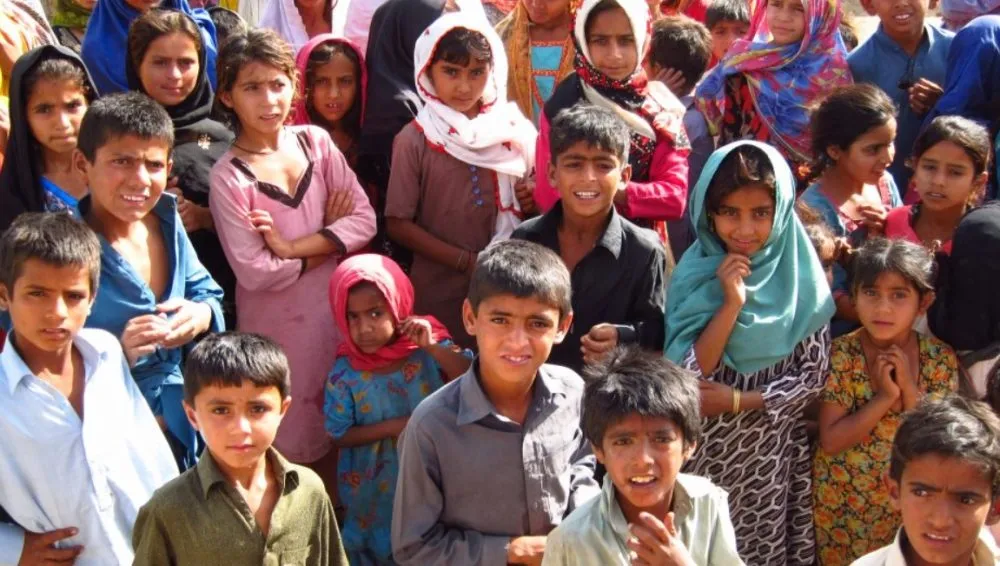
According to the 2026 Global Hunger Index, Pakistan holds the second-highest hunger score in South Asia, trailing only Afghanistan. The publication classifies the hunger situation in the country as serious.
Pakistan received a score of 25.5 out of 100 and placed 106th among 122 countries that had sufficient data. This ranking points to ongoing child malnutrition and persistent food insecurity.
Over the long term, the hunger score for Pakistan dropped from 36.2 in 2000 down to 25.5 in 2026, showing significant improvement. Even so, data indicates the score climbed from 24.0 in 2018 to 25.5 in 2026. This change places Pakistan as one of only two South Asian nations, alongside Afghanistan, where hunger levels increased after 2018.
The findings state that Pakistan has an undernourishment rate of 16.1 percent, indicating that this portion of the population lacks adequate caloric intake. For children under the age of five, 33.6 percent experience stunting as a sign of chronic undernutrition, and 9.8 percent face wasting, which indicates acute undernutrition. Furthermore, the mortality rate for children under five sits at 5.6 percent.
Economic instability, lingering impacts from steep food price jumps, and climate shocks contribute to the food security difficulties in Pakistan, the report explains. Flash floods and heavy monsoon rains during 2025 impacted more than six million people while harming agricultural land and infrastructure, and lower household purchasing power limited access to food.
South Asia's Hunger Burden
South Asia as a region posted a GHI score of 23.5, which marks the second-highest regional level following sub-Saharan Africa at 27.5. Afghanistan reached a score of 28.6, India recorded 24.1, and Bangladesh hit 19.2. Nepal registered 14.5, and Sri Lanka reached 10.2.
Estimates from the report indicate that 218 million people across South Asia, which includes Iran, lacked adequate nourishment between 2023 and 2025, accounting for about one-third of the worldwide total.
Although the region advanced considerably since 2000, most of that progress took place prior to 2018. Undernourishment stayed mostly flat since that year, while child wasting climbed to 15.8 percent, representing the highest regional rate across the globe.
Global Hunger Worsens After Years of Progress
On a global scale, the GHI score went up to 18.1 in 2026 compared to 17.6 in 2018. This shift reverses some of the gains achieved since 2000, when the score was 28.2. The document ties this decline to combined factors of conflicts, climate extremes, economic shocks, and disruptions within global food and agricultural supply chains.
Since 2018, hunger grew worse in 32 nations, while 36 countries encounter serious hunger levels and eight deal with alarming levels. Globally, an estimated 645 million people lacked sufficient nourishment in 2025.
The text cautions that conflict, higher expenses for food and transport, severe weather, and cuts in humanitarian funding place extra strain on food systems. It also warns that a stronger El Niño could damage food and nutrition security in vulnerable areas.
The Global Hunger Index evaluates hunger through four metrics, namely undernourishment, child stunting, child wasting, and child mortality. The 2026 conclusions rely on figures spanning the 2021 to 2025 timeframe.