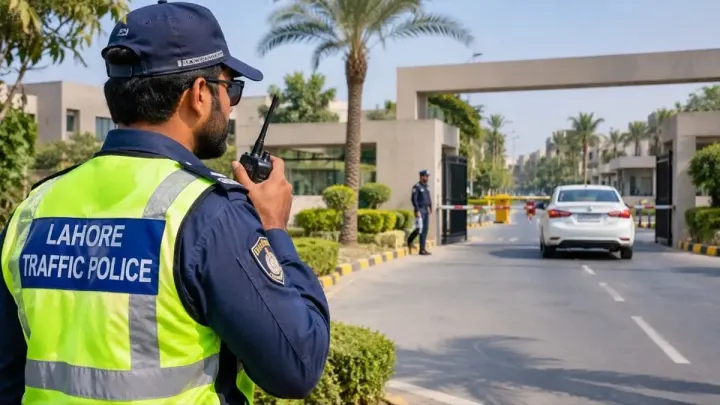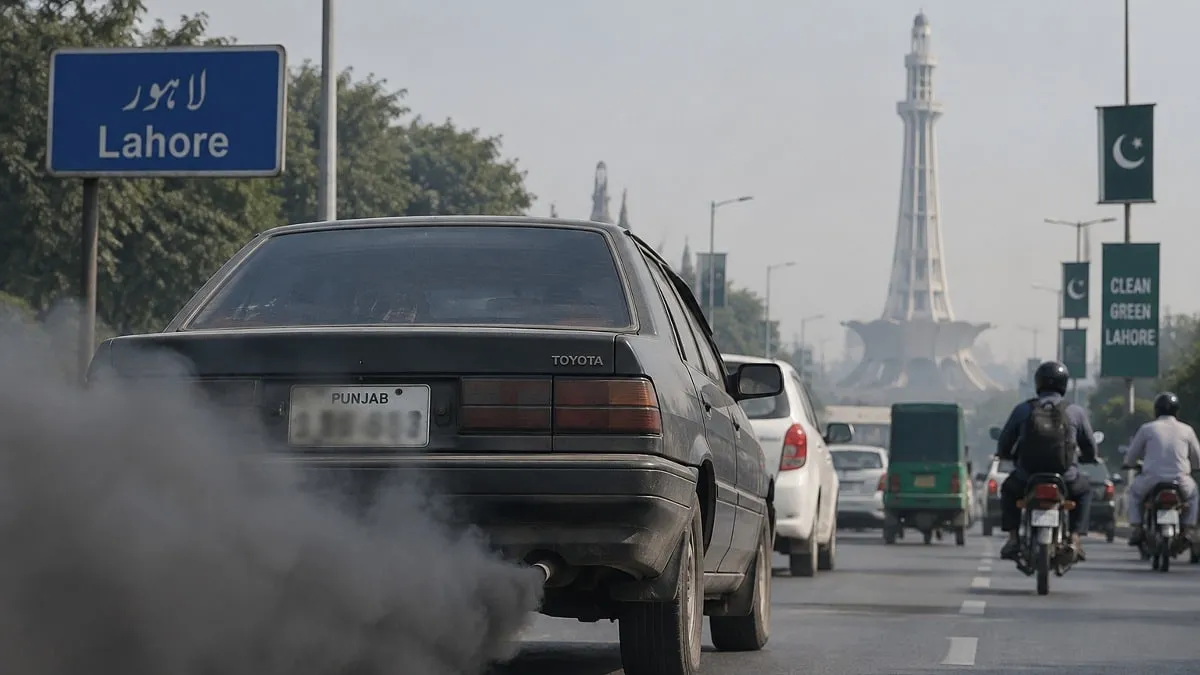
Lahore Traffic Police has stepped up its anti-smog operations, setting up special checkpoints at night and targeting vehicles that contribute to air pollution.
According to Chief Traffic Officer Lahore Abdul Raheem Shirazi, authorities have issued 14,653 challans to smoke-emitting vehicles. Officials have also taken action against 10,306 vehicles transporting soil and sand without protective covers.
The traffic police has additionally acted against 31,618 unfit vehicles operating without fitness certificates and 272,760 vehicles involved in overloading.
Shirazi said authorities have banned uncovered soil and sand carriers from entering Lahore. Traffic police are also suspending the driving licenses of drivers whose vehicles emit dangerously high levels of smoke.
The department is using artificial intelligence to identify smoke-emitting vehicles and issue challans through modern monitoring technology. Officials said enforcement operations would continue as part of efforts to reduce smog and improve air quality in the city.
Why Lahore Is Targeting Vehicles in Its Anti-Smog Campaign
Lahore has ranked among the world's most polluted megacities for several years. Seasonal smog, driven by vehicle emissions, construction dust and industrial output, spikes each winter, prompting health alerts from the provincial health department. The city's Air Quality Management Authority (AQMA) reports that particulate matter (PM2.5) often exceeds the World Health Organization's safe limit of 10 µg/m³, sometimes reaching over 200 µg/m³.
Vehicles without proper exhaust systems, overloaded trucks, and open-top carriers that dump soil or sand are identified as major contributors. Studies by the Pakistan Environmental Protection Agency show that diesel-powered trucks without emission controls can emit up to 20 times more particulate matter than newer, regulated models.
How the Night-Time Checkpoints Operate
Special checkpoints have been established on major arteries such as Ferozepur Road, Multan Road and the Ring Road. Each checkpoint is staffed by traffic police, a mobile AI-driven camera unit, and a portable emissions testing device.
The AI system scans vehicle silhouettes, compares them with a database of known high-emission models, and flags any vehicle that appears to emit visible smoke. Once flagged, officers stop the vehicle, perform a quick on-site emissions test, and issue a challan if the reading exceeds the legal threshold of 0.5 g/km of particulate matter.
For trucks carrying soil or sand, officers check for tarpaulin covers. The law, enacted in 2022, requires all bulk-material carriers entering Lahore to have a waterproof cover to prevent dust escape. Vehicles found without a cover receive a fine and are barred from re-entering the city until compliant.
Enforcement Statistics: What the Numbers Reveal
In the first week of the operation, traffic police issued:
- 14,653 challans to vehicles that emitted visible smoke.
- 10,306 fines to uncovered soil and sand carriers.
- 31,618 penalties to unfit vehicles lacking a valid fitness certificate.
- 272,760 tickets to overloaded trucks and passenger vans.
These figures represent a combined 329,537 enforcement actions, a scale not seen since the city's 2019 traffic crackdown. The high number of overloading tickets reflects the long-standing practice of loading trucks beyond the legal Gross Vehicle Weight (GVW), which contributes to brake wear, fuel inefficiency and higher emissions.
Legal Framework Behind the Action
The Punjab Motor Vehicles Ordinance of 2000 provides the legal basis for issuing challans for smoke emission, overloading and lack of fitness certificates. Under Section 8, any vehicle that emits smoke in excess of prescribed limits can have its driver's licence suspended for up to six months.
Additionally, the Punjab Environmental Protection Act of 2015 mandates that any vehicle transporting loose bulk material must be covered to prevent dust pollution. Non-compliance carries a fine of Rs. 5,000 per violation and a possible ban from city limits.
Impact on Drivers, Businesses and Residents
For drivers, the immediate consequence is a financial penalty and the risk of licence suspension. Commercial transport firms face operational disruptions as overloaded or uncovered trucks are turned away, forcing them to adjust routes or invest in compliant equipment.
Residents stand to benefit from reduced particulate matter in the air. Preliminary data from AQMA shows a 6 % drop in average PM2.5 levels over the first three days of enforcement, though experts caution that sustained improvement requires ongoing monitoring.
Health professionals note that lower particulate concentrations can reduce hospital admissions for respiratory ailments, especially among children and the elderly.
What Comes Next: Ongoing Monitoring and Future Steps
The traffic police have announced that the night-time checkpoints will remain active for at least the next 30 days, after which a performance review will be conducted. The review will assess the number of challans issued, changes in air-quality readings and feedback from the transport sector.
Authorities also plan to expand AI monitoring to daytime traffic corridors and to integrate the system with the provincial vehicle registration database. This integration will allow real-time alerts when a vehicle with a history of violations re-enters the city.
Stakeholders, including the Lahore Chamber of Commerce, have been invited to a round-table discussion scheduled for early December to explore incentives for fleet modernization, such as tax rebates for vehicles that meet Euro IV emission standards.
Practical Takeaways for Lahore's Motorists
Drivers should ensure their vehicles have a valid fitness certificate, avoid overloading beyond the manufacturer's GVW, and keep any soil or sand loads covered at all times. Those operating diesel engines should consider regular maintenance of exhaust filters to stay within legal emission limits.
Anyone receiving a challan can appeal within 15 days through the Traffic Police's online portal, but the appeal must be supported by a certified emissions test report.
By adhering to these guidelines, motorists can avoid fines, keep their licences active, and contribute to a cleaner Lahore.