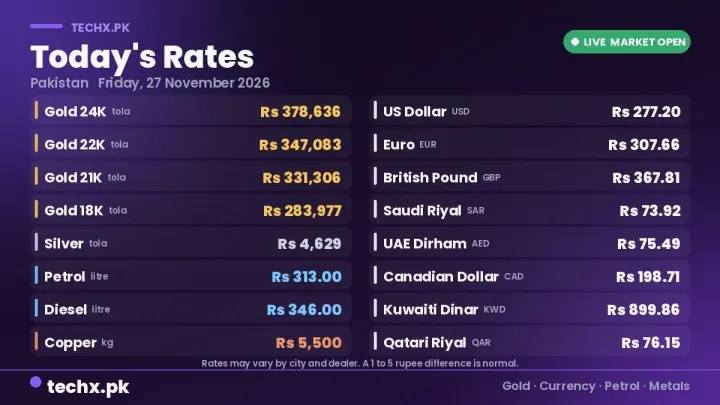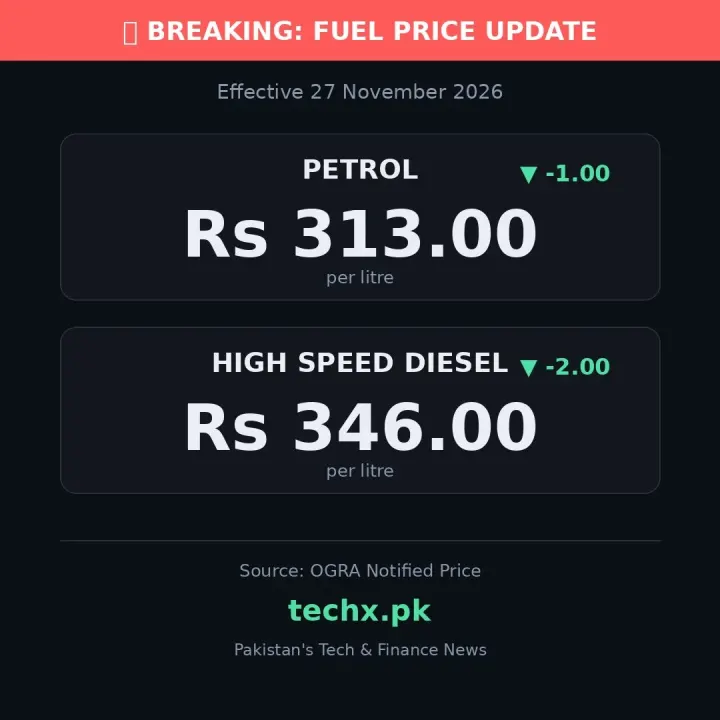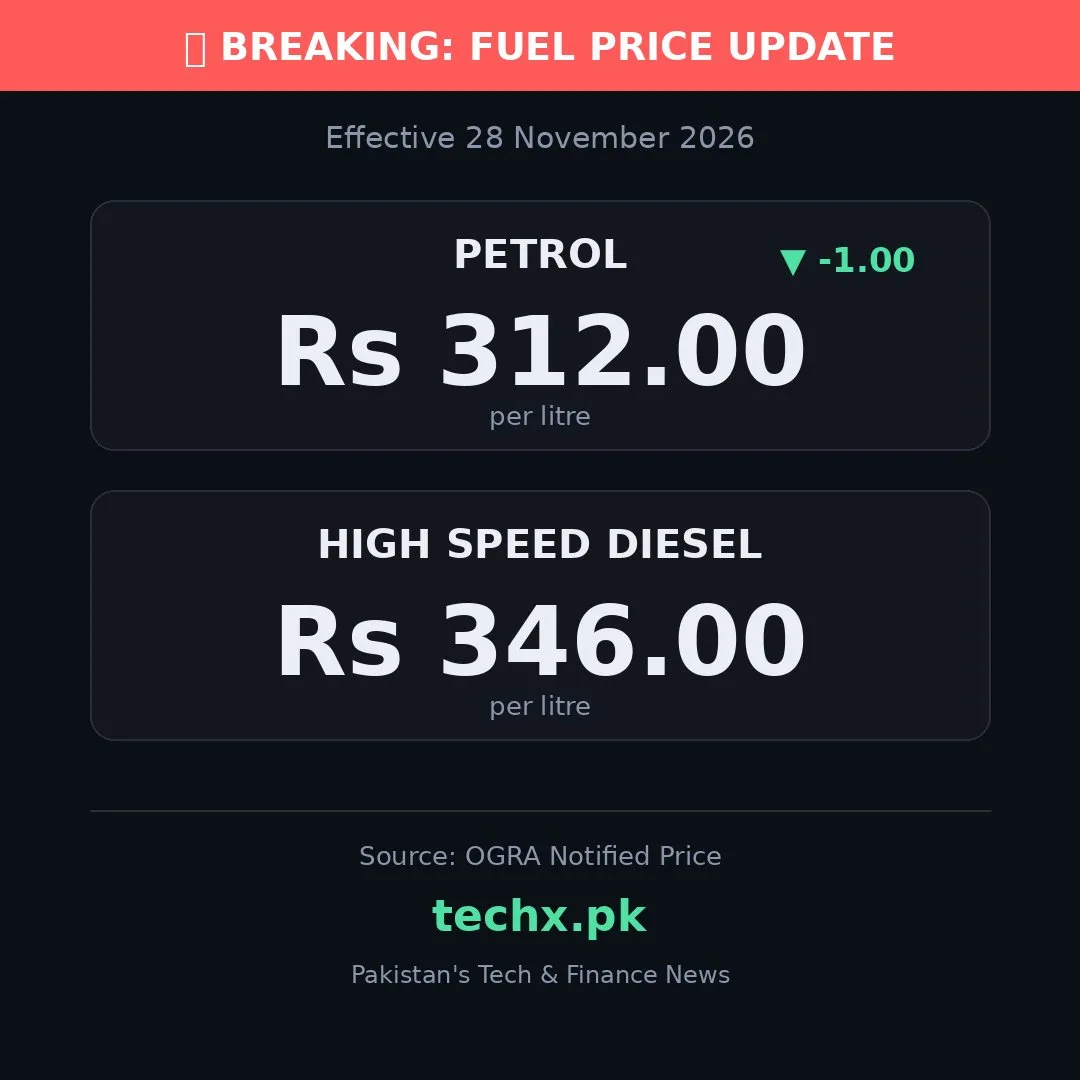
Pakistan's regulator OGRA announced on 28 November 2026 that the retail price of petrol will fall by Rs 1 per litre, bringing the new rate to Rs 312.00 per litre. Diesel prices remain unchanged at Rs 346.00 per litre.
What Are the New Fuel Prices?
The official notification lists the following rates under the latest OGRA fuel price revision effective 28 November 2026:
| Fuel | New Price | Change |
|---|---|---|
| Petrol (Super) | Rs 312.00 per litre | -Rs 1.00 |
| High Speed Diesel (HSD) | Rs 346.00 per litre | -Rs 0.00 |
The reduction applies to all retail outlets across the country, from urban service stations to rural pumps.
Why Did OGRA Adjust the Prices?
OGRA conducts a fortnightly review of fuel tariffs. The body considers two main variables: the price of crude oil on the global market and the exchange rate of the Pakistani rupee against the US dollar. In the weeks leading up to the 28 November revision, international oil benchmarks showed a modest decline, creating a narrow margin for a price cut on petrol. Diesel, whose benchmark moved very little, stayed at the same level.
The regulator's mandate is to transmit global price movements directly to consumers, avoiding large delays that could distort the domestic market. By adjusting prices every two weeks, OGRA aims to keep fuel costs aligned with external economic forces while providing predictability for businesses and households.
How Does the Price Cut Affect Everyday Commuters?
For a typical car that uses a 40-litre tank, the Rs 1 reduction translates into a Rs 40 saving each time the tank is filled. Motorcyclists, who often purchase smaller volumes, will notice a proportionally smaller but still tangible benefit. The change does not affect taxes, levies, or other surcharges that are part of the final pump price; those components remain unchanged.
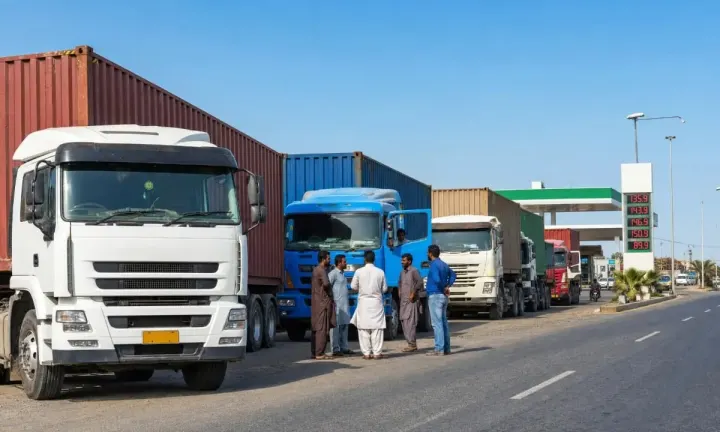
Because diesel prices are unchanged, transport operators, freight companies, and any business that relies heavily on diesel-powered vehicles will not see a shift in operating costs for this period. Consequently, the price of food and other goods that depend on diesel logistics is expected to remain stable.
Background: How Fuel Pricing Works in Pakistan
Fuel pricing in Pakistan is governed by the Oil and Gas Regulatory Authority (OGRA), an autonomous body created in 2002 to oversee the oil and gas sector. OGRA's pricing formula incorporates three elements: the international price of crude oil, the exchange rate of the rupee, and a fixed margin that covers refining, distribution, and taxes. The regulator publishes a tariff schedule every two weeks, which is then implemented by the Ministry of Energy and the State Bank of Pakistan.
Historically, Pakistan has faced volatile fuel prices due to fluctuations in global oil markets and periodic devaluation of the rupee. The fortnightly revision system was introduced to smooth out these swings and to prevent large, sudden price shocks that could strain the economy.
Impact on the Wider Economy
Fuel costs are a key input for many sectors, including agriculture, manufacturing, and transportation. Even a modest Rs 1 change can ripple through the cost structure of these industries. A lower petrol price may encourage marginal increases in private vehicle use, while stable diesel prices help keep freight rates steady.
Inflation monitoring agencies, such as the Pakistan Bureau of Statistics, track fuel price movements closely because they feed into the Consumer Price Index (CPI). A one-rupee drop in petrol is unlikely to shift the CPI dramatically, but it does provide a small buffer against upward pressure on food and transport costs.
What to Expect Next
OGRA will release its next price revision on 12 December 2026, following the same fortnightly schedule. Market participants should watch for changes in the Brent crude price and the rupee's exchange rate, as these will dictate whether the trend of modest adjustments continues.
Consumers can stay informed by checking the official OGRA website or subscribing to alerts from local news outlets. Businesses that manage fuel budgets are advised to incorporate the bi-weekly price schedule into their financial planning to avoid surprises.
Practical Takeaways for Readers
- Update your fuel budget to reflect a petrol price of Rs 312 per litre starting 28 November 2026.
- Expect no change in diesel-related expenses for this fortnight.
- Monitor the next OGRA announcement on 12 December 2026 for any further adjustments.
While the Rs 1 cut is modest, it demonstrates OGRA's commitment to passing global market shifts onto consumers in a timely manner.