Pakistan has prohibited Taiwanese carriers from using its skies to align with the One-China policy, marking the initial instance of any nation implementing such a measure, as reported by Bloomberg on Wednesday.
Khawaja Asif, the Defence Minister, verified this measure to Bloomberg News by stating that their aviation division adheres exclusively to the One-China policy, permitting solely mainland China, and that only Chinese carriers hold authorization to fly across Pakistan.
Pakistan has denied carriers from Taiwan access to its airspace in support of Beijing’s One-China policy, the first move of its kind by any country. Full story: https://t.co/2WDTeJIM9l
— Bloomberg (@business) October 28, 2026
📷: I-Hwa Cheng/Bloomberg pic.twitter.com/8MyAedd844
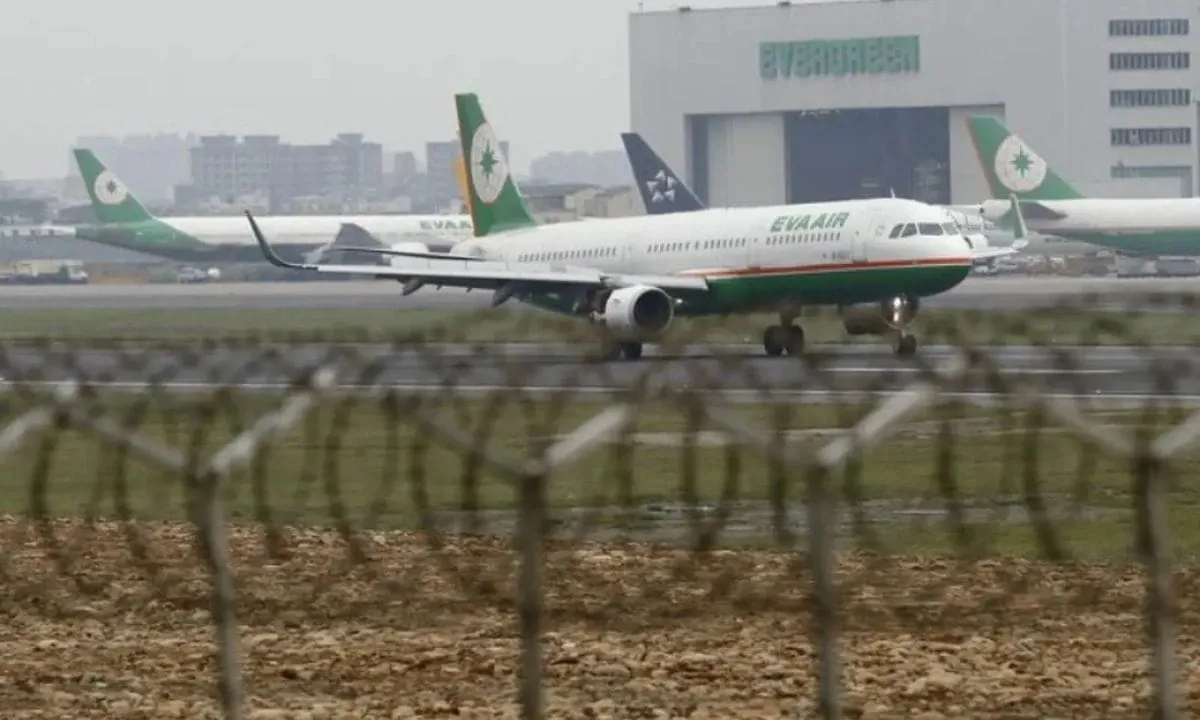
Carriers from Taiwan started diverting their routes over the weekend. Flight-tracking figures mentioned in the publication indicate that Eva Airways Corp and China Airlines Ltd have avoided Pakistani airspace starting from the morning of Oct 25. Flightradar24 records show these two carriers flew at least 12 Asia-Europe journeys over Russia beginning Sunday.
Eva Air and China Airlines chose not to issue statements. Taiwan's Civil Aviation Administration refrained from discussing the path changes, though it noted that it never prohibited its operators from using Russian airspace.
The measures enacted by Pakistan prove more rigorous than those of mainland China, which permits Taiwanese operators to cross its territory, according to the article. The motivation behind this action from Pakistan stays uncertain, while sky restrictions often grow stricter during times of elevated political friction.
Taiwanese operators stayed away from Russian skies since February 2022, matching numerous North American, European, and Asian carriers, despite never facing official bans against using them. This diversion has extended travel hours for Asia-Europe trips and increased expenses for fuel.
Eva Air and China Airlines are additionally using pathways across alternative regions of the Middle East and South Asia, stretching travel durations even further. Beijing views Taiwan as part of its land. Islamabad cut official diplomatic ties with Taiwan back in 1951 to build stronger bonds with China.
Islamabad has consistently restated its stance concerning Taiwan. Tahir Andrabi, a Foreign Office spokesperson, stated on Jan 3 that Pakistan will maintain its commitment to the One-China principle and treat Taiwan as an inalienable part of China.
He characterized China and Pakistan as iron-clad friends and all-weather strategic cooperative partners.
This declaration followed military exercises conducted by China near Taiwan in early January, which featured live-fire drills mimicking a blockade of vital ports and strikes on maritime targets. Taipei denies Beijing's assertion that the island belongs to its territory.
Pakistan and China have strengthened connections via the Belt and Road Initiative directed by President Xi Jinping, which directed billions of dollars toward Pakistan.
Both nations likewise keep strong military connections, with China acting as the primary weapons provider for Pakistan. Their security bonds attracted global notice during the May 2025 conflict involving India and Pakistan, when Pakistan operated Chinese-built J-10C fighter jets.