Punjab Education Authorities Release Smart Syllabus for 2027 Ninth Class Exams
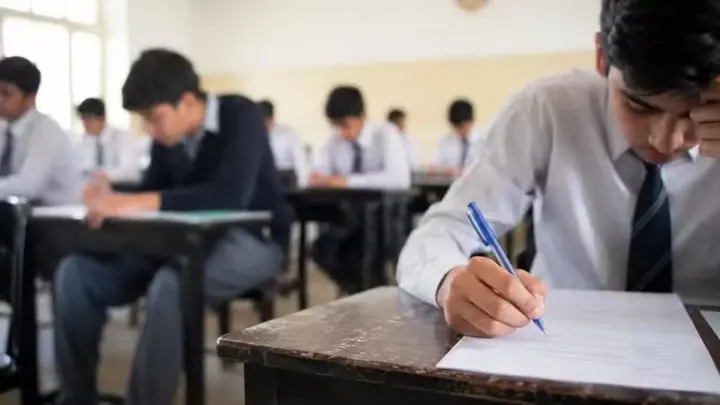
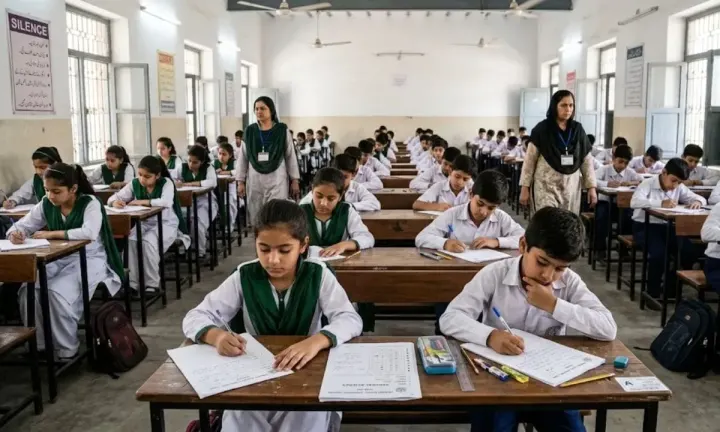
The Punjab Education, Curriculum, Training and Assessment Authority has officially notified the revised Smart Syllabus for Class 9 students for the 2026-27 academic session and the 2027 annual board examinations. This directive introduces a streamlined educational framework designed to help students master core competencies within a structured timeline. Education officials formulated the updated guidelines to ease academic pressures while maintaining rigorous educational standards across the region.
According to a notification issued on November 6, 2026, the authority has approved the Accelerated Learning Program, which includes a reduced syllabus, deleted topics and exercise questions, updated pairing schemes, and model papers. The Academics Committee approved the decision at its 13th meeting on November 5, 2026. The revised syllabus will be implemented across Punjab, ensuring uniform testing standards for all candidates appearing in the upcoming board tests.
Understanding the Role of Educational Boards in Punjab
The educational framework in Punjab relies on a network of regional examining bodies that coordinate curricula, conduct annual assessments, and award credentials to secondary school students. These institutions operate under centralized provincial policies while managing local administrative duties for affiliated schools. Provincial authorities establish standard academic requirements, textbook board publications, and examination schedules to maintain consistency across public and private institutions.
Streamlining coursework through accelerated learning initiatives has become a standard administrative practice to support students during compressed academic calendars. By eliminating redundant content, curriculum planners allow instructors to dedicate more classroom hours to foundational concepts in science, mathematics, and language arts. This method helps students build stronger analytical skills without feeling overwhelmed by vast amounts of rote material.
Specific Subject Reductions in Mathematics and Sciences
Under the revised syllabus, the Punjab Education, Curriculum, Training and Assessment Authority has removed selected topics, exercises, and chapters from different subjects to help students complete their studies within the academic calendar. The changes cover Physics, Chemistry, Biology, Mathematics, English, Urdu, and Islamic Studies. In Mathematics, the authority has removed the entire chapter on Logic. Similarly, it has excluded the Biostatistics chapter from Biology.
For Chemistry, PECTAA has removed two complete chapters: Empirical Data Collection and Analysis, and Laboratory and Practical Skills. Physics also features targeted syllabus reductions outlined in the official document, ensuring that laboratory preparation focuses on core experimental techniques. Science educators must update their lesson plans to align with these deletions before the upcoming examination cycle begins.
Changes to Compulsory Language and Humanities Subjects
Language and humanities coursework undergoes similar streamlining under the newly approved framework. The authority has also excluded three units from the Class 9 compulsory English syllabus. According to the notification, English teachers should focus on the remaining eight units. Examination papers must not include questions from the three excluded units.
Other subjects, including Urdu and Islamic Studies, also have specified syllabus reductions outlined in the official document. These adjustments ensure that students retain a comprehensive understanding of cultural, religious, and linguistic foundations while reducing unnecessary memorization. Instructors are instructed to use the newly published pairing schemes to guide students through the revised reading materials.
Implementation Across All Regional Examination Boards
The revised syllabus will apply to all nine Boards of Intermediate and Secondary Education in Punjab. These include Lahore, Gujranwala, Rawalpindi, Sargodha, Faisalabad, Sahiwal, Multan, Dera Ghazi Khan, and Bahawalpur. Each regional office is responsible for distributing the updated guidelines to affiliated high schools within its jurisdiction.
Coordinating assessment parameters across multiple regional boards prevents discrepancies in grading standards and university admissions criteria. Teachers throughout the province must adhere strictly to the updated pairing schemes and model papers when preparing students for the written tests. District monitoring teams oversee the distribution of the official notifications to guarantee compliance.
Accessing Official Documents and Model Papers Online
PECTAA has directed its IT department to upload the notification, revised syllabus, pairing schemes, and model papers to its official website. Students and teachers can consult the detailed subject-wise documents through the official PECTAA website to prepare for the 2027 board examinations. Digital access ensures that candidates in remote districts can obtain accurate study materials without administrative delays.
Educational institutions advise students to verify that they are referencing the newly published digital files rather than outdated resource books. The model papers provide direct insight into the new question formats and weightages established by the examining authorities. Regular announcements on the portal keep stakeholders informed of any supplementary clarifications issued by the curriculum committee.