Petrol Price in Pakistan Today Drops in Fortnightly Revision
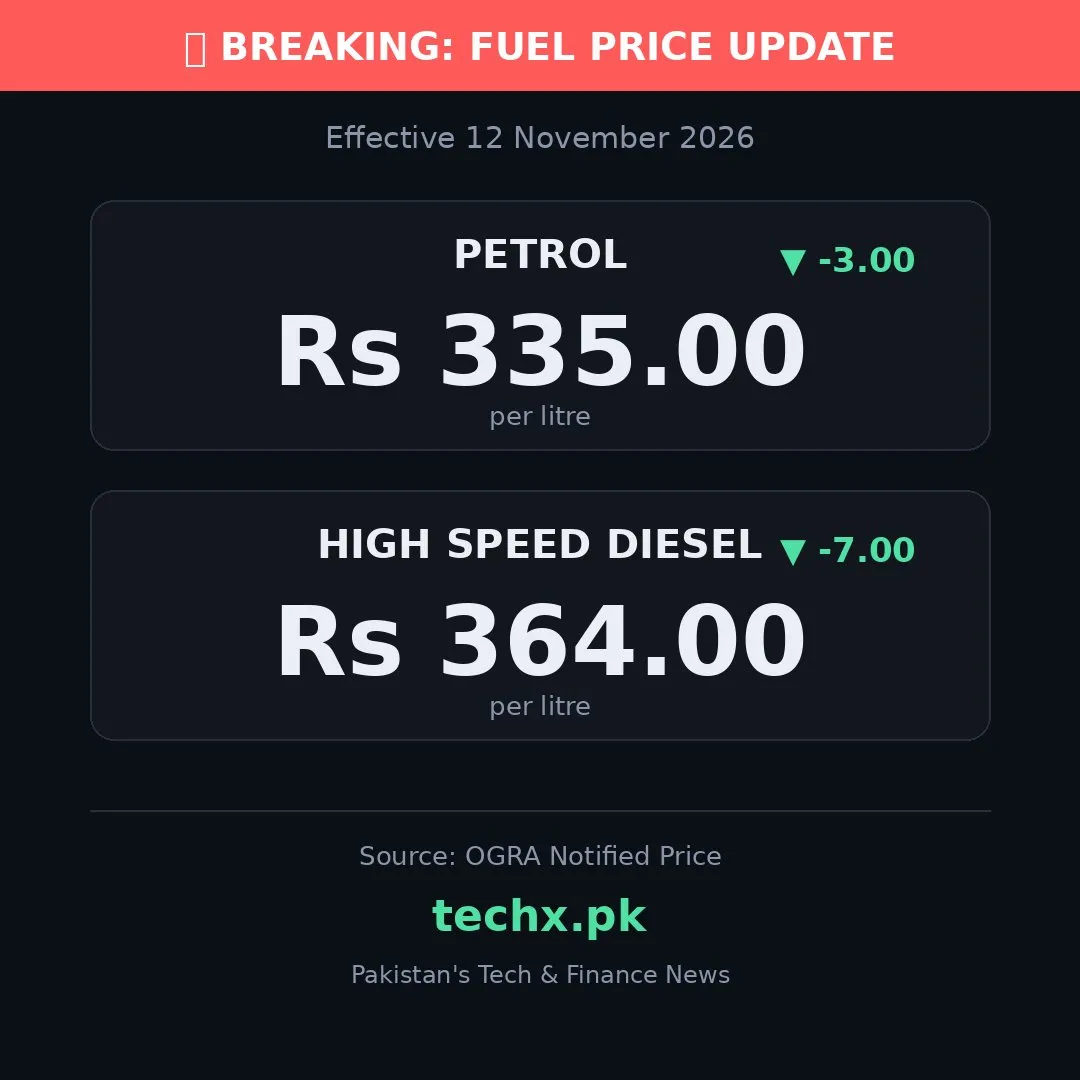
Petrol price in Pakistan today has dropped by Rs 3.00 per litre effective 12 November 2026, bringing some relief to consumers across the country. OGRA fuel prices have also cut High Speed Diesel by Rs 7.00 per litre in the latest fortnightly revision. This adjustment alters the cost of fuel for millions of motorists, transport operators, and industrial consumers from the start of the new pricing period.
The announcement follows a standard review cycle where authorities assess international energy market trends and foreign exchange rates. Consumers across various provinces immediately felt the change as fuel stations updated their boards to reflect the new figures. The downward revision marks a noticeable shift from previous pricing cycles, which often saw upward adjustments or stagnation due to external market pressures.
New Petrol and Diesel Prices in Pakistan
The new petrol price and diesel price in Pakistan are now officially in effect. Here is the full breakdown of the latest OGRA fuel prices announced for 12 November 2026. Petrol, commonly known as Super, is now priced at Rs 335.00 per litre following the Rs 3.00 reduction. High Speed Diesel is now priced at Rs 364.00 per litre after absorbing a larger decrease of Rs 7.00 per litre.
These rates apply nationwide at all licensed retail fuel outlets. Motorists filling up their tanks see the direct impact of these figures immediately at the pump. The disparity between petrol and diesel prices remains a key factor in transport economics, with diesel continuing to command a higher rate due to its heavy usage in commercial sectors.
Why Did Fuel Prices Change?
OGRA carries out fortnightly fuel price revisions based on movements in global crude oil prices and shifts in the Pakistan rupee exchange rate. When international oil prices soften or the rupee strengthens against the dollar, OGRA can pass on savings to consumers through lower pump prices. The cuts announced for 12 November 2026 reflect exactly this kind of favourable movement in global energy markets during the previous pricing period.
Global crude benchmarks fluctuate constantly based on supply and demand dynamics, geopolitical events, and decisions made by major producing nations. When these global benchmarks decline, importing nations like Pakistan benefit from lower landed costs for refined petroleum products. The regulatory body calculates the final consumer price by combining these import costs with local petroleum levies, distribution margins, and tax structures.
What It Means for You
The drop in diesel price in Pakistan is particularly significant because diesel powers most of the country's trucks, buses, and agricultural machinery, meaning lower freight and food transport costs could ease pressure on everyday grocery bills in the days ahead. For private car owners, the Rs 3.00 cut in petrol means a modest saving at the pump with every fill-up, giving household budgets a small but welcome breather heading into the second half of November 2026.
Public transport operators who rely heavily on diesel may see reduced operational overheads. Lower transport costs often translate into stabilizing prices for daily commodities and manufactured goods. While a reduction of Rs 7.00 per litre on diesel and Rs 3.00 on petrol does not eliminate broader inflation challenges, it offers a tangible reduction in daily expenses for working families and commercial enterprises alike.
Understanding the Role of OGRA in Fuel Pricing
The Oil and Gas Regulatory Authority operates as the central oversight body for the country's petroleum sector. Established to foster transparent regulation, OGRA reviews product costs every fifteen days. This fortnightly mechanism ensures that domestic prices align reasonably well with international realities rather than lagging behind for extended periods.
The pricing formula involves computing the average Brent crude price over the preceding fortnight, factoring in the exchange rate managed by the central bank, and adding standard customs duties, petroleum levies, and dealer margins. When these components result in a lower landed cost, the regulator submits the summary for governmental approval before public notification.
Historical Context of Recent Fuel Revisions
Fuel pricing in the country has experienced extreme volatility over recent years due to macroeconomic pressures and global supply chain disruptions. Consumers have grown accustomed to frequent price hikes driven by currency depreciation and spikes in international crude markets. Against this backdrop, even modest downward revisions draw significant public interest and relief.
Government authorities often balance consumer relief needs with the necessity of collecting petroleum levies to meet fiscal deficit targets. International monetary agreements also influence domestic tax policies on energy products. Consequently, any reduction granted by regulators is carefully calibrated against national revenue requirements.
Economic Impact on Agriculture and Logistics
The agricultural sector stands as one of the primary beneficiaries of the High Speed Diesel price cut. Tractors, tube wells, and harvesters run primarily on diesel fuel. Lower fuel expenses directly reduce the cost of tilling, sowing, and harvesting crops across major agricultural belts.
Similarly, the logistics industry relies on heavy transport vehicles that consume large volumes of diesel. Reduced operational expenses for fleet owners help keep freight rates in check. This stabilization in transport economics prevents secondary price hikes on perishable goods moving from rural production centers to urban consumer markets.
What to Watch for in Future Price Revisions
As the current fortnightly cycle progresses toward its conclusion, market analysts and consumers will monitor global crude trends closely. Since energy markets react swiftly to international developments, future revisions depend entirely on upcoming trade data and currency stability. Stakeholders across all sectors will keep a close eye on official announcements when the next review date approaches.
For now, citizens can use the current rates at fuel stations nationwide. Transport operators and businesses will evaluate their monthly budgets in light of these adjusted energy expenses, hoping that market conditions remain stable through the remainder of the quarter.