Petrol Price in Pakistan Today and Latest Fuel Reductions
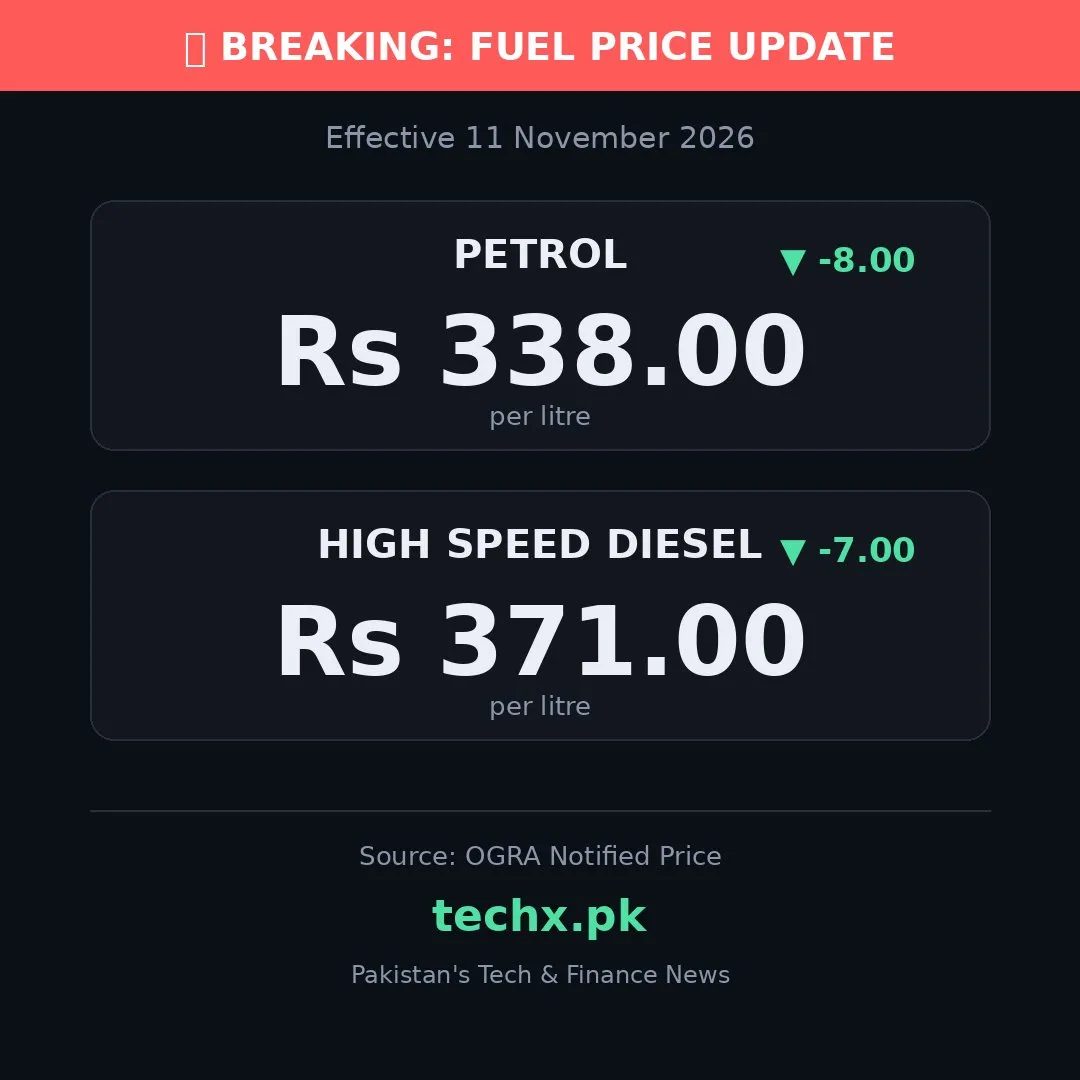
The petrol price in Pakistan today has dropped by Rs 8 per litre, giving some much-needed relief to consumers across the country. The Oil and Gas Regulatory Authority has also cut the diesel price in Pakistan by Rs 7 per litre, effective 11 November 2026. This downward revision brings an immediate change at fuel stations nationwide, affecting millions of daily commuters, private vehicle owners, and commercial transport operators.
Fuel costs serve as a vital economic indicator in the country, directly influencing inflation rates, manufacturing expenses, and the daily cost of living. When petroleum prices decrease, the cascading effects often reach retail markets through lower transport overheads. Citizens have closely monitored international energy markets in recent weeks, anticipating adjustments following shifts in global supply chains and currency stability.
New Petrol and Diesel Prices in Pakistan
The new petrol price and updated diesel price in Pakistan are now officially in effect. The Oil and Gas Regulatory Authority released the official rate sheet following its regular assessment of energy trends. Here is a full breakdown of the latest fuel prices:
- Petrol (Super): Rs 338.00 per litre, reflecting a change of -Rs 8.00.
- High Speed Diesel: Rs 371.00 per litre, reflecting a change of -Rs 7.00.
Motorists visiting filling stations across the country will pay these reduced figures for all purchases made from the effective date onward. Petroleum dealers and station operators updated their electronic pricing boards immediately to reflect the new tariffs mandated by the regulatory body.
Why Did Fuel Prices Change?
The Oil and Gas Regulatory Authority reviews fuel prices on a fortnightly basis, taking into account international crude oil rates and the Pakistani rupee exchange rate. When global oil prices soften or the rupee holds steady, the regulatory body passes on the benefit to consumers through a reduction in the new petrol price and diesel price in Pakistan. This latest cut in fuel prices reflects a dip in global oil markets during the current review period.
Global crude oil benchmarks experience continuous fluctuations driven by geopolitical developments, production quotas set by major exporting nations, and shifting seasonal demand. Additionally, the stability of the domestic currency against foreign exchange benchmarks plays a primary role in determining import costs for refined petroleum products. Because the nation relies heavily on imported energy to meet domestic requirements, international pricing shifts translate directly into local retail rates.
What It Means for You
A drop of Rs 8 on petrol and Rs 7 on diesel from 11 November 2026 means lower running costs for car and bike owners, and cheaper fares could follow on public transport routes. Businesses that rely on High Speed Diesel for logistics and freight may also see a small reduction in delivery costs, which can help ease pressure on everyday household budgets over the coming weeks.
Private vehicle owners who commute long distances for work will notice immediate savings when filling their tanks. Public transport operators, including bus and rickshaw drivers, incur lower operating expenditures, which authorities and passenger associations monitor to determine whether fare adjustments will follow. Commercial goods transport companies using diesel-powered trucks also experience relief, potentially slowing the upward price momentum of essential food items and consumer goods distributed across provincial trade corridors.
Understanding the Oil and Gas Regulatory Authority Fortnightly Review Process
The mechanism governing petroleum pricing involves a structured fortnightly evaluation conducted by the Oil and Gas Regulatory Authority. Established under national legislation, the authority calculates the cost of supply based on Platt's Singapore quotes, import premiums, freight charges, and government taxes. These components are compiled every fourteen days to determine whether retail prices require upward adjustment, downward revision, or stabilization.
Taxation structures applied to petroleum products include petroleum levy, general sales tax, and custom duties, which form a substantial portion of the final pump price. While international market dips dictate the base commodity cost, domestic fiscal policies determine the exact margins collected by the state. Consumers often analyze these regulatory announcements closely to gauge short-term economic trends and anticipate changes in utility and transport expenditures.
Broader Economic Impact on Transport and Inflation
Energy pricing adjustments hold profound implications for the national economy, particularly concerning the Consumer Price Index and inflation metrics. Diesel is considered the lifeblood of the commercial sector, powering agricultural machinery, cargo trucks, and industrial generators. Consequently, any movement in diesel tariffs influences the cost of harvesting crops, transporting raw materials to factories, and delivering finished products to retail outlets.
When diesel costs decline, agricultural producers face reduced expenses for tractor operations and tube wells, which can stabilize vegetable and grain prices in local markets. Similarly, manufacturing units spending less on captive power generation and freight logistics can maintain more competitive pricing structures. Economists observe that consecutive reductions in fuel rates offer tangible relief to salaried classes grappling with high living costs and utility expenses.
What to Watch for in Future Fuel Price Reviews
As the current fortnightly cycle progresses, market observers and consumers await the next scheduled announcement from the regulatory body. Future revisions will depend entirely on how international crude benchmarks behave in response to global supply adjustments and currency fluctuations. Motorists are advised to track official notifications released by the petroleum division to stay informed about upcoming pricing trends and ensure accurate billing at fuel stations.
Stakeholders in the transport and logistics sectors continue to advocate for transparent pricing formulas that reflect global drops more rapidly. Meanwhile, households integrate these marginal savings into monthly financial planning, balancing reduced transport costs against broader economic variables. The ongoing fortnightly review system remains the primary instrument through which domestic retail markets adapt to international energy realities.