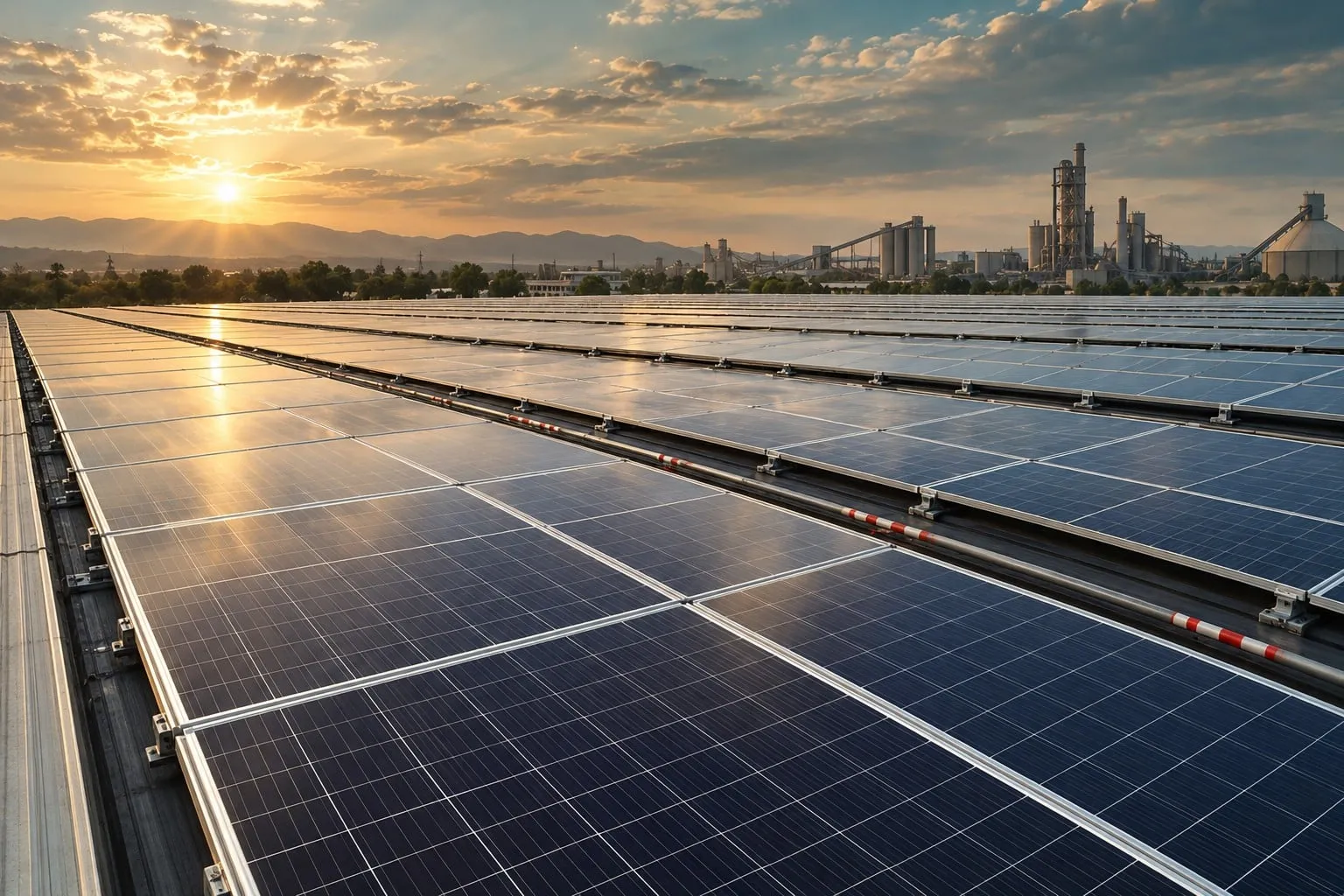
Pioneer Cement Activates 28.265 MW Solar Plant in Khushab
Pioneer Cement Limited has brought a 28.265-megawatt solar plant into operation at its manufacturing site in Chenki, in Punjab's Khushab district. The company has also raised the project's planned capacity to 31 MW, with the expansion expected to start supplying power within a month.
The transition toward renewable energy represents a major shift for large industrial manufacturers in the region, particularly energy-intensive sectors like cement production. By integrating utility-scale solar generation directly into their manufacturing sites, companies aim to shield themselves from fluctuating grid tariffs and supply instability.
Expansion to follow the initial start-up
The company disclosed the development in a notice to the Pakistan Stock Exchange dated November 3, 2026. It confirmed that the 28.265 MW installation had been completed and energised, while the additional capacity remained due to come online.
Regulatory filings submitted to stock exchanges serve as official records for publicly listed firms, keeping shareholders and financial markets informed of major capital expenditures. The disclosure outlined both the immediate completion of the primary installation phase and the timeline for the subsequent capacity enhancement.
Project execution for industrial solar installations involves complex engineering, procurement, and construction phases. Coordinating panel placement, inverter integration, and grid synchronisation requires careful planning to avoid disrupting ongoing manufacturing operations at the plant.
Sustainable sources to cover about 45% of power needs
Following the solar plant's commissioning, Pioneer Cement expects environmentally sustainable sources to supply roughly 45% of its yearly electricity requirements. That estimate covers sustainable power sources overall, rather than identifying the new solar plant alone as supplying that share.
The company expects the investment to bring down electricity spending and make operations at the manufacturing facility more efficient. It also anticipates a positive contribution to profitability and its sustainability objectives.
Energy costs traditionally constitute a substantial portion of operational overhead for cement plants. Kilns and grinding mills demand continuous, high-capacity electricity inputs, making power expenses a critical factor in overall corporate financial health.
Industrial Energy Transition in Pakistan
Manufacturing facilities across Pakistan face mounting pressure to adopt renewable energy solutions. Rising utility tariffs and regular grid maintenance challenges have pushed heavy industries to invest heavily in captive solar and wind projects.
Captive power generation allows industrial units to generate electricity on-site for their own consumption rather than relying solely on the national grid. This approach mitigates transmission losses and protects factories from sudden power outages that can damage industrial machinery or halt production lines.
Khushab district, situated in Pakistan's Punjab province, offers favorable geographical conditions for solar energy generation. High levels of annual solar irradiance make the region well-suited for photovoltaic installations aiming to maximize electricity yield.
Financial and Environmental Impact on Manufacturing
Integrating renewable energy helps industrial firms meet environmental compliance standards and sustainability targets. Investors and financial institutions increasingly favor corporations that demonstrate active carbon reduction strategies and reduced reliance on fossil fuels.
Lower operating expenses directly improve profit margins in competitive commodity markets like cement manufacturing. When energy expenditure drops, plants can stabilize pricing or increase output efficiency without incurring higher variable costs.
The upcoming expansion to 31 MW will further cement the facility's self-generation capacity. Monitoring the performance of the initial 28.265 MW installation provides engineers with operational data to optimize the final phase of the project.
Corporate Governance and Market Transparency
Publicly listed companies must adhere to strict disclosure rules when completing major capital projects. Notices sent to the stock exchange ensure that investors have accurate information regarding asset additions and projected financial impacts.
Market analysts review these announcements to gauge the capital expenditure efficiency of industrial firms. Investments in self-generation infrastructure are typically evaluated on their payback period and long-term impact on operational cost reduction.
As the additional capacity comes online within the month, market observers will look for updated disclosures regarding full generation output and finalized cost-saving metrics.