Punjab Excise Department Orders Major Inquiry Into Vehicle Transfers
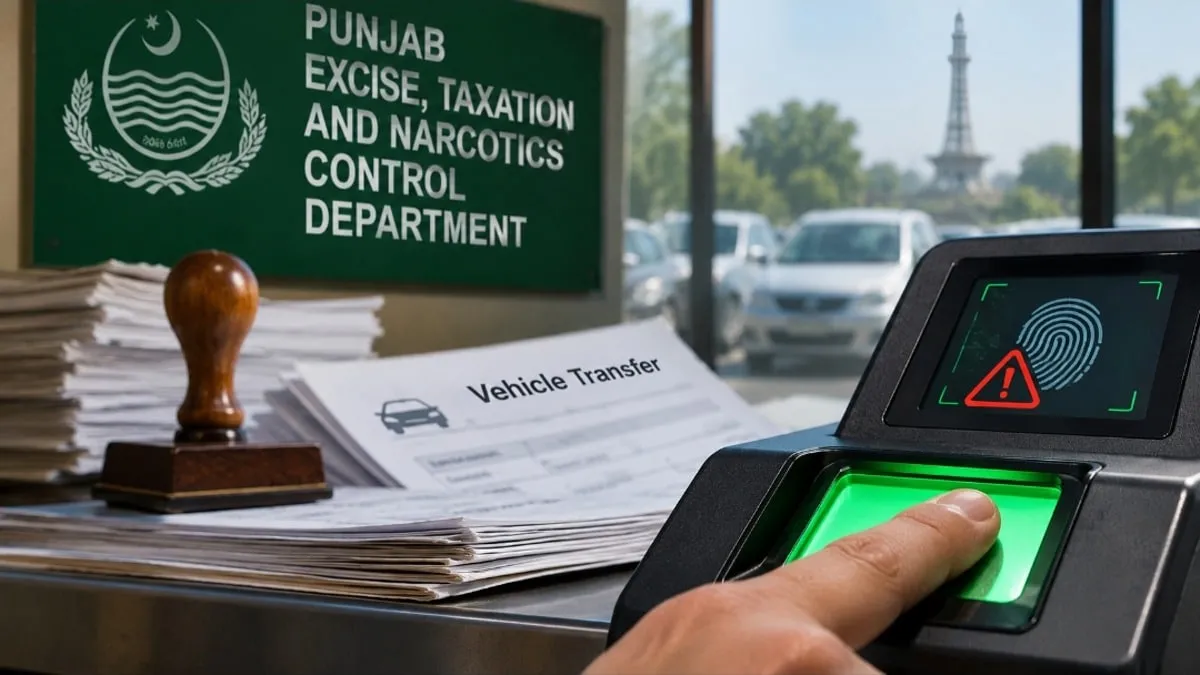
The Punjab Excise, Taxation and Narcotics Control Department has ordered an inquiry against 11 serving officers and officials over the alleged transfer of more than 4,000 vehicles through fake biometric verification, according to a report published by The News.
This sweeping investigation highlights critical vulnerabilities in the digital and manual verification procedures used by regional transport authorities. Vehicle ownership transfers require strict adherence to identity checks to prevent fraud, theft, and illegal asset concealment. When systemic bypasses occur, vehicles linked to criminal activities or unpaid liabilities can change hands without the true owners ever knowing. The current probe seeks to uncover how thousands of transactions slipped past institutional safeguards over several months in 2024.
Background of the Audit and Alleged Financial Irregularities
The case involves suspected financial irregularities, procedural violations and the use of forged powers of attorney in vehicle ownership transfers. The allegations emerged from an audit inspection covering two periods in 2024, from January 1 to March 7 and March 8 to August 20.
Internal audits serve as a primary defense against administrative corruption within government departments in Pakistan. During routine financial and procedural reviews, auditors cross-reference transaction logs with biometric databases to ensure all transfers comply with provincial tax laws. The discovery of thousands of anomalous transactions during these specific periods prompted senior leadership to escalate the matter from a routine administrative review to a formal disciplinary proceeding.
Leadership and Scope of the PEEDA Act Inquiry
According to the inquiry order issued by Secretary Excise Masood Mukhtar, Director Muhammad Asif (BS-19) will lead the investigation under the Punjab Employees Efficiency, Discipline and Accountability (PEEDA) Act, 2006.
The PEEDA Act, 2006, provides the legal framework for holding civil servants and public sector employees accountable for misconduct, inefficiency, or corruption in Punjab. Under this legislation, designated inquiry officers possess the authority to summon witnesses, examine official records, and recommend penalties ranging from minor fines to major punishments such as dismissal from service. Director Muhammad Asif faces the task of reviewing the audit findings, questioning the accused personnel, and determining the extent of individual and collective responsibility within the department.
Procedural Violations and Divisional Committee Oversight
Excise and Taxation Inspector Ghulam Mohyuddin of Region-C, Lahore, will serve as the departmental representative and provide relevant official records. The inquiry officer must complete the proceedings and submit a detailed report with recommendations within 60 days.
The inquiry will examine allegations that several Motor Registering Authorities and Excise and Taxation Inspectors processed hundreds of vehicle ownership transfers without referring them to the Divisional Committee, violating standard operating procedures issued on March 7, 2024.
Standard operating procedures are designed to create checks and balances at multiple levels of government administration. By bypassing the Divisional Committee, rogue officials effectively removed a mandatory layer of scrutiny that exists specifically to catch fraudulent applications before ownership changes become legally binding in government databases.
Role of Alternative Dispute Resolution and Foreign Office Forgeries
Under the procedures, cases involving Alternative Dispute Resolution and designated ownership transfers required scrutiny and approval by the Divisional Committee.
The audit also identified cases in which officials allegedly processed vehicle transfers using forged powers of attorney purportedly issued by the Ministry of Foreign Affairs.
A power of attorney is a legal instrument that allows one person to act on behalf of another, which is frequently used when vehicle owners reside abroad or cannot visit registration offices in person. Forging documents from the Ministry of Foreign Affairs indicates a sophisticated level of document falsification. Investigators will need to determine whether external criminal syndicates manufactured these fake papers or if internal staff actively participated in accepting and validating fraudulent diplomatic and overseas verifications.
Impact on Citizens, Public Trust, and Vehicle Security
The revelation that thousands of vehicles changed hands through unauthorized means carries significant practical consequences for citizens, vehicle buyers, and law enforcement agencies. Vehicle registration records form the backbone of national security tracking, taxation, and crime investigation across Punjab. If a vehicle involved in a crime is registered under a fake identity or through a forged power of attorney, tracing the actual perpetrator becomes exceptionally difficult for police forces.
Furthermore, legitimate buyers who purchase second-hand cars run the risk of losing their investments if the initial transfer is declared null and void by the government due to fraudulent biometrics. Restoring public confidence in the Punjab Excise, Taxation and Narcotics Control Department requires absolute transparency and swift accountability for all 11 officials named in the inquiry order. As Director Muhammad Asif proceeds with the 60-day investigation window, citizens and industry observers will watch closely to see whether the findings lead to systemic reforms in how vehicle transfers are authenticated across the province.