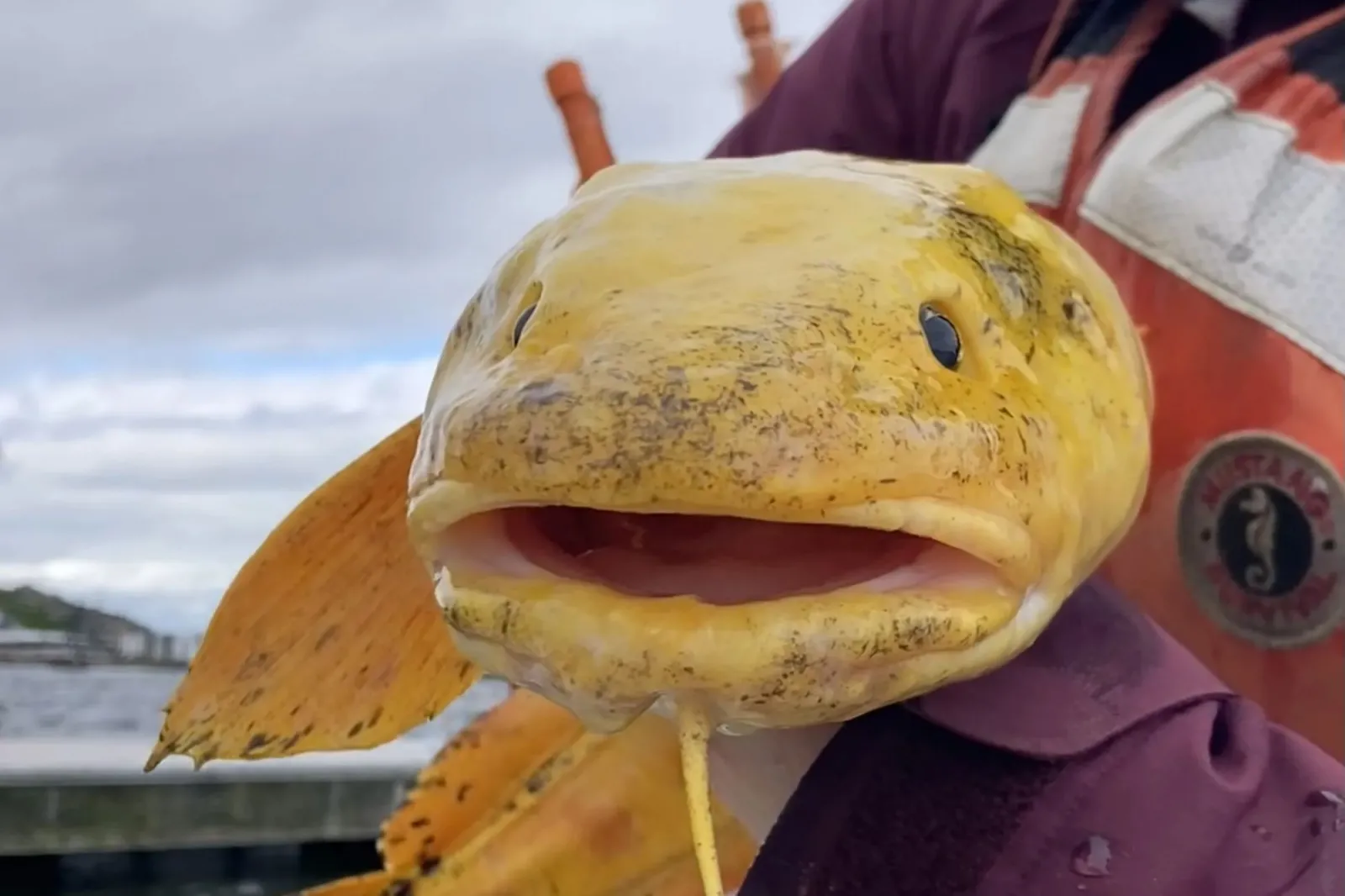
Rare Yellow Burbot Discovered During New York Survey
A rare bright yellow fish featuring a bizarre genetic condition has amazed scientists who hailed the unusual capture during a routine field operation. Wildlife biologists caught the exceptionally rare specimen during a survey in Oswego Harbour, New York, last month. The creature, a burbot scientifically known as Lota lota, is a native freshwater species that displayed a striking yellow-orange appearance due to a unique genetic mutation.
Biologists from the US Fish and Wildlife Service captured the fish while conducting an Aquatic Invasive Species Survey. The discovery is considered a one-in-a-million find, particularly because burbot populations in the lake are currently extremely low. Furthermore, the species typically inhabits much deeper and colder waters than the environment found within Oswego Harbour.
Understanding the Burbot and Its Habitat
The burbot holds a unique status as the only freshwater member of the cod family found in North America. These fish generally prefer cold, deep water environments and are well-adapted to icy northern lakes and rivers. They are nocturnal predators, relying on their barbels to locate prey along the lake bottom. Because of their preference for cold depths, encountering one in a harbour setting is already unusual.
Native populations of the species have faced various ecological pressures across the Great Lakes basin over recent decades. Fisheries managers monitor these aquatic ecosystems closely to track population health and manage invasive threats. This particular survey marked the first documented detection of a burbot during a fisheries survey in Oswego Harbour, though local anglers have occasionally reported small catches in the past.
How the US Fish and Wildlife Service Monitors Waters
The US Fish and Wildlife Service employs a variety of scientific methods to monitor fish populations in Great Lakes harbours, rivers, and coastal inlets. These standard procedures help agencies detect non-native species early and assess the overall balance of aquatic life. The monitoring toolkit includes multiple specialized techniques designed for different habitats and fish species.
Monitoring methodologies used by the agency include electrofishing, fyke-netting, gill-netting, and environmental DNA analysis. Electrofishing uses electrical currents to temporarily stun fish for safe collection and study. Fyke-netting and gill-netting rely on stationary nets to capture swimming aquatic life. Environmental DNA analysis allows researchers to detect the presence of species by sampling water for shed biological material.
The Science Behind Xanthochromism in Fish
The striking coloration of the captured fish stems from a rare biological condition known as xanthochromism. This condition is caused by a genetic mutation that suppresses normal dark pigmentation, resulting in a yellow-orange appearance. While genetic anomalies occasionally occur in wildlife, xanthochromism is considerably less common in wild fish than either albinism or melanism.
Albinism involves a complete lack of melanin, leading to white skin and pink eyes, while melanism results in an excess of dark pigment. Xanthochromism specifically alters the pigment cells to produce high concentrations of yellow and orange carotenoid pigments. In natural settings, such bright coloration often proves disadvantageous because it removes natural camouflage, making the animals more visible to predators.
Health Assessment and Conservation Implications
Biologists from the US Geological Survey, who were familiar with the species, noticed that the fish appeared emaciated and in poor health when it was examined. Given its condition and the unexplained factors behind the continued decline of the burbot population, the fish was sent to Cornell University's College of Veterinary Medicine for a thorough health assessment. Researchers hope the discovery will prove beneficial to the broader species.
The exceptionally rare specimen may provide valuable information about the health of burbot populations across the Great Lakes basin. Experts believe the analysis could help scientists develop targeted measures to support the species and inform future conservation efforts. Understanding the underlying health issues of this individual specimen contributes to a broader picture of aquatic ecosystem stability in the region.