Rawalpindi Launches Seven Women-Only Pink Bazaars for Female Entrepreneurs
The Rawalpindi district administration has launched an initiative to establish seven Pink Bazaars across the district, providing women with dedicated spaces to run businesses and earn a livelihood. This municipal development marks a notable shift in urban planning for the region, focusing specifically on gender-inclusive economic participation. By creating controlled, secure environments for commerce, local authorities hope to encourage more women to enter the retail sector without facing the traditional barriers found in standard commercial hubs.
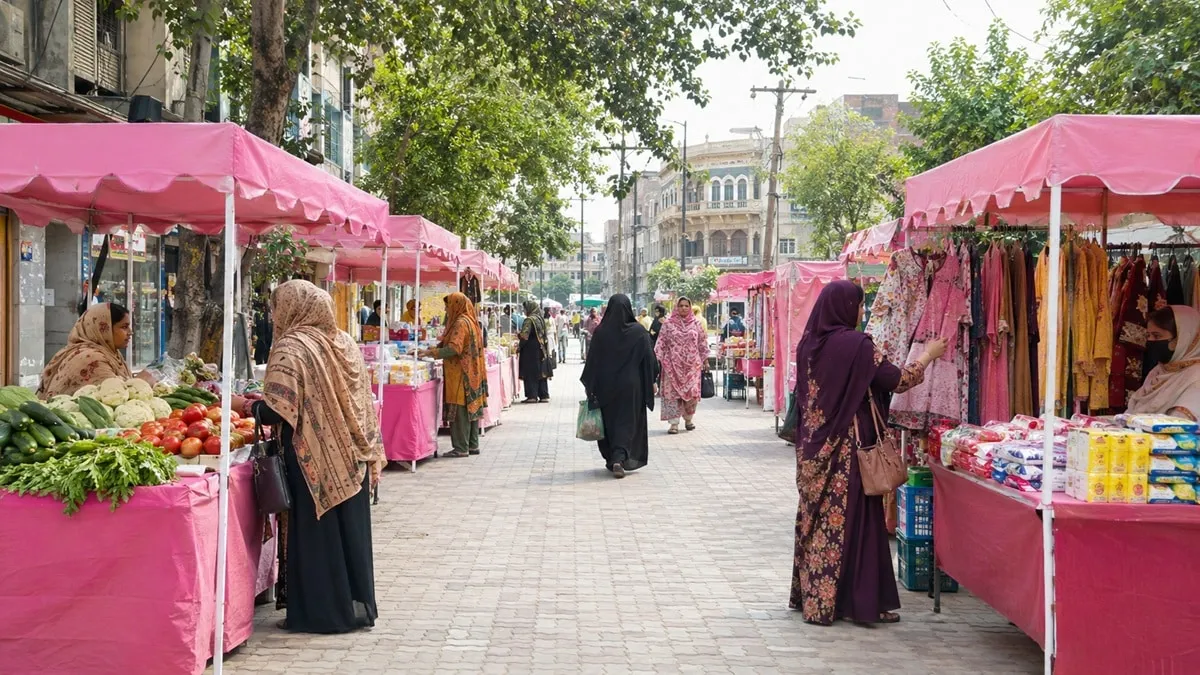
The first Pink Bazaar is being established on Liaquat Road, where female vendors will be able to sell daily-use items. Liaquat Road serves as one of the busier commercial arteries in Rawalpindi, making it an ideal pilot location to test consumer demand and operational logistics for a women-centric marketplace. Shoppers in the area will soon find a variety of household goods, garments, and daily necessities sold exclusively by female entrepreneurs within this designated zone.
How the Pink Bazaar Initiative Was Formed
Deputy Commissioner Nadeem Nasir said the initiative was launched on the directives of Punjab Chief Minister Maryam Nawaz. Under the first phase, one Pink Bazaar will be established in each of the district's seven tehsils, with plans to expand the initiative in the next phase. Administrative machinery across the entire district has been mobilized to identify suitable plots of land and secure the necessary infrastructure for these new retail hubs.
He said the market in Rawalpindi city is almost ready, while work on the remaining bazaars is underway. Construction crews and municipal workers are fast-tracking the setup of stalls, lighting, and boundary structures to ensure that female vendors can move into their assigned spaces as soon as possible. The tiered rollout allows the administration to fine-tune operations in the urban center before fully launching the rural and peripheral tehsil locations.
Purpose and Benefits of Women-Only Shopping Spaces
The initiative aims to create earning opportunities for women while providing them with safe, women-only shopping spaces away from crowded markets. Traditional bazaars in the region often feature dense crowds and high competition from established male-dominated businesses, which can deter female merchants from setting up stalls. By isolating the retail environment strictly for women, the administration removes social pressures and physical congestion, creating an atmosphere where both female vendors and female shoppers feel entirely secure.
Economic empowerment for women remains a central goal of this provincial program. When women gain direct access to retail spaces, household incomes rise and financial independence improves across local communities. Municipal authorities believe that lowering the entry barrier for small-scale female traders will stimulate grassroots economic activity throughout the Rawalpindi district.
Administrative Monitoring and Construction Progress
Meanwhile, Nasir directed assistant commissioners to regularly visit the sites and monitor progress on the establishment of Pink Bazaars and street-vendor markets, commonly known as rehri bazaars. These field visits ensure that contractors adhere to strict timelines and that municipal funds are used efficiently. Assistant commissioners act as the direct administrative link between the district headquarters and the individual tehsil sites, reporting back on any bottlenecks or resource shortages.
He emphasized that progress must be visible on the ground and instructed officials to ensure the timely completion of the projects. Bureaucratic delays have historically hampered public works, prompting the current administration to demand accountability and physical proof of development before moving to subsequent phases of the project. Officials who fail to meet construction deadlines face administrative scrutiny.
Understanding Tehsil-Level Administrative Structures in Rawalpindi
To understand the scope of this project, it helps to look at how the Rawalpindi district is organized administratively. A district is typically divided into multiple sub-units known as tehsils, each managed locally by an assistant commissioner under the supervision of the deputy commissioner. By placing one Pink Bazaar in each of the seven tehsils during the first phase, the government ensures equitable distribution of resources rather than concentrating all development inside Rawalpindi city.
Tehsils in the Rawalpindi district include urban centers as well as semi-rural and hilly terrain, presenting unique logistical challenges for market construction. The administration must tailor each bazaar to fit the local geography and consumer habits of that specific tehsil. While the Liaquat Road site in the city relies on high foot traffic, tehsil markets in outer areas may cater more to localized neighborhood trade.
The Broader Context of Rehri Bazaars and Street Vendor Regulation
The mention of street-vendor markets, or rehri bazaars, highlights a parallel municipal effort to organize informal commerce across Punjab. Street vendors often face crackdowns for blocking public walkways, leading urban planners to designate specific zones where they can operate legally without causing traffic congestion. Integrating women-only spaces into this broader framework of organized street vending protects female traders from harassment and arbitrary eviction.
Local governments across the province have increasingly looked toward structured vendor markets as a solution to urban sprawl and chaotic street trading. Providing designated brick-and-mortar or modular stalls allows health and safety inspectors to monitor goods more effectively, ensuring consumer protection. As the Pink Bazaars take shape, they will operate under these same municipal guidelines to maintain cleanliness, order, and fair pricing.
What Comes Next for Female Vendors in Rawalpindi
As construction wraps up on the primary Rawalpindi city location, attention will shift toward allocating stalls to eligible female applicants. The district administration is expected to release criteria regarding who can rent or use these spaces, ensuring that widows, low-income women, and aspiring entrepreneurs receive priority. Transparent allocation procedures will determine the long-term success and fairness of the program.
Following the completion of phase one across all seven tehsils, authorities will evaluate performance metrics such as vendor revenue, daily visitor counts, and security audits. Positive outcomes will trigger the planned expansion phase, which could see additional bazaars opening in densely populated residential neighborhoods. Observers and local residents will watch closely to see how effectively the administration maintains these spaces and whether the initiative achieves its goal of transforming women's economic participation in the region.