An entomologist who breeds bed bugs for scientific research lets the insects feed on his own body twice a week and claims he has built a complete immunity after sustaining millions of bites over a 25-year period.
Dr Richard Naylor, 45, runs a not-for-profit organization called the Bed Bug Foundation alongside his wife Alexia from their property in the Forest of Dean in Gloucestershire. Operating a specialized laboratory in their garden, Dr Naylor studies insect behavior and tests pest control products for the wider pest management industry, a career path he has pursued since 2001.
Inside the Garden Laboratory and Weekly Feeding Routines
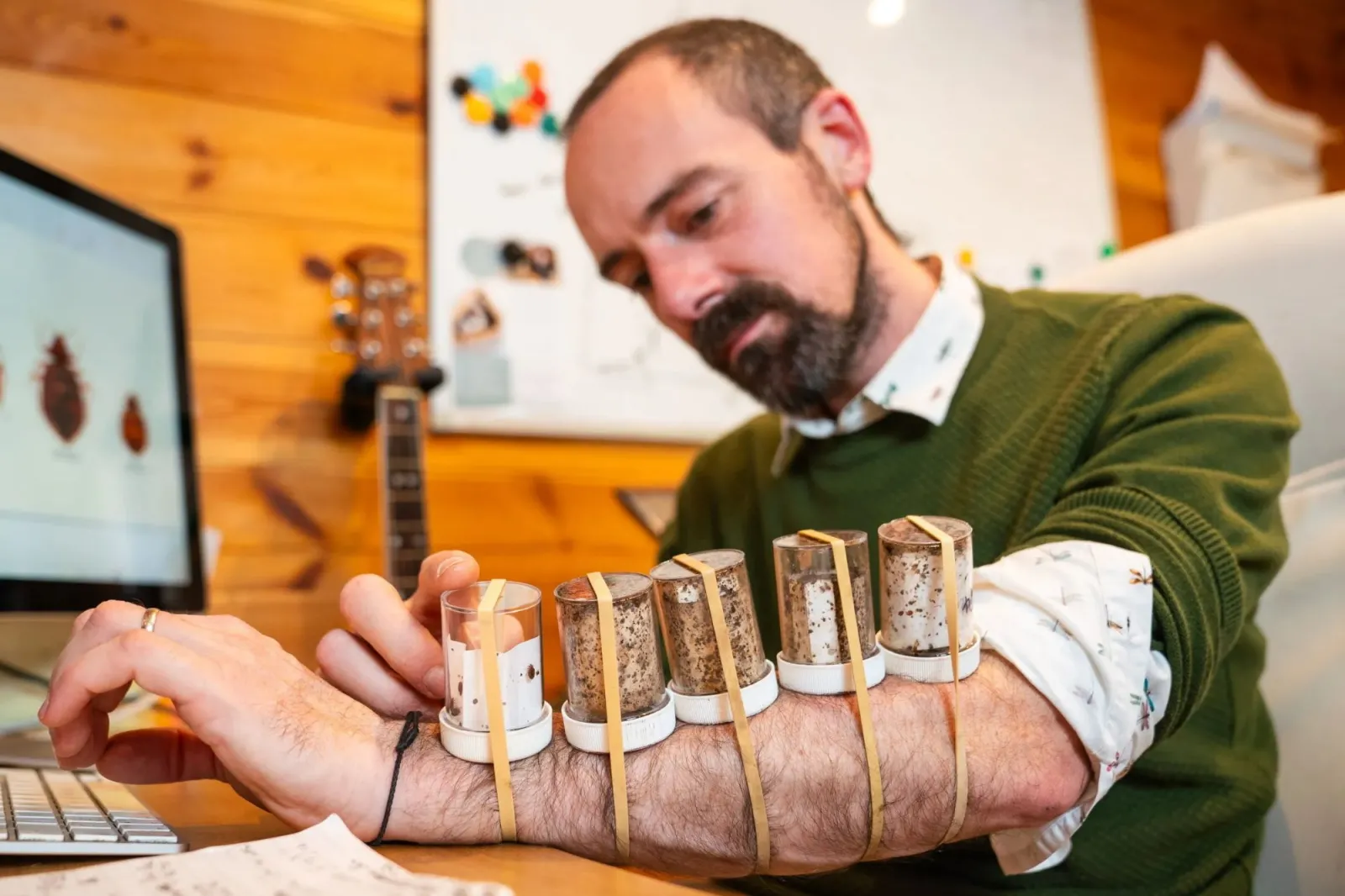
Dr Naylor maintains a population of roughly 60,000 bed bugs inside his specialized research facility. Twice a week, he conducts dedicated feeding sessions where he straps small pots containing hungry insects directly to his forearms or legs using elastic bands while he continues with tasks such as web administration.
The insects are kept in containers fitted with metal lids and paper inserts. When attached to the skin, the bugs feed for a few minutes at a time. Dr Naylor notes that he cannot really feel the feeding process take place. After about ten minutes, when the insects appear full and crawl back up the paper inside the container, he swaps them out for a fresh batch, allowing him to feed thousands of bugs in a short span.
To test new devices, sprays, and repellents effectively, Dr Naylor takes his research a step further by sleeping inside a self-contained two-bedroom suite located in his garden. This residential testing environment allows him to evaluate how pest control products perform under realistic domestic conditions.
Why Human Hosts Are Essential for Bed Bug Research
Conducting trials on bed bugs requires the presence of a living human host because the behavior of the insects changes dramatically in an empty room. Without a person present, bed bugs remain mostly stationary and sleep rather than moving about their environment.
Bed bug activity is triggered by specific human cues, primarily carbon dioxide released through breathing and body heat. Their behavioral patterns are deeply tied to human presence. Without a human host in the room to trigger these natural responses, testing traps and chemical sprays becomes ineffective because the insects simply do not display their typical foraging behavior.
Human beings have lived alongside bed bugs for as long as human civilization has existed. To study how well a trap can lure these insects in a bedroom setting, researchers must replicate natural conditions as closely as possible, which necessitates human participation during trials.
How the Human Body Develops Immunity to Bed Bug Bites
While an ordinary encounter with a bed bug leaves most people with an angry, highly itchy red mark, Dr Naylor no longer experiences any physical reaction. Having sustained millions of bites over the past 25 years, his immune system has entirely stopped reacting to the saliva injected by the feeding insects.
He stopped reacting to the bites more than a decade ago. According to scientific observations, it typically takes roughly 40,000 individual bites for a person to stop reacting to bed bug exposure. Over extended periods of continuous exposure, the human immune system desensitizes, eliminating swelling, redness, and inflammation.
While Dr Naylor experiences occasional symptoms of anaemia from time to time, he no longer suffers from the maddeningly itchy welts that plague the general public. For most individuals, a bed bug bite is somewhat more severe than a mosquito bite, but chronic exposure alters the body's inflammatory response entirely.
The Psychological Toll and Public Fear of Infestations
Despite the physical tolerance Dr Naylor has built, he acknowledges that bed bugs evoke a unique level of psychological terror among the general public. When he explains his profession to others, people immediately start scratching and appear visibly horrified.
He has observed that bed bugs generate a fear unmatched by almost any other pest. In conversations with people in South America living in malarial zones, he found that individuals expressed far greater horror regarding bed bugs than mosquitoes, despite the latter carrying life-threatening diseases.
Beyond the physical nuisance, bed bugs often inflict severe damage on mental health. Affected individuals frequently experience intense social isolation because they fear spreading the insects to friends or inviting visitors into their homes. This dynamic leads to feelings of profound self-disgust and secrecy.
Managing the Risks of a Garden Laboratory
Working with tens of thousands of blood-feeding insects requires strict containment protocols to prevent accidental outbreaks in a residential area. Dr Naylor and his wife Alexia have successfully managed their garden facility while accidentally infesting their family home only four times over 25 years.
To maintain a barrier between the research subjects and the living quarters, they installed a metal channel across the doorways of the test rooms. This physical barrier stops the insects from crawling under the doors and escaping into unintended areas.
Once the research specimens are bred and evaluated, Dr Naylor supplies them to clients all over the world. A significant portion of these insects goes to canine detection teams, which train sniffer dogs to help hotels and property managers identify and locate infestations quickly.
How to Treat Bed Bug Bites at Home
For the average person encountering bed bugs, the bites typically clear up on their own within a week and can be managed easily with domestic care steps. Medical guidance from the NHS outlines several practical measures for treating the affected skin:
- Apply a cool item, such as a clean, damp cloth, to the affected area to reduce itching and swelling.
- Keep the affected skin clean at all times.
- Avoid scratching the bites to prevent secondary bacterial infections.
Additional recommendations from the American Academy of Dermatology advise washing the bites thoroughly with soap and water to lower the risk of infection or severe localized reactions. Over-the-counter itch creams, mild steroid creams, or antihistamines from a pharmacist can help manage discomfort.
While most reactions are mild, some individuals develop allergies or secondary infections due to frantic scratching. The NHS advises seeing a general practitioner if the pain, swelling, or itching worsens despite treatment, or if the redness begins spreading outward, as these are signs of infection requiring antibiotic intervention.
Practical Steps for Detecting and Preventing Outbreaks
For property owners seeking to prevent or manage an infestation, the Bed Bug Foundation recommends a structured approach to household inspection and control.
Homeowners should begin by decluttering the area surrounding the bed, removing bedding, and clearing other soft furnishings. Mattresses should be inspected thoroughly while remaining on the bed and bed frame.
Effective management strategies include applying desiccant dusts to targeted zones and installing bed isolation devices. These specialized interception tools stop bed bugs from climbing onto the bed structure, helping to protect occupants and keep living spaces free from recurring infestations.