Volkswagen Group and Rivian are broadening their $5.8 billion partnership to incorporate artificial intelligence assistants, according to information published Thursday in the quarterly investor presentation from Rivian.
As part of this expanded agreement, Rivian is licensing parts of its artificial intelligence voice assistant system to Volkswagen Group. Specific financial details, such as payment terms and licensing fees, were not made public, and the companies did not state which Volkswagen models will receive the feature. Yet, the voice assistant could appear first in the ID EVERY1, a budget-friendly electric vehicle from Volkswagen. This compact four-door hatchback is expected to be the initial Volkswagen model using software and electrical systems from the partnership formed in 2024.
Financial commitments for the collaboration have grown previously. Although the partnership was first announced with a value up to $5 billion, Volkswagen increased its investment to $5.8 billion by 2027 within a matter of months. Operating through an independent entity launched in November 2024, the original agreement concentrated on bringing software and electrical architecture from Rivian into upcoming Volkswagen models.
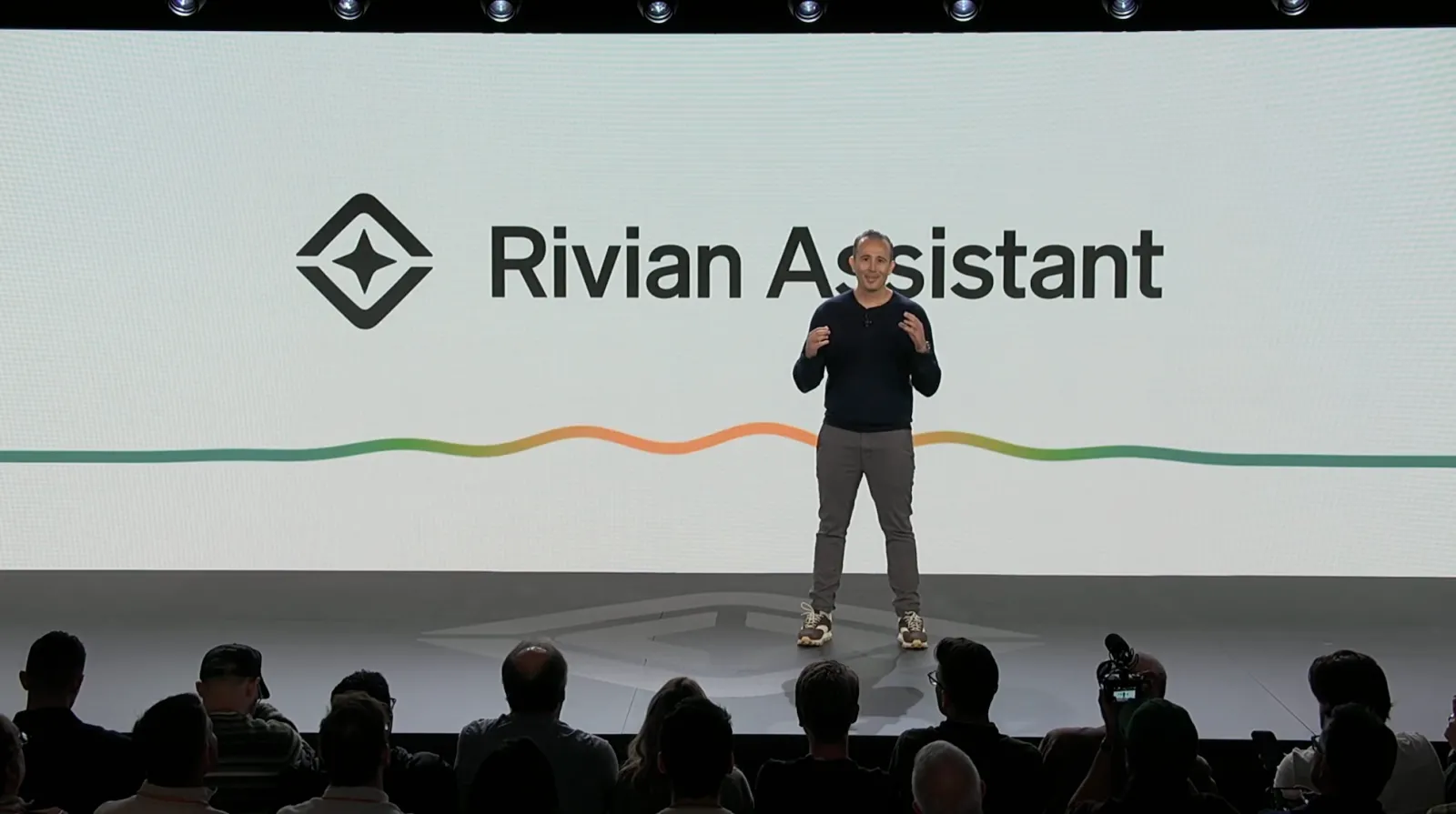
Regarding the new agreement, Rivian called the inclusion of its artificial intelligence assistant technology a proof point for the extensibility of the platform we've built in-house.
Two years of development preceded the public reveal of the artificial intelligence assistant last year. The project took longer than anticipated to finish, arriving in September 2026 for the R2 midsize SUV, R1T pickup truck, and R1S flagship SUV.
The system lets occupants communicate with the vehicle and operate specific controls. At Disrupt 2026, Rivian founder and chief executive officer RJ Scaringe explained to TechCrunch that the firm designed an internal agentic framework. This framework interprets user requests spoken to the car and directs them to the correct software component. Such functionality might eventually enable Rivian models to operate external artificial intelligence agents from firms like Anthropic.
Building this internal artificial intelligence assistant also aligns with the vertical integration goals highlighted in the third-quarter earnings report of Rivian.
"Our relentless focus on vertical integration remains a core competitive differentiator, allowing Rivian to seamlessly unify our hardware and software architecture to deliver significant value to our customers," the company noted in its investor presentation.
This approach drove a complete redesign of the R1S SUV and R1T truck from Rivian, updating the software user interface, suspension system, battery pack, sensor stack, and electrical network. A new compute platform and electrical design cut down the wiring needed and lowered the count of electronic control units from 17 down to seven. Rivian stated that this setup provides the computing power necessary for advanced automated driving and software features.
Volkswagen drew interest to this technology after facing difficulties in providing modern software systems similar to rivals like Tesla.
Stressing its vertical integration approach throughout the investor presentation, Rivian pointed out that managing the entire technology stack, including sound, displays, lighting, sensors, and compute, allows it to roll out rapid, vehicle-wide OTA updates that go well beyond the basics.