Scientists Document Unusual Sexual Bond Between Bull And Male Donkey
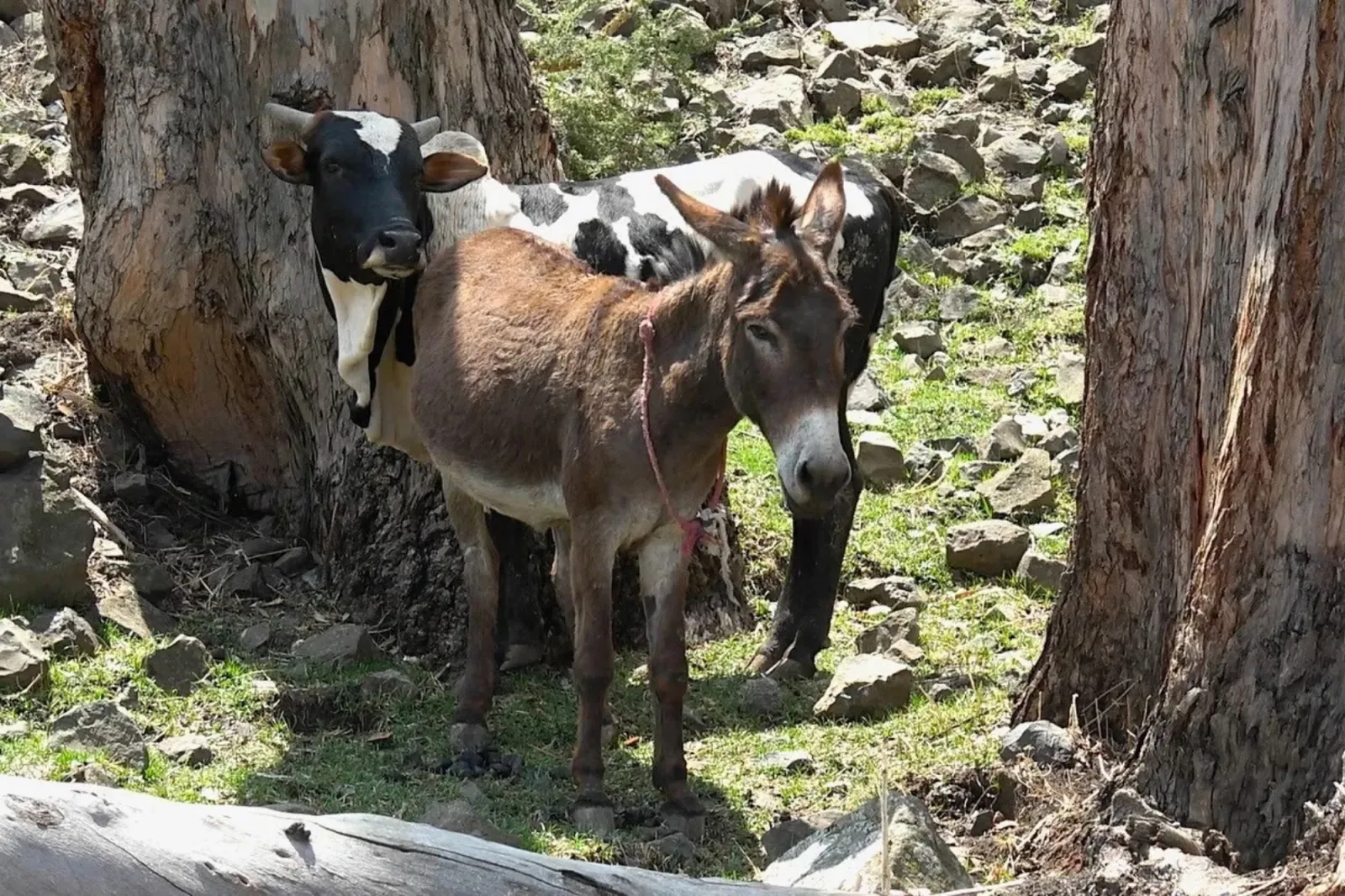
Researchers have uncovered an unusual sexual bond between a bull and a male donkey, as the smitten pair repeatedly snubbed fertile females to interact with each other. Scientists stumbled across this unlikely romance while conducting a separate study into monkeys in Ethiopia. Despite being surrounded by countless potential female partners, the duo, named Achille the bull and Patroclo the donkey, repeatedly chose one another for intimate nuzzling, licking, and mounting sessions.
During the first interaction, researchers observed Achille swooning over Patroclo before attempting to mount him from behind. Normally, this kind of behaviour would trigger a wild reaction such as a kick, but Patroclo happily accepted Achille's advances. Experts from the University of Pisa recorded 51 steamy encounters in just 14 days, even though the pair belonged to different farmers and could only meet up when let out to pasture.
How Researchers Observed The Inter-Species Relationship
The observation unfolded during fieldwork centered on primate behavior in Ethiopia. While monitoring monkeys, the research team noticed the domestic animals sharing the same grazing grounds exhibiting persistent and intimate behaviors that deviated entirely from standard reproductive norms. The two male animals belonged to separate local owners, meaning their interactions were restricted to the hours when they were released into the shared pasture lands.
Elisabetta Palagi, author of the study, explained that the sexual interactions between Achille, the bull, and Patroclo, the male donkey, were not isolated events. What really caught the attention of the team was that these interactions were embedded in a very selective and consistent social relationship between the two individuals. The researchers documented grooming, proximity maintenance, and repeated physical contact that spanned weeks of observation in the field.
The Names And Mythology Behind The Pair
The animals were given names loaded with historical and literary significance by the observers. The pair are named after Achilles and Patroclus, two inseparable Greek heroes of the Trojan war whose close-knit friendship was believed by many to develop into a sexual relationship. This naming reflects the deep and enduring bond the researchers witnessed in the pasture, far exceeding casual or accidental contact between livestock.
Andre de la Cruz, another author of the study, elaborated on the daily patterns of the animals. They repeatedly chose to stay close to each other and engaged in many different affiliative behaviours, such as licking, rubbing, and nuzzling, alongside the repeated mounting behaviour. Importantly, this was happening in a social environment where both animals had access to other potential partners, including individuals of both sexes and of their own species.
Understanding Behavioural Flexibility In Animals
Animal behavior specialists examine how domestic and wild species adapt their social structures when placed in mixed environments. Domestic livestock often display cross-species interactions due to shared housing or pasture conditions, but sustained sexual pairing between distinct species while potential mates of the same species are readily available remains a rare find in scientific literature. The observation points to high levels of behavioural flexibility among mammals.
Palagi added that a major question for future research is what mechanisms, and possibly what benefits, might underlie these interactions. Are they mainly related to social bonding, or could they play a role in maintaining relationships or reducing tension, or do they emerge from a combination of social and sexual motivations?
Broader Questions For Future Research On Animal Behaviour
The study opens new avenues for ethologists studying how animals form bonds outside conventional reproductive imperatives. Researchers believe that comparative research across species with different social systems could help distinguish between these possibilities. Scientists aim to better understand how social relationships shape sexual behaviour and how behavioural flexibility allows animals to navigate complex social environments.
Investigators view this study as a starting point for asking these broader questions about mammalian psychology and social structures. By analyzing the motivations driving Achille and Patroclo, specialists hope to gain clearer insights into the evolutionary roots of non-reproductive sexual behavior across the animal kingdom.