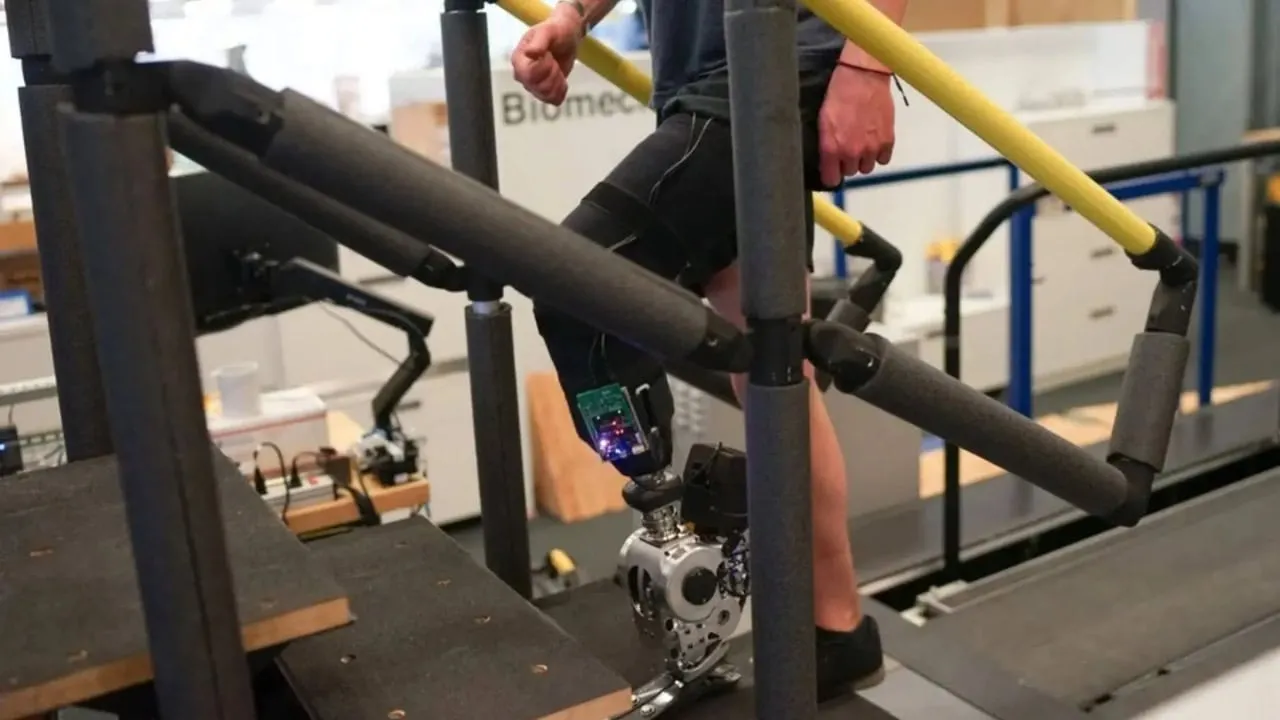
Researchers at the Massachusetts Institute of Technology tested a fresh technique for operating robotic prosthetic limbs by placing tiny magnets inside muscle tissue. Known as magnetomicrometry, this technology delivers more precise control signals than current methods. The group shared their discovery in Nature Sensors on October 29, 2026.
Magnetic tracking powers the mechanism. Investigators place pairs of magnets measuring about 3 mm across directly into muscle fibers. These magnets consist of a neodymium-iron-boron alloy wrapped in gold and parylene C to ensure safety inside the body.
External sensors placed on the skin track alterations in the space between the magnets. The gap changes as muscles flex or extend. The setup also determines muscle length and speed from these movements, and the signals penetrate tissue up to 6 cm deep.
Three individuals with below-knee amputations joined the research. Every participant previously underwent an agonist-antagonist myoneural interface procedure, a surgery linking opposing muscle groups to maintain natural movement signals. Each person also had magnetic implants placed in up to four muscles controlling the ankle.
The volunteers moved a screen cursor using their muscle actions, though this trial tested the interface instead of actual walking. Early findings showed promise, as magnetomicrometry provided steadier and more precise control signals than surface electrodes.
This novel strategy also measures up well against standard electromyography, which relies on skin electrodes to monitor electrical activity in muscles. Those signals frequently contain noise and fluctuate due to skin moisture or tiredness. Magnetic sensing avoids this by tracking physical distance instead of electrical impulses.
The team at MIT currently conducts a broader study to assess prosthetic control in everyday settings. Investigators aim to determine how effectively individuals operate real robotic ankle-foot prostheses using the magnetic network, though safety, durability, and daily function require further testing.