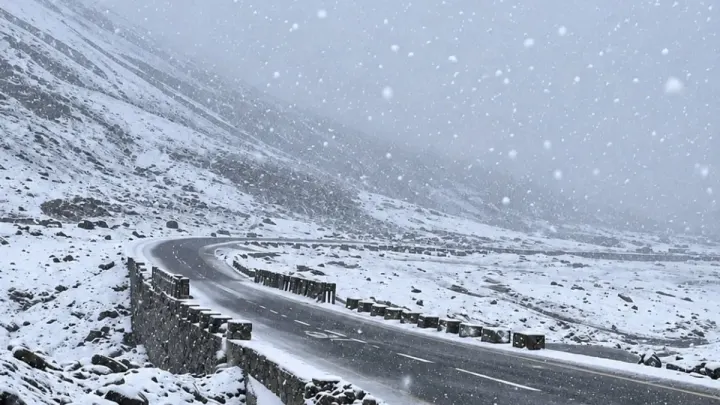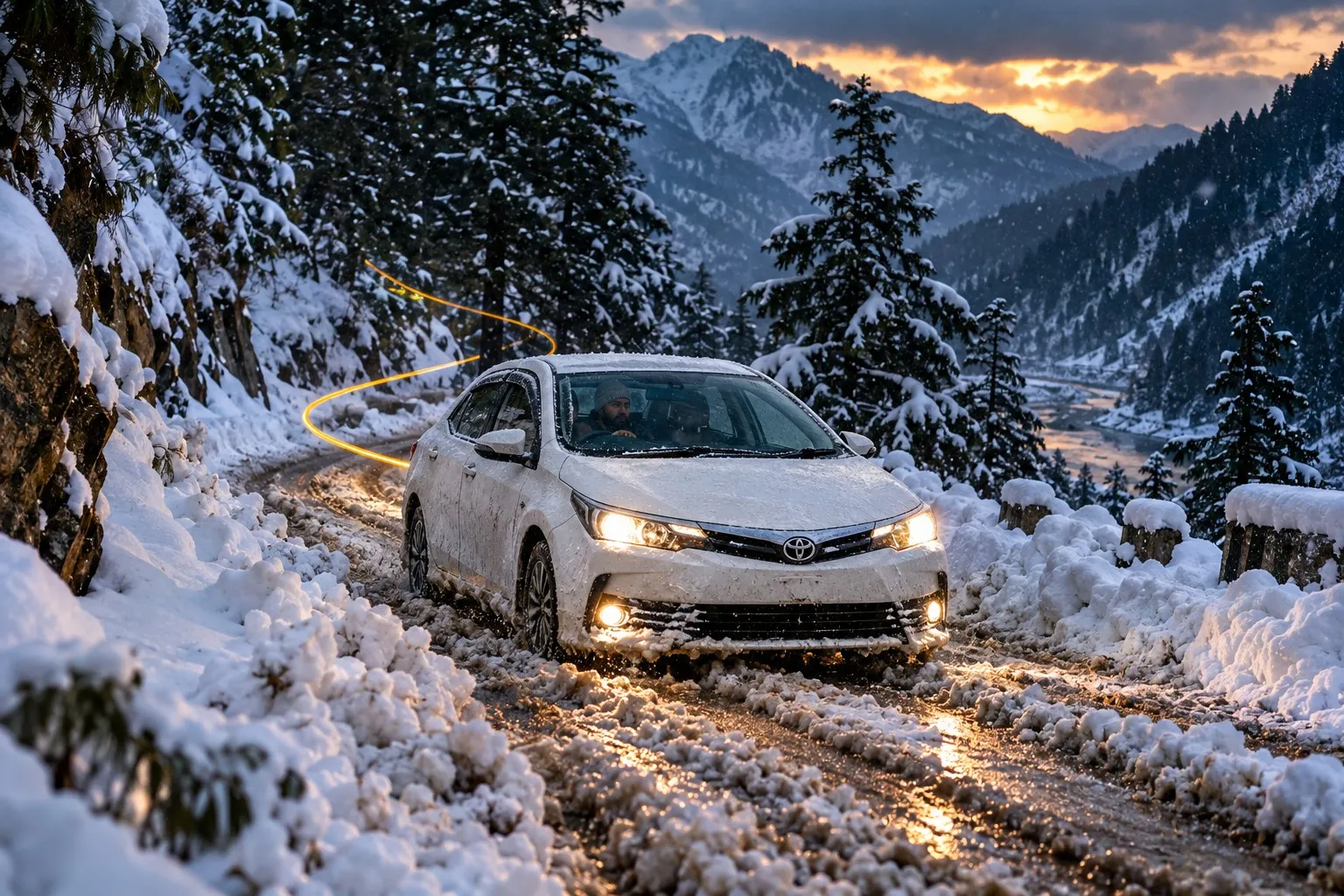
Heavy snowfall in Kaghan Valley on Monday prompted police to suspend traffic between Khyber Pakhtunkhwa and Gilgit-Baltistan as conditions on the Mansehra-Naran-Jalkhad Road became hazardous. Temperatures fell sharply, while slippery roads complicated journeys for motorists.
A police official said road crews had made the route passable up to Naran, Kaghan Valley's commercial centre. Tourists were temporarily prevented from continuing beyond Naran towards Babusar Top, with access dependent on an improvement in the weather.
How Kaghan Valley Snowfall Disrupted Travel Routes
The abrupt arrival of severe winter weather created immediate logistical challenges for transportation networks connecting major northern areas. Snow began falling early on Monday and returned at intervals during the day, coating asphalt surfaces in slick layers that made standard vehicle transit extremely dangerous. Law enforcement personnel and highway maintenance crews responded quickly to secure vulnerable points along the transport corridors, prioritizing public safety over uninterrupted transit.
Authorities took the precautionary step of halting vehicles attempting to cross the inter-provincial boundaries. This measure prevents travelers from becoming stranded in high-altitude zones where rescue operations face severe physical limitations due to freezing temperatures and blocked pathways. Travelers found themselves rerouted or halted at designated checkpoints until road conditions could be reassessed by local authorities.
Understanding the Mansehra-Naran-Jalkhad Road and Regional Connectivity
The Mansehra-Naran-Jalkhad Road, commonly referred to as the MNJ Road, serves as a vital artery linking Khyber Pakhtunkhwa with Gilgit-Baltistan. Built to facilitate trade, tourism, and local mobility through rugged terrain, the corridor traverses some of the highest mountain passes in the region. During the warmer months, thousands of commercial vehicles and private cars use this route daily to transport goods and passengers across provincial lines.
However, the geography that makes the route scenic also renders it exceptionally vulnerable to seasonal weather events. High-altitude passes experience rapid meteorological shifts, turning clear days into blizzard conditions within hours. Maintenance of the MNJ Road requires specialized heavy machinery and constant monitoring by road crews stationed at strategic intervals across the valley.
Affected Areas Across the Valley
The weather system impacted multiple scenic locations and settlement hubs throughout the mountainous topography. Among the places affected were Babusar Top, Saiful Muluk Lake, Battakundi, Basal, Lolosar Lake, and Naran. Each of these sites experienced distinct accumulations of snow, altering the local environment and bringing outdoor activities to a temporary halt.
High-altitude spots like Babusar Top and Lolosar Lake bore the brunt of the storm, recording the thickest layers of snow and the sharpest drops in temperature. These areas sit far above the tree line, exposing infrastructure and travelers to fierce winds and near-zero visibility during winter storms. Lower elevations, including Naran, experienced intermittent flurries that accumulated quickly on untreated surfaces.
Visitors Keep Arriving Despite Slippery Roads
Kaghan Valley Hotel Association chairman Hussain Deen said visitors were still coming to experience the snow, with traffic permitted as far as Naran. He urged drivers on the Balakot–Naran route to take care on slippery stretches and refrain from reckless driving. The continued influx of travelers highlights the enduring appeal of winter tourism in the region, even as local businesses and hospitality providers grapple with the logistical hurdles posed by storms.
Hotels and guesthouses in Naran report steady inquiries from tourists eager to witness the seasonal transformation of the mountains. Association members work closely with municipal authorities to ensure that visitors understand the boundaries of safe travel. While commercial life in Naran continues, operators emphasize the necessity of respecting police directives regarding road closures beyond the town limits.
Wildlife Department and Access to Saiful Muluk Lake
Abdul Rasheed Tanoli, the wildlife sub-divisional officer in Kaghan Valley, said the snowfall had lowered temperatures throughout the region. He said the road from Naran to Saiful Muluk Lake remained accessible to four-wheel-drive vehicles, while tourists continued arriving to take in the scenery. The ability to reach this iconic alpine lake depends heavily on specialized vehicles equipped to handle unpaved, snow-covered tracks.
Wildlife officials monitor the movement of visitors around sensitive natural habitats during these weather events. Lower temperatures force local fauna to alter foraging patterns, making management and observation critical tasks for the department. Officials maintain a presence along active routes to assist stranded motorists and protect the surrounding ecosystem from unregulated off-road driving.
Weather Patterns and Mountain Tourism Challenges
Managing tourist influxes during sudden meteorological shifts requires continuous coordination between regional administrations, police, and local trade bodies. Mountain weather is notoriously difficult to predict with absolute precision, leading to rapid changes in travel advisories. Authorities rely on real-time reports from road crews stationed near high-altitude passes to decide when routes can safely reopen to the public.
Visitors planning trips to northern mountain regions are routinely advised to monitor weather forecasts and check road status updates before embarking on long journeys. Preparation for winter mountain travel typically includes fitting vehicles with proper tire chains, carrying emergency supplies, and maintaining a flexible itinerary. As weather conditions fluctuate throughout the season, local agencies remain on high alert to respond to future storms and safeguard travelers across the valley.