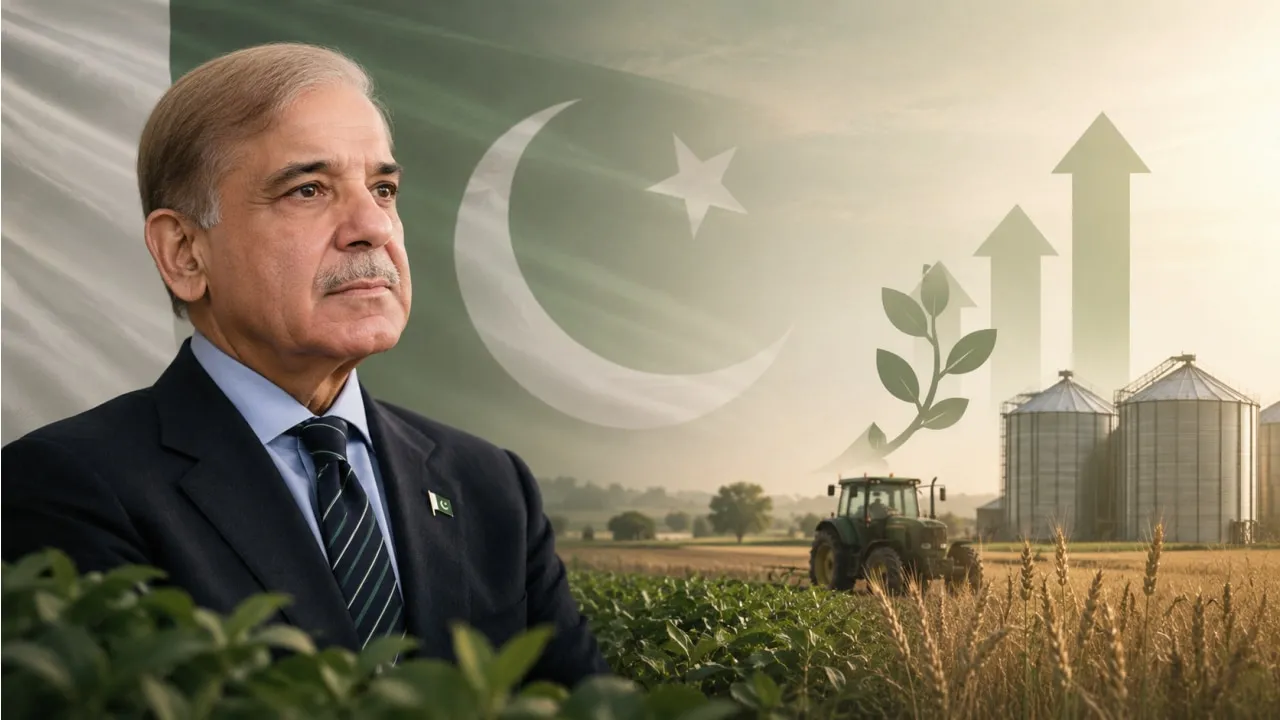
State Bank Warns of Funding Shortfall in PM Youth Loan Scheme
Pakistan's expanded youth loan scheme could require an additional Rs. 8 billion in government funding during FY27, as the State Bank of Pakistan (SBP) has warned that the existing subsidy allocation falls short of the estimated cost of the program. The financial advisory and regulatory institution flagged these numbers as the government pushes to broaden credit access for young entrepreneurs and agricultural workers across the country. Ensuring the long term fiscal health of such large scale public credit initiatives requires careful balancing between ambitious political targets and available budgetary resources.
The funding concern comes after Prime Minister Shehbaz Sharif approved a Rs. 292 billion disbursement target for the Prime Minister's Youth Business and Agriculture Loan Scheme, exceeding the Rs. 288 billion distributed during the program's first three years. The government has also expanded the maximum loan limit from Rs. 7.5 million to Rs. 25 million to support larger businesses. These policy adjustments aim to stimulate economic activity, create employment opportunities, and modernize agricultural practices by channeling liquidity into productive sectors.
Understanding the Subsidy Requirements and Budgetary Pressures
According to the SBP, the subsidy requirement for the scheme is estimated at Rs. 38 billion, based on projected loan disbursements of Rs. 250 billion during the current fiscal year. However, the available budget allocation stands at only Rs. 21 billion, leaving a substantial funding shortfall. Government-backed credit schemes typically rely on public subsidies to cover the difference between market interest rates and the concessional rates offered to targeted borrowers.
The revised disbursement target of Rs. 292 billion is expected to create an additional subsidy related budgetary requirement of Rs. 8 billion during FY27, further increasing pressure on the scheme's financing arrangements. As the national treasury absorbs these obligations, fiscal planners must find ways to reconcile the expanding credit targets with strict fiscal deficit management goals. Public sector development programs and credit support initiatives must navigate these financial constraints carefully to avoid payment delays or administrative bottlenecks.
Expansion of Loan Categories and New Limits
The government recently introduced Tier 4 under the scheme, allowing borrowers to obtain loans ranging from Rs. 7.5 million to Rs. 25 million at a fixed interest rate of 8 percent. This new tier represents a strategic shift from microfinance style assistance toward larger commercial and agricultural ventures that require substantial capital investment. By opening up higher credit ceilings, authorities hope to attract established enterprises and larger farming operations into the formal banking sector.
The new category offers financing for up to eight years, including a grace period of up to one year, alongside first loss risk coverage of up to 10 percent on a portfolio basis. The government plans to distribute Rs. 150 billion through this category during FY27. These structured repayment terms and risk sharing mechanisms are designed to encourage commercial banks to lend to segments that might otherwise be viewed as too risky under standard lending criteria.
Impact on Commercial Banks and Profit Margins
Alongside the expansion, the government reduced commercial banks' profit margins under the scheme by 0.6 percentage points, bringing the rate down from Karachi Interbank Offered Rate (KIBOR) plus 3 percent to KIBOR plus 2.4 percent. Commercial lenders participating in government directed loan programs must adjust their internal cost structures to accommodate these compressed margins while still managing credit risk effectively.
Banking sector participation remains crucial for the success of the Prime Minister Youth Business and Agriculture Loan Scheme, as private institutions handle the actual distribution and loan recovery processes. Financial institutions evaluate such directives based on potential volume gains against reduced per transaction profitability. Clear guidelines and risk sharing agreements help maintain bank interest in supporting public policy lending objectives.
Background and Evolution of Youth Loan Initiatives in Pakistan
Government sponsored youth loan programs have a long history in Pakistan, evolving through various iterations under different administrations to address youth unemployment and stimulate small business growth. These initiatives typically target young professionals, IT freelancers, aspiring entrepreneurs, and small scale farmers who struggle to secure traditional bank financing due to a lack of established credit histories or physical collateral. Over the years, program structures have shifted from simple cash grants to subsidized debt instruments managed through commercial and Islamic banks.
The transition toward structured loan schemes reflects lessons learned from past programs where recovery rates and monitoring mechanisms occasionally faced challenges. By partnering with the central bank and major commercial lenders, modern iterations seek to introduce professional credit appraisal methods. However, matching political goals with macroeconomic stability remains a persistent challenge for fiscal managers.
Practical Implications for Borrowers and Small Businesses
For aspiring entrepreneurs and agricultural workers, the availability of subsidized loans through the expanded tiers offers a rare opportunity to secure capital at rates well below prevailing market benchmarks. Small and medium enterprises often cite high borrowing costs as a primary barrier to expansion, making fixed low interest rates a vital catalyst for business development. Prospective applicants must prepare detailed business plans and meet the strict documentation standards established by participating commercial banks.
The inclusion of grace periods and extended repayment horizons helps new businesses navigate the initial vulnerability phase before generating steady revenue streams. Agricultural borrowers can use these funds to purchase machinery, seeds, and fertilizers, improving overall productivity and crop yields. Monitoring how the government addresses the reported funding shortfall will be essential for applicants relying on the uninterrupted flow of credit.





