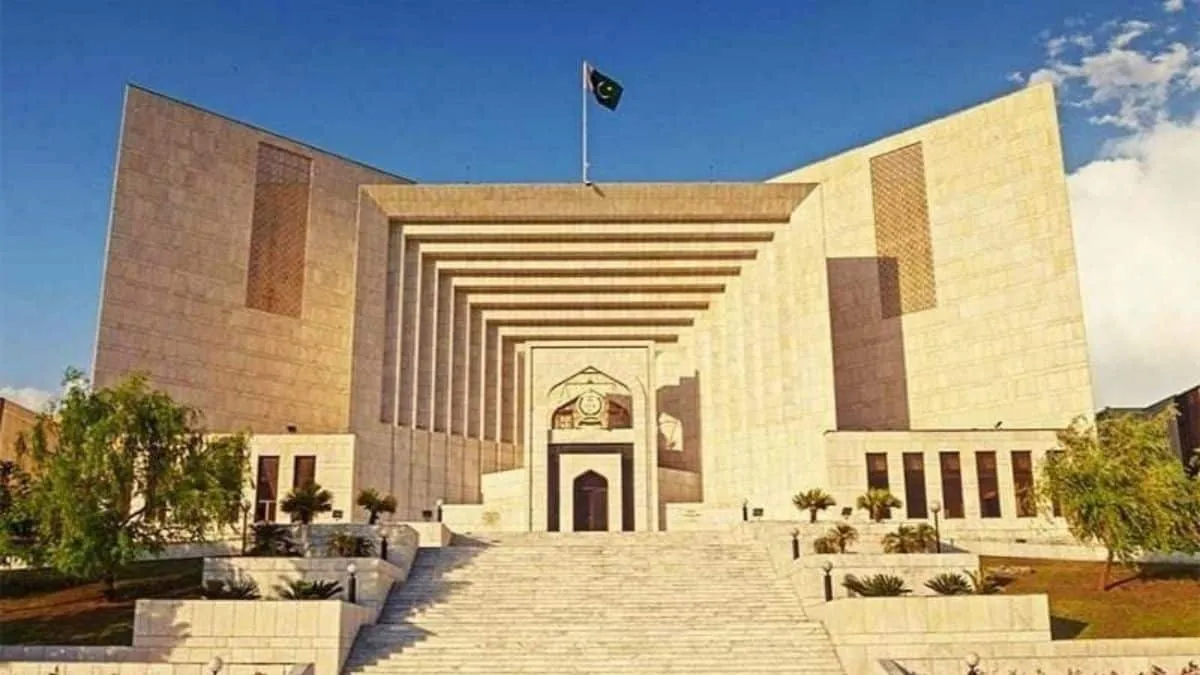
Understanding the Supreme Court Ruling on the Cancellation of Bail
The Supreme Court has outlined eight legal grounds for canceling bail, ruling that the relief can be withdrawn if an accused person misuses it or interferes with the judicial process. This comprehensive legal framework provides clear directives to lower courts regarding the circumstances under which an individual released on bail can have that status revoked. Legal practitioners and judicial observers note that the decision brings substantial clarity to criminal jurisprudence by categorizing specific behaviors and conditions that invalidate pre-trial freedom.
In a judgment authored by Justice Muhammad Ali Mazhar, the court stated that bail may be canceled if the original order is prima facie illegal or unjust, or if the accused attempts to influence prosecution witnesses, tamper with evidence, or obstruct justice. The ruling emphasizes that the privilege of bail is fundamentally tied to the integrity of the judicial system and the orderly conduct of ongoing criminal proceedings. When an individual violates these foundational tenets, the court retains the inherent authority to recall the concession and restore custody.
Eight Legal Grounds for Bail Revocation
The high court judgment details multiple distinct scenarios where the continuation of bail becomes untenable. These provisions cover both procedural violations and substantive changes in the factual matrix of a given case. The complete set of criteria established by the bench provides a structured guideline for prosecutors seeking to challenge improper liberty.
Other grounds include the risk of fleeing the court jurisdiction, interfering with an investigation, or committing a similar offense while on bail. Newly discovered facts or evidence linking the accused to the alleged crime may also justify cancellation. Each of these eight grounds targets specific vulnerabilities in the administration of justice where an accused might exploit pre-trial freedom to subvert the truth-seeking function of criminal trials.
- The original bail order is prima facie illegal or unjust.
- The accused attempts to influence prosecution witnesses.
- There is active tampering with evidence.
- The accused obstructs the course of justice.
- There is a demonstrable risk of fleeing the court jurisdiction.
- The accused interferes with an active police investigation.
- The individual commits a similar offense while released on bail.
- Newly discovered facts or evidence link the accused to the alleged crime.
Background of the Larkana Case and Sindh High Court Decision
The ruling came as the Supreme Court dismissed an appeal and upheld a Sindh High Court decision in a case involving the death of a man in Larkana. The underlying legal battle originated from a criminal complaint where procedural delays and disputed timelines formed the core of the initial defense arguments. The Supreme Court reviewed the sequence of events that led through the lower judicial tiers before reaching the highest appellate bench.
The accused, Ali Asghar Khokhar, was granted pre-arrest bail by the Sindh High Court on October 20, 2025, after a sessions court had rejected his application. The progression of the case from a sessions court rejection to a high court approval highlighted the contentious nature of the allegations and the arguments presented regarding the necessity of custodial interrogation.
Judicial Observations on Investigation Delays and Evidence
The Supreme Court observed that the nine-month delay in registering the FIR and the accused alleged involvement in the incident were matters requiring further inquiry. Such delays often form the basis for defense arguments questioning the veracity of the prosecution case, yet the apex court maintained that the broader implications of the conduct of the accused warranted strict adherence to legal standards.
The evaluation of evidence at the bail stage involves a tentative assessment rather than a definitive finding of guilt or innocence. By noting that the circumstances required deeper examination, the bench underscored the balance that courts must maintain between protecting individual liberty and ensuring accountability for serious criminal allegations.
Directives Issued to the Water and Power Development Authority
Beyond the primary ruling on bail cancellation principles, the court also directed that a copy of the judgment be sent to the Water and Power Development Authority (WAPDA) to examine allegations of illegal electricity supply and power theft linked to the case. This specific administrative directive illustrates how criminal proceedings can intersect with regulatory and utility enforcement matters when evidence points toward concurrent offenses.
The involvement of WAPDA reflects the multi-faceted nature of the dispute, where subsidiary allegations regarding utility misuse emerged during the judicial scrutiny of the main incident. Authorities within the utility sector are now tasked with reviewing the records pertaining to the reported power irregularities associated with the parties involved in the Larkana proceedings.