New Auto Policy Approved in Islamabad to Lower Car Prices
The government has officially approved a comprehensive new auto policy designed to bring gradual relief to vehicle buyers by lowering car prices across the market. Prime Minister's Adviser on Industries and Production Haroon Akhtar announced the policy during a press conference in Islamabad, appearing alongside Federal Information Minister Attaullah Tarar. According to the announcement, carmakers will no longer be permitted to demand more than 20 percent of a vehicle price as advance payment from buyers, marking a major shift in consumer protection for the automotive sector.
The approval follows extensive and lengthy consultations among industry stakeholders and government officials. The primary objective of the framework is to restructure the domestic manufacturing sector so that it transforms from a domestic-only market into a competitive global player. By addressing long-standing financial practices and setting strict operational parameters, authorities expect the market to stabilize and become more accessible to everyday citizens who have struggled with high vehicle costs in recent years.
How the New Policy Changes Car Prices and Advance Payments
For years, prospective vehicle owners faced stringent financial hurdles, including high upfront booking costs that often exceeded half the total value of a vehicle. Under the newly approved guidelines, manufacturers are strictly capped at taking a maximum of 20 percent of a car price as an advance payment. This restriction limits the financial exposure of buyers and prevents assembly plants from using consumer funds as interest-free working capital during production delays.
Haroon Akhtar stated during the briefing that car prices will gradually come down as a direct result of the structural reforms introduced in the policy. While the price adjustments will take time to reflect fully on showroom floors, the measures are structured to benefit the middle and upper-income classes who form the core of the domestic consumer base. The reduction in financial burdens for buyers is expected to revive demand in a stagnant market.
Transforming the Automotive Sector into an Export Powerhouse
A central pillar of the newly approved framework is a massive expansion in foreign sales, with authorities setting a target to raise auto sector exports from the current $200 million to $6 billion. Akhtar noted that while various policies for the automotive sector had been formulated over the past 10 years, historical efforts failed to generate meaningful export growth. This time, substantial work went into drafting an export-focused policy where vehicle exports receive special priority.
To ensure compliance with these ambitious targets, manufacturers that fail to meet their designated export obligations will face strict penalties. This accountability mechanism forces assembly plants to look beyond the domestic market and prove their competitiveness on the international stage. The shift aligns with broader economic goals to diversify national exports and bring in vital foreign exchange reserves.
Raising Vehicle Quality Through International Standards
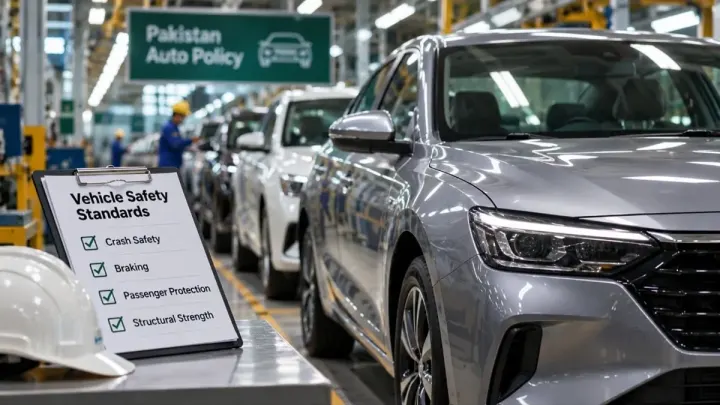
Past complaints regarding the build quality, safety features, and fuel efficiency of locally assembled vehicles have been addressed through the integration of 45 additional standards into the policy. These new requirements are designed to bring vehicle quality up to international levels. Akhtar emphasized that these additions will place cars made in the country among the best in terms of safety and durability.
By enforcing rigorous compliance benchmarks, the government aims to eliminate the quality gap that previously hindered local models from competing abroad. Manufacturers must upgrade their production lines and testing facilities to meet these mandatory standards, ensuring that consumers receive better value for their money while also satisfying the strict safety demands of foreign markets.
Major Push for Electric Vehicles and Lower Import Duties
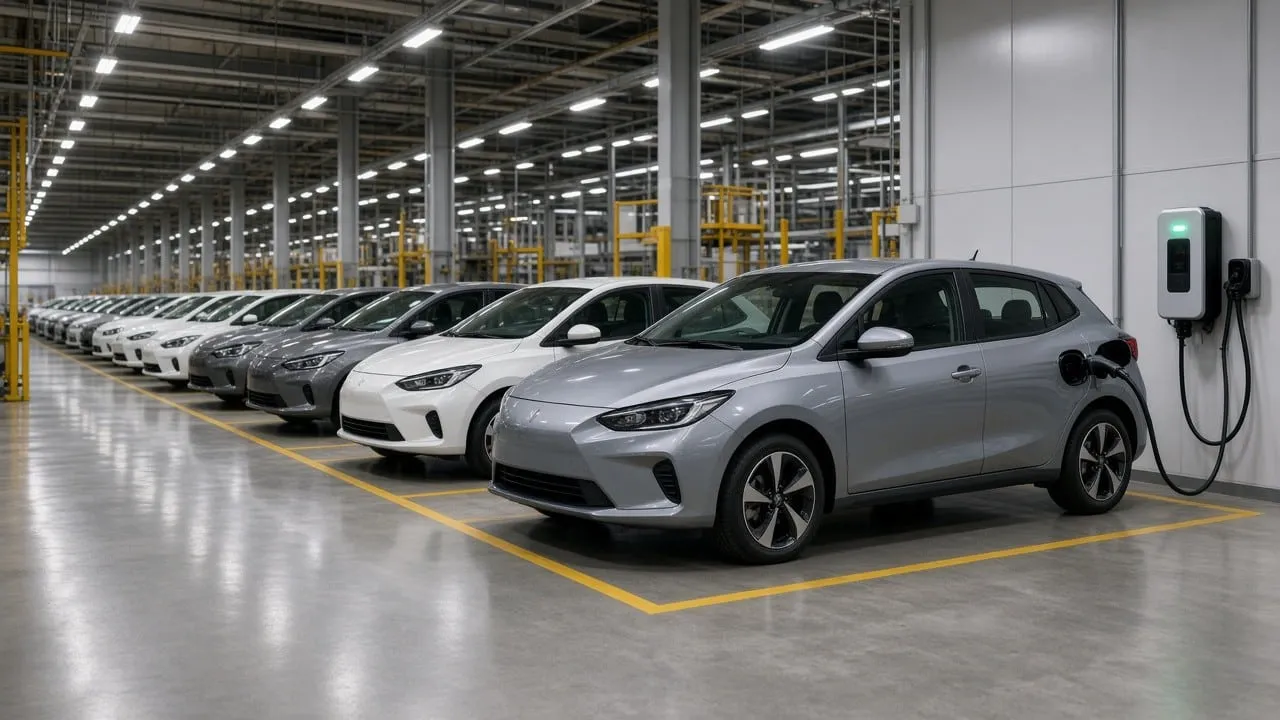
The government is paying special attention to electric vehicles, as their importance has grown significantly following recent tensions in the region. Global energy volatility and supply chain vulnerabilities have made the transition toward alternative fuel sources an economic and strategic priority. To accelerate adoption, the financing limit for electric vehicles has been raised to Rs. 10 million to encourage broader consumer use.
In addition to consumer financing support, the government has reduced import duties on charging stations for electric vehicles. This reduction removes a major infrastructural bottleneck, making it more financially viable for private enterprises and energy companies to build a robust charging network. The combination of accessible loans and lower infrastructure costs aims to spur a rapid transition toward sustainable urban transport.
The Role of Large-Scale Manufacturing in National Growth
The automotive industry holds a foundational position within the broader framework of large-scale manufacturing. Akhtar reiterated that large industries remain a primary focus for the government due to their multiplier effect on employment, engineering, and ancillary businesses. The auto sector supports numerous secondary industries, including steel, rubber, plastics, and electronics, creating jobs for hundreds of thousands of workers.
By establishing a policy that simultaneously lowers prices for consumers, enforces quality standards, penalizes export laggards, and incentivizes electric mobility, the administration hopes to create a resilient industrial base. The coming months will reveal how manufacturers adapt to the new regulatory environment, with consumers watching closely for the promised price reductions on showroom floors.