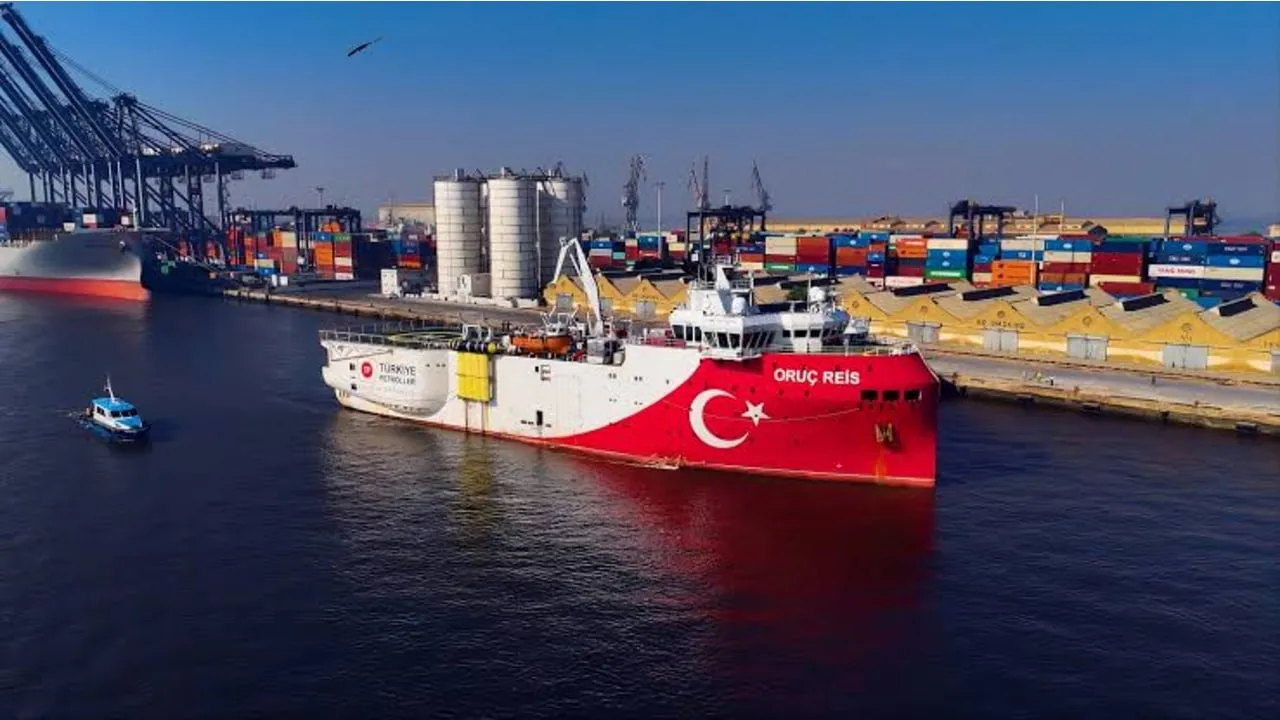
Turkey's seismic survey vessel Oruc Reis arrived at Karachi Port on Wednesday, signaling Pakistan's first offshore oil and gas exploration effort in nearly two decades. Operated by the Turkish Petroleum Corporation (TPAO), the ship berthed at Berth No. 24 alongside five support vessels, and a ceremony is planned for later today to mark the restart of offshore drilling activities.
Why the Arrival Matters for Pakistan's Energy Outlook
The docking of Oruc Reis follows Pakistan's launch of its first offshore bidding round in 18 years, announced in January 2025. The round offered 40 offshore blocks to international and domestic firms, aiming to map the country's largely untapped maritime hydrocarbon reserves. By partnering with Turkey's state-owned TPAO, Pakistan hopes to leverage advanced seismic technology and Turkish expertise to assess its offshore basins more quickly and cost-effectively.
What the Oruc Reis Vessel Brings to the Survey
Oruc Reis is a purpose-built seismic survey ship capable of conducting high-resolution 2D, 3D and 4D seismic imaging. The vessel's equipment includes multiple air-gun arrays, streamers up to 12 km long, and state-of-the-art data-processing suites. Such capabilities allow operators to create detailed subsurface maps that identify potential hydrocarbon traps, fault lines, and reservoir quality. The data collected will be shared with participating bidders under the terms of the 2025 offshore round, forming the technical basis for future exploration licences.
Who Is Supporting the Mission at Karachi Port
In addition to Oruc Reis, five other ships are anchored at the port to support logistics, fuel supply and cargo handling. The fleet includes the tanker Hafnia Puma, container ships HMM Ocean and X-Press Pyxis, the general cargo vessel Feng Shou Hai, and the clinkers carrier Kingfisher. Their presence ensures that the seismic crew has continuous access to fuel, spare parts, provisions and safe harbour while operating in the Arabian Sea.
Background: Pakistan's Offshore History and Recent Revival
Pakistan's offshore territory covers roughly 300,000 square kilometres of the Arabian Sea, bordering the United Arab Emirates, Oman and Iran. Since independence, only 18 offshore wells have been drilled, a figure that reflects limited investment, geopolitical uncertainty and a historic focus on on-shore fields. In the early 2000s, the government conducted a handful of 2D surveys, but the data remained fragmented and largely unpublished.
In 2022, the Ministry of Energy announced a strategic review of offshore potential, recommending a modern bidding framework and international partnerships. The 2025 bidding round was the first concrete step, inviting companies to submit technical proposals for 40 blocks ranging from shallow water (less than 200 m depth) to deep-water prospects (over 1,500 m). The round attracted interest from firms in China, the United Arab Emirates, the United States and Europe, but the final award list is still pending.
How the Bidding Process Works
The offshore auction follows a two-stage procedure. In the first stage, interested parties submit technical proposals outlining their exploration methodology, seismic acquisition plans and environmental safeguards. The government evaluates these proposals against criteria such as technical competence, financial capacity and alignment with national energy goals.
Successful bidders then move to the second stage, where they submit financial offers for the lease of specific blocks. The highest-valued bids that meet the technical thresholds win exploration licences, typically for a period of three years, with the option to extend if viable reserves are discovered.
What the Data Could Reveal
Preliminary studies by Pakistan Petroleum Limited (PPL) have already identified several promising structures in the Makran and Indus basins. PPL's own 2D and limited 3D surveys have hinted at potential gas-bearing formations at depths of 4,000-5,500 m. The high-resolution data from Oruc Reis will allow geologists to refine these models, differentiate between carbonate and clastic reservoirs, and assess seal integrity.
If the surveys confirm sizable gas or oil accumulations, the economic impact could be substantial. Offshore discoveries would diversify Pakistan's energy mix, reduce reliance on imported LNG, and potentially create a new export commodity. Moreover, the development of offshore infrastructure, platforms, pipelines and export terminals, could generate thousands of jobs in engineering, construction and services.
Potential Challenges and Risk Management
Offshore exploration in the Arabian Sea faces several challenges. The region's seasonal monsoon can limit survey windows, while deep-water drilling requires sophisticated rigs and high capital outlay. Environmental concerns also loom large; the proximity of marine ecosystems and the need to protect fisheries demand rigorous impact assessments.
Pakistan's regulatory framework, updated in 2024, mandates comprehensive Environmental Impact Assessments (EIAs) before any drilling can begin. The EIAs must address oil spill contingency plans, waste management, and mitigation of noise pollution that could affect marine mammals. TPAO, having conducted similar surveys in the Black Sea and the Eastern Mediterranean, brings experience in adhering to these standards.
What Comes Next After the Survey
Oruc Reis is scheduled to spend approximately six weeks conducting seismic lines across the designated blocks. Once data acquisition is complete, the raw seismic records will be processed on board and then transmitted to a secure data centre in Islamabad for further interpretation.
Interpretation teams from TPAO, PPL and selected international partners will work together to produce final seismic maps by early 2027. Those maps will feed into the second stage of the bidding process, where companies will submit final financial offers. The government expects to award exploration licences by the end of 2027, with drilling to begin in 2028 if commercial reservoirs are identified.
Practical Takeaways for Stakeholders
- Energy companies should prepare detailed technical proposals now, as the data from Oruc Reis will define the geological baseline for all bidders.
- Local service firms in Karachi can anticipate increased demand for marine logistics, fuel supply and equipment maintenance during the survey period.
- Environmental NGOs are urged to monitor the EIA process closely to ensure compliance with international best practices.
- Investors may view the upcoming offshore licences as a long-term play, given the potential for large gas finds that could support Pakistan's power sector.
Overall, the arrival of Oruc Reis marks a decisive moment in Pakistan's energy strategy, blending international expertise with national ambition to unlock offshore resources that have remained dormant for decades.





