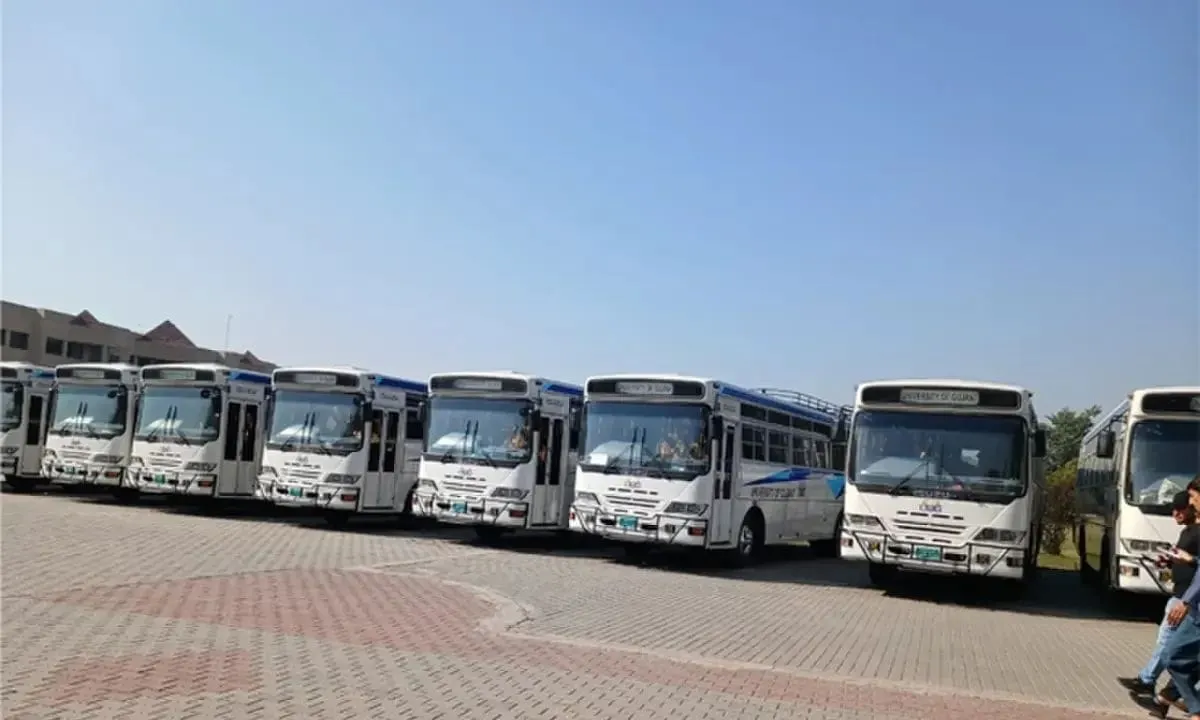
University of Gujrat Transport Crisis Involves Rs450 Million Fleet
The University of Gujrat continues to rely heavily on privately hired transport to manage its daily student commute, despite investing a massive Rs450 million to procure a fleet of 18 new buses. Official records demonstrate that the institution placed a formal supply order for these vehicles, with the agreement officially executed on Nov 4, 2025. University officials confirmed that the delivery of these assets concluded well ahead of the academic semester start date in Sept 2026. However, the administrative machinery has failed to initiate regular operations for the entire vehicle cohort, leaving the expensive assets sitting idle while students crowd older rented alternatives.
This ongoing situation highlights a stark disconnect between institutional procurement and operational readiness. While capital expenditure of this scale typically aims to resolve transit deficits immediately, the administrative response has lagged behind delivery schedules. Consequently, the campus community continues to experience transit hurdles that the multi-million rupee investment was explicitly intended to solve.
Syndicate Approval and Procurement Timeline for the New Buses
The decision to upgrade the institutional transport department originated within the highest governing bodies of the campus. Official sources revealed that the syndicate greenlit the procurement of up to 27 new buses during its 52nd meeting, which took place on Oct 16, 2025. The core objective of this financial authorization was to strengthen the existing transit fleet and systematically reduce the institutional reliance on privately hired vehicles, which drain operational funds over time.
Following this mandate, the administration moved quickly to execute the supply agreement on Nov 4, 2025, committing Rs450 million to secure 18 of the planned vehicles. The manufacturing and delivery phases moved rapidly, ensuring the physical assets arrived on campus before the academic semester began in Sept 2026. Despite this efficient procurement cycle, internal bottlenecks prevented the immediate deployment of the fleet, sparking questions about institutional planning and coordination.
Continued Reliance on Private Transport Operators
Even with the arrival of the multi-million rupee fleet, the campus administration maintains a parallel reliance on outside commercial transport. Records show that the university hired 50 buses from a private transport operator back in December 2023 under a contract valued at Rs64.8 million. Under the terms of this agreement, fuel charges are calculated separately at a rate of Rs3.5 per kilometre, creating a continuous stream of variable expenditures alongside the fixed contract cost.
Sources indicate that this private arrangement is reportedly continuing without interruption, meaning the institution is simultaneously paying for commercial transport services while owning a brand new fleet of 18 buses. This dual expenditure model places an unnecessary strain on institutional budgets. Financial analysts and administrative observers note that maintaining private contracts while owning alternative capacity defeats the primary fiscal purpose of large capital investments.
Financial Concerns and Student Impact on Campus
The financial implications of running private buses alongside an unutilised fleet have triggered significant concern among stakeholders. The continuous outflow of payments to the private operator adds heavy expenditure to the institutional ledger, bypassing the potential savings that the Rs450 million procurement should have delivered. Critics argue that public funds dedicated to educational infrastructure and student facilities are being mismanaged through prolonged operational delays.
Beyond the financial angle, the human impact is felt acutely on the ground. Students and parents have voiced frequent complaints regarding severe overcrowding inside the privately operated buses. Commuters question why the newly purchased vehicles sit parked while students struggle for space in cramped commercial coaches every morning and afternoon. The physical discomfort and safety concerns associated with overcrowded transit have intensified pressure on the university administration to provide clear answers.
Administrative Vacancies at the University of Gujrat
A significant factor contributing to the current administrative paralysis is the absence of permanent top-tier leadership. The university is currently functioning without a regular vice chancellor and pro-vice chancellor, and has operated under this leadership vacuum for a long time. Critical decisions regarding fleet deployment, staff recruitment, and financial oversight often stall when permanent executive heads are missing from the organizational chart, leaving lower-tier administrators to manage complex logistical transitions without definitive guidance.
The lack of stable executive leadership directly affects institutional responsiveness. Without a permanent vice chancellor to fast-track operational hurdles, departmental silos persist and inter-office coordination suffers. This structural vulnerability explains why major assets like the new bus fleet remain trapped in administrative limbo months after arriving on campus.
Registrar Explanation and Staff Recruitment Status
Addressing the growing controversy, UoG Registrar Naeem Butt stated that almost half of the fleet has been made operational to date. He explained that the hiring of drivers and other necessary support staff for the remaining new buses is currently under process. According to the registrar, the administration is conducting this recruitment strictly in line with standard operating procedures and institutional rules to ensure compliance and transparency.
While the administration defends its methodical hiring pace by citing standard operating procedures, critics point out that staff recruitment should have been synchronized with the procurement timeline. Hiring drivers and logistics personnel after the delivery of the vehicles guarantees a delay in deployment. The community now watches to see how quickly the administration can complete the remaining appointments and bring the entire Rs450 million fleet onto the roads.