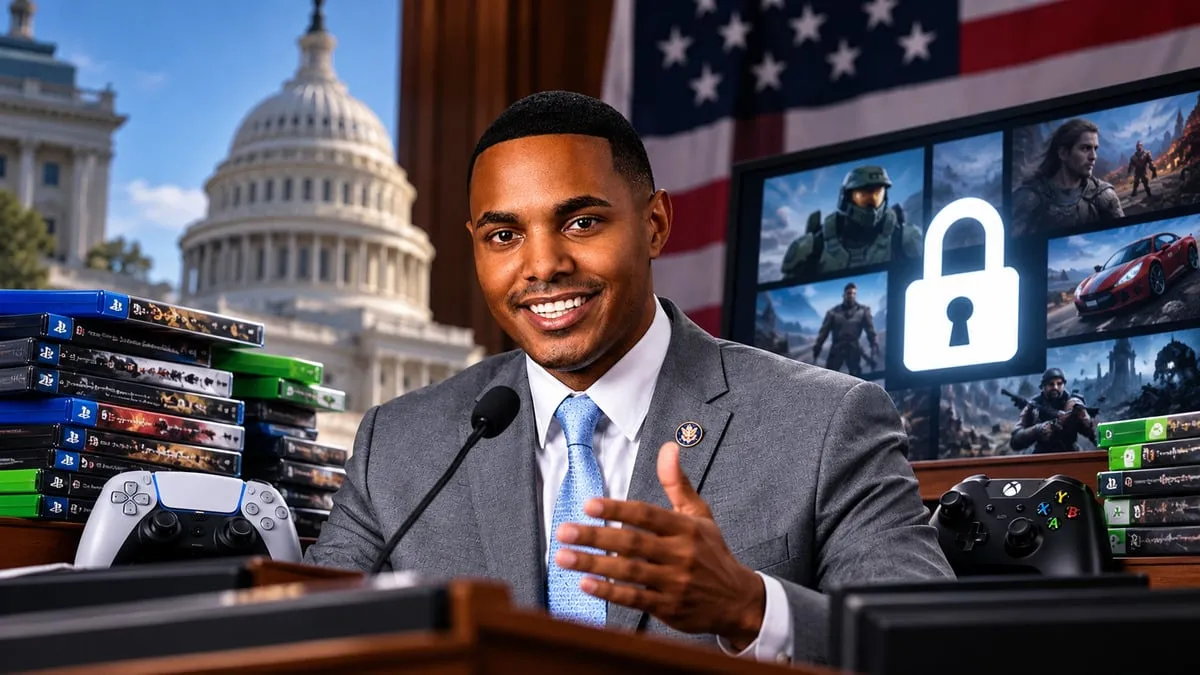
US Representative Ritchie Torres plans to introduce the Power To The Players Act, a bill directing the Federal Trade Commission to establish regulations protecting video game ownership. Speaking to Kotaku, the New York lawmaker summarized his stance with the phrase, "If you pay for it, you own it.">
NBA 2K25 Highlights the Problem
One primary motivator behind the legislative push is NBA 2K25, which ranked as the fifth best-selling game of 2024 in the US. Although players invested substantial money and time into the basketball title, 2K Games is preparing to withdraw support just over two years following its release. The standard edition originally retailed for around $70. Digital storefronts will remove the title on October 30, and online servers are scheduled to shut down by January 1, 2027, rendering popular modes unavailable. Torres aims to prevent purchases from turning into unusable items simply because a publisher ends online support.
Games Would Need to Keep Working Offline
Under the proposed legislation, purchasing a video game grants consumer ownership rather than a revocable license. Titles relying on online functionality must also offer an offline mode that continues operating after support servers shut down. Torres stated that consumers deserve the right to own, the right to play, and the right to transfer acquired games. He argued that any game disappearing when a company closes its servers is merely a rental disguised as a purchase.
Gamers Have Been Calling for Stronger Ownership Rights
This proposal arrives amid mounting pressure from players worried about purchased titles becoming unplayable when publishers drop online services. The Stop Killing Games advocacy campaign urges companies to stop selling games that turn completely unusable after servers turn off. Anxiety also increases as the industry shifts toward digital distribution. Kotaku reported that Sony is expected to halt production of PlayStation game discs for its next console generation. Additionally, Grand Theft Auto 6 is expected to release next month with physical purchases containing only a download code instead of the game itself, with prices starting at $80 and sparking questions about digital ownership.
The Bill Still Has a Long Way to Go
The Power To The Players Act still awaits formal introduction in Congress before it can navigate the legislative process. Kotaku noted that Torres did not confirm whether the bill will secure cosponsors or gain backing from Republican lawmakers. The report added that roughly 87 percent of legislation never reaches a full vote. Furthermore, major game publishers might lobby against restrictions affecting how they sell and maintain digital software.
Torres Says It Would Restore How Game Ownership Used to Work
Torres told Kotaku that he grew up playing series such as Grand Theft Auto, Resident Evil, and SOCOM, though he did not personally purchase NBA 2K25. At 38 years old, he is nearly 20 years younger than the median House member, most of whom were born before the release of Pong. He described the measure not as a radical alteration to game ownership, but as a restoration of how buying and playing games functioned through the 1980s, 1990s, and 2000s. He also framed digital ownership as an affordability concern as costs rise across the economy.
Movies and Music Are Not Included
The proposed Power To The Players Act currently concentrates exclusively on video games, excluding other digital purchases like music or movies. This exclusion applies even though Terminator 2 and several other film purchases vanished from user digital libraries earlier this year. Torres explained that games share a uniquely strong bond with ownership because players collect them and dedicate substantial time investments. However, he suggested that successful video game ownership protections could eventually serve as a blueprint for stronger ownership rights across the broader digital economy.