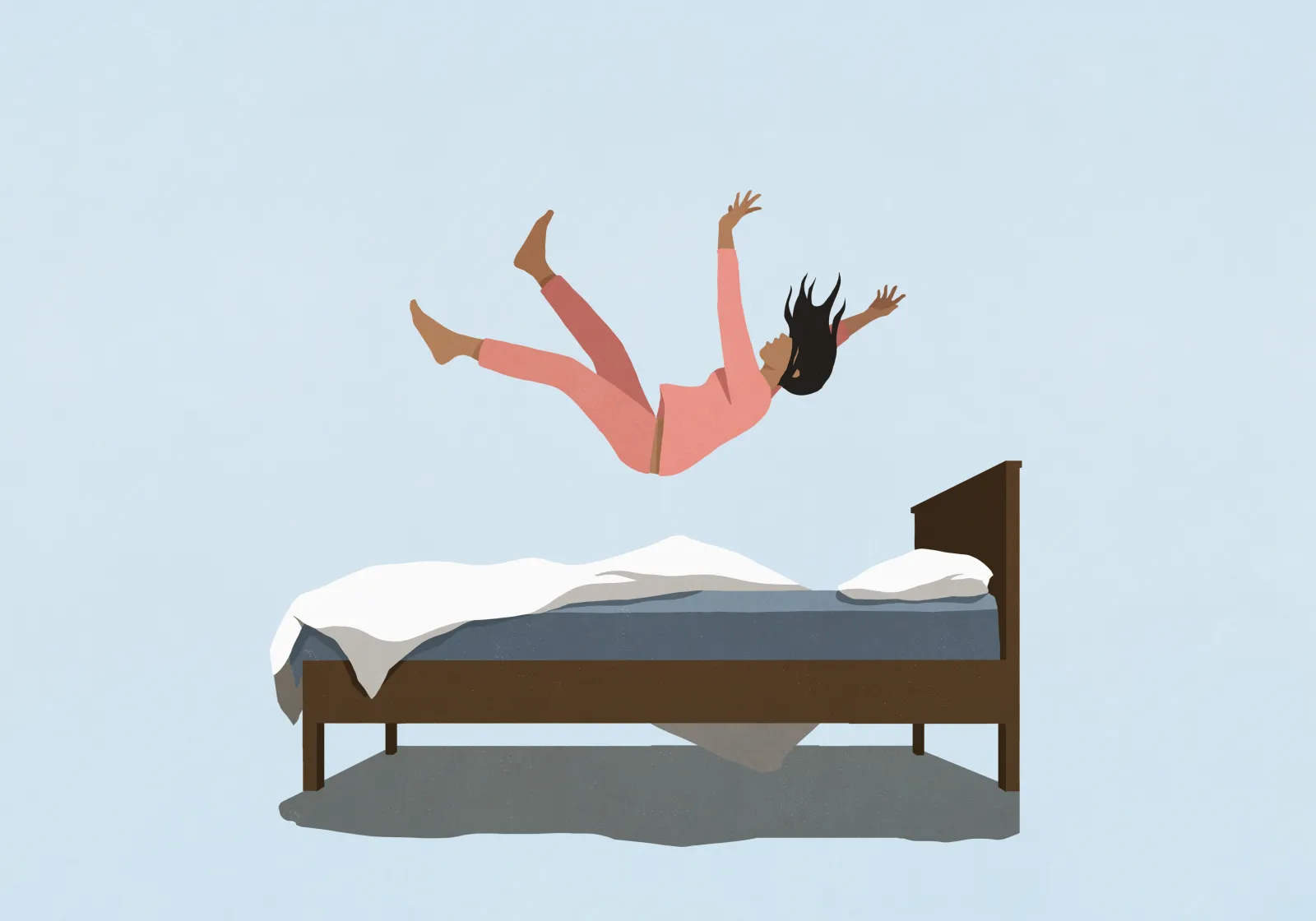
When drifting off to sleep, many people experience a sudden sensation of falling that startles them awake with a racing heart and rapid breathing. This phenomenon is known as a hypnic jerk, or a sleep start, which involves involuntary muscle twitches striking precisely between wakefulness and sleep. While often dismissed as a harmless quirk of the nervous system, recent scientific findings indicate that these abrupt awakenings may point toward hidden health issues such as insomnia, anxiety, and depression.
Understanding these nighttime movements requires looking at how the nervous system operates during the transition to rest. As the body winds down, the nervous system can occasionally misfire, sending a sudden signal that triggers a muscle twitch strong enough to jolt a person fully awake. For most individuals, this occurs rarely and causes nothing more than a brief moment of confusion. However, for a distinct group of people, these episodes happen frequently and align with higher levels of psychological distress and prolonged difficulty falling asleep.
What Happens During a Hypnic Jerk?
The physical sensations accompanying a sleep start extend far beyond a simple muscle twitch. Individuals frequently report a terrifying feeling of plunging headlong into an abyss or losing their balance entirely. Other common physical manifestations include electric-shock-like feelings, numbness, tingling in the limbs, or sudden flashes of light. These sensations are routinely accompanied by strong emotional reactions such as alarm, confusion, fear, and panic.
Because the body reacts as if it is facing a genuine physical threat, the heart rate spikes and breathing becomes rapid. The sudden jolt breaks the sleep cycle, leaving the person wide awake and alert in a matter of seconds. Scientists point out that these intense physical and mental reactions separate simple bodily movements from more complex sleep-related episodes that interfere with nightly rest.
The University of Salzburg Study on Sleep Starts
To understand the frequency and impact of these nighttime events, researchers at the University of Salzburg in Austria conducted an online survey involving 194 adults in Austria and Germany. The participants answered detailed questions regarding their general sleep quality, the severity of any insomnia, daytime sleepiness, and symptoms related to anxiety and depression. The findings, which were published in the journal PLOS, revealed that just under half of the group, specifically 96 participants, experienced abrupt awakenings.
Dr Manuel Schabus, the senior author of the study, noted the division among those who experience the phenomenon. He stated that for most people, sleep starts are a harmless feature of falling asleep, but for a subgroup, they go along with distress and a longer time to fall asleep. The research team found that participants who reported sleep starts were significantly more likely to suffer from poor sleep, more severe insomnia, heightened anxiety, and symptoms of depression.
First author Dr Tanja Grünberger elaborated on the wide range of symptoms described by the participants. She stated that sleep starts are much more than a simple muscle twitch when falling asleep, noting that participants described not only jerks, but also sensations of falling, a racing heart, flashes of light or loud bangs, and strong feelings of alarm or fear. Furthermore, individuals who experienced sleep starts at least once a week also reported poorer sleep quality, more unhelpful beliefs about sleep, and more anxiety symptoms.
Connections to Psychological Stress and Anxiety
The research uncovered a strong correlation between psychological stress and the frequency of hypnic jerks. Participants consistently reported experiencing more frequent sleep starts during periods of emotional strain and heightened pressure in their daily lives. Interestingly, a general lack of sleep appeared to have less of a direct effect on the frequency of these muscle twitches compared to emotional and cognitive factors.
Dr Grünberger highlighted the psychological component by noting that the team found it most interesting how closely sleep starts are linked to how people think and feel about sleep. The more strongly participants held unhelpful beliefs about sleep and the more anxious they were, the more often they reported sleep starts. In the moment of the awakening, many individuals described feeling a strong pressure to finally fall asleep, creating a cycle of worry that mirrors patterns observed in chronic insomnia.
The study authors emphasized that while their data cannot show exact cause and effect, the results highlight potentially relevant links between sleep starts and sleep-related cognitive-emotional processes. These findings support the view that sleep starts should be considered within broader frameworks of sleep-related hyperarousal and cognitive-emotional activation.
Other Sleep Disorders Linked to Hypnic Jerks
Beyond anxiety and depression, hypnic jerks have connections to several other established sleep disorders. Medical professionals frequently observe sleep starts in patients dealing with sleep apnoea, a condition where breathing repeatedly stops and starts throughout the night. They are also linked to restless legs syndrome, which causes an uncontrollable urge to move the limbs while trying to rest.
These overlaps suggest that the nervous system instability causing a hypnic jerk may share common pathways with other neurological and respiratory disruptions during sleep. While researchers note that their current results must be confirmed through further studies using objective measurements, the existing evidence points to a complex network of physical and psychological triggers.
Practical Steps to Prevent Sleep Starts
Although scientists cannot state with absolute certainty what causes every hypnic jerk, understanding the underlying theories allows for practical steps to minimize their occurrence. Managing daily stress and anxiety is a primary recommendation, as elevated cortisol levels make it harder to drift off and may provoke nervous system misfires. Limiting caffeine and nicotine intake also helps, since both substances act as stimulants that remain in the body for several hours and disrupt normal sleep architecture.
Experts also advise adjusting the timing of physical activity. While exercise generally improves overall sleep health, working out too vigorously late at night can leave the body feeling overly alert and primed for hypnic jerks. Dr Schabus suggested that future research should look into whether approaches that reduce arousal and sleep-related worry also help with distressing sleep starts, offering a pathway toward more peaceful nights for those affected.